Wang Fei, Cai Kuntai, Xiao Qiuxiang, He Lihua, Xie Lu, Liu Zhiping
Gannan Medical University, Ganzhou, Jiangxi, 341000, China.
The Fifth People's Hospital of Jinan, Jinan, Shandong, 250000, China.
J Cancer. 2022 Jan 1;13(1):124-133. doi: 10.7150/jca.63578. eCollection 2022.
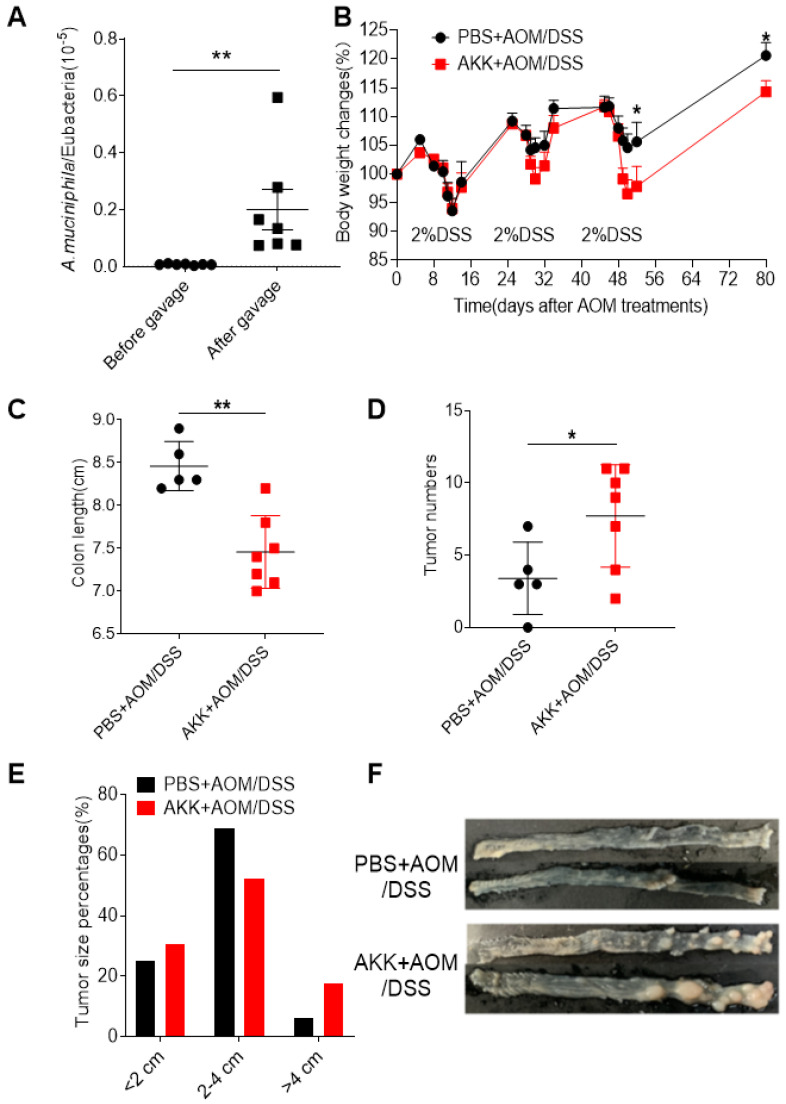
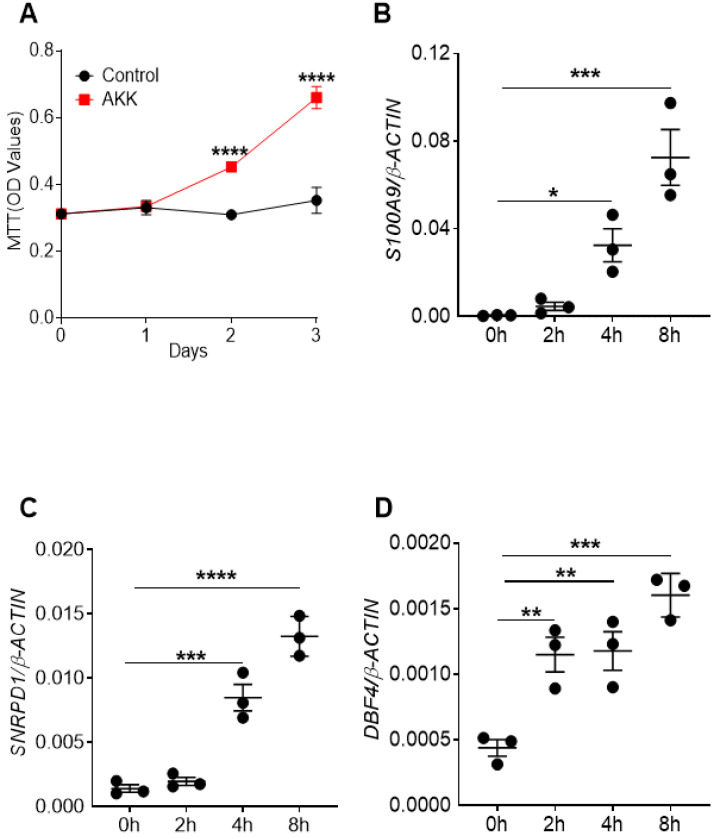
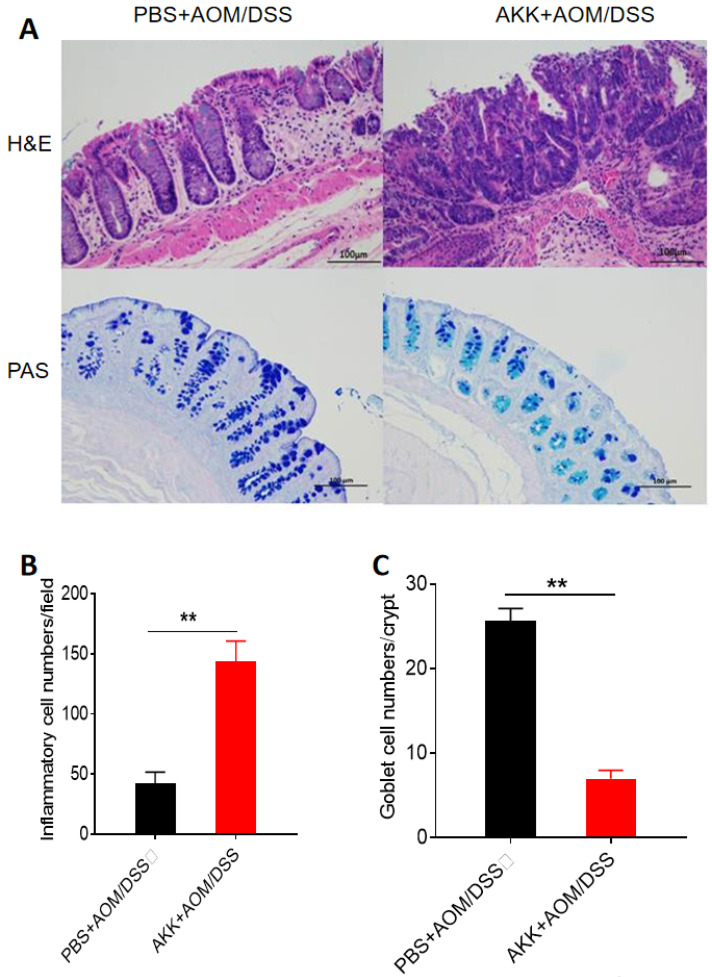
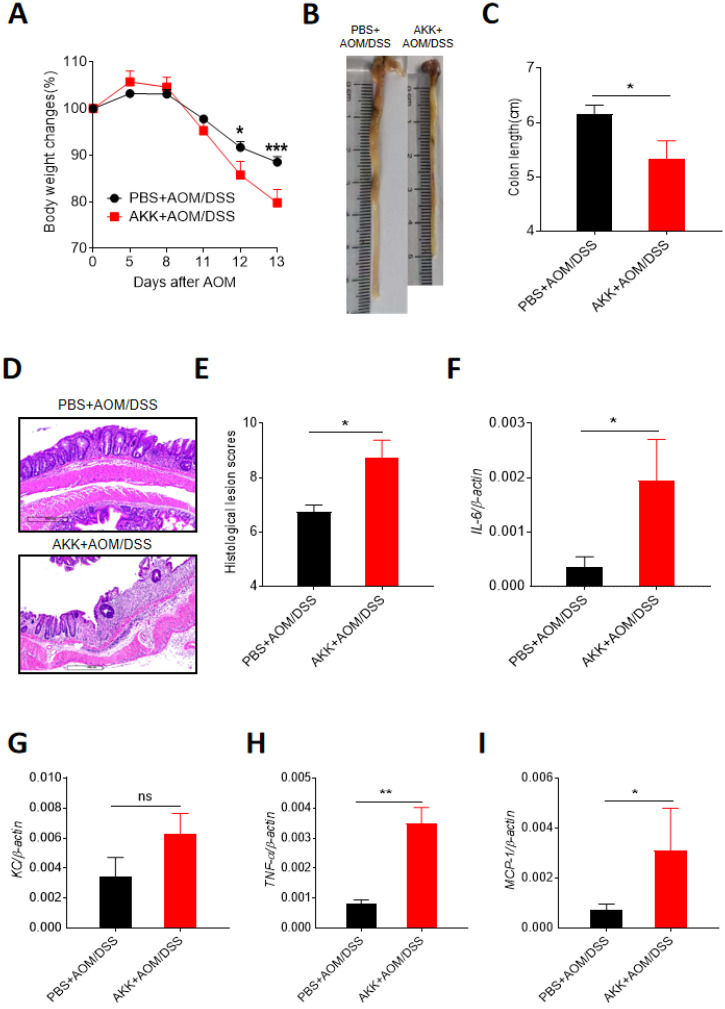
Colorectal cancer (CRC) is one of the most common digestive tract malignancies and inflammation and gut microbiota are well-known key factors to influence CRC development. is an important gram-negative anaerobic bacterium that can degrade mucin in gut. Previous studies suggested that may affect inflammation and cell proliferation, but the relationship between and CRC is not clarified. Here C57BL/6 mice were administrated with or PBS and then treated with azoxymethane (AOM)/dextran sodium sulphate (DSS) to induce CRC. The mice receiving administration had more serious weight loss, shorter colon length and more intestinal tumors than those receiving PBS administration after AOM/DSS treatment. More colon damage and less goblet cells were also observed in treated mice. Furthermore, administration induced more Ki67 proliferating cells, higher PCNA expression and elevated gene expression of proliferation-associated molecules including , or . At early stage of CRC development, in comparison with controls, the mice receiving administration also had more body weight loss and shorter colon length, as well as higher gene expression of inflammatory cytokines. Furthermore, the experimental results showed that the co-culture of colon epithelial cells with enhanced the cell proliferation and gene expression of proliferation-associated molecules. Therefore, may promote the formation of CRC in mice through increasing the early level of inflammation and the proliferation of intestinal epithelial cells.
结直肠癌(CRC)是最常见的消化道恶性肿瘤之一,炎症和肠道微生物群是影响CRC发生发展的众所周知的关键因素。[细菌名称]是一种重要的革兰氏阴性厌氧菌,可降解肠道中的黏蛋白。先前的研究表明,[细菌名称]可能影响炎症和细胞增殖,但[细菌名称]与CRC之间的关系尚未阐明。在此,给C57BL/6小鼠施用[细菌名称]或磷酸盐缓冲盐水(PBS),然后用氧化偶氮甲烷(AOM)/葡聚糖硫酸钠(DSS)处理以诱导CRC。在AOM/DSS处理后,接受[细菌名称]施用的小鼠比接受PBS施用的小鼠体重减轻更严重、结肠长度更短且肠道肿瘤更多。在接受[细菌名称]处理的小鼠中还观察到更多的结肠损伤和更少的杯状细胞。此外,[细菌名称]施用诱导更多的Ki67增殖细胞、更高的增殖细胞核抗原(PCNA)表达以及包括[相关分子名称1]、[相关分子名称2]或[相关分子名称3]在内的增殖相关分子的基因表达升高。在CRC发生发展的早期阶段,与对照组相比,接受[细菌名称]施用的小鼠体重减轻也更多、结肠长度更短,以及炎症细胞因子的基因表达更高。此外,[细菌名称]实验结果表明,结肠上皮细胞与[细菌名称]共培养增强了细胞增殖和增殖相关分子的基因表达。因此,[细菌名称]可能通过增加早期炎症水平和肠道上皮细胞增殖来促进小鼠CRC的形成。