Department of Oncology, Tongji Hospital, Tongji Medical College, Huazhong University of Science and Technology, Wuhan, China.
Department of Orthopedics, Tongji Hospital, Tongji Medical College, Huazhong University of Science and Technology, Wuhan, China.
Theranostics. 2022 Jan 1;12(2):747-766. doi: 10.7150/thno.65828. eCollection 2022.
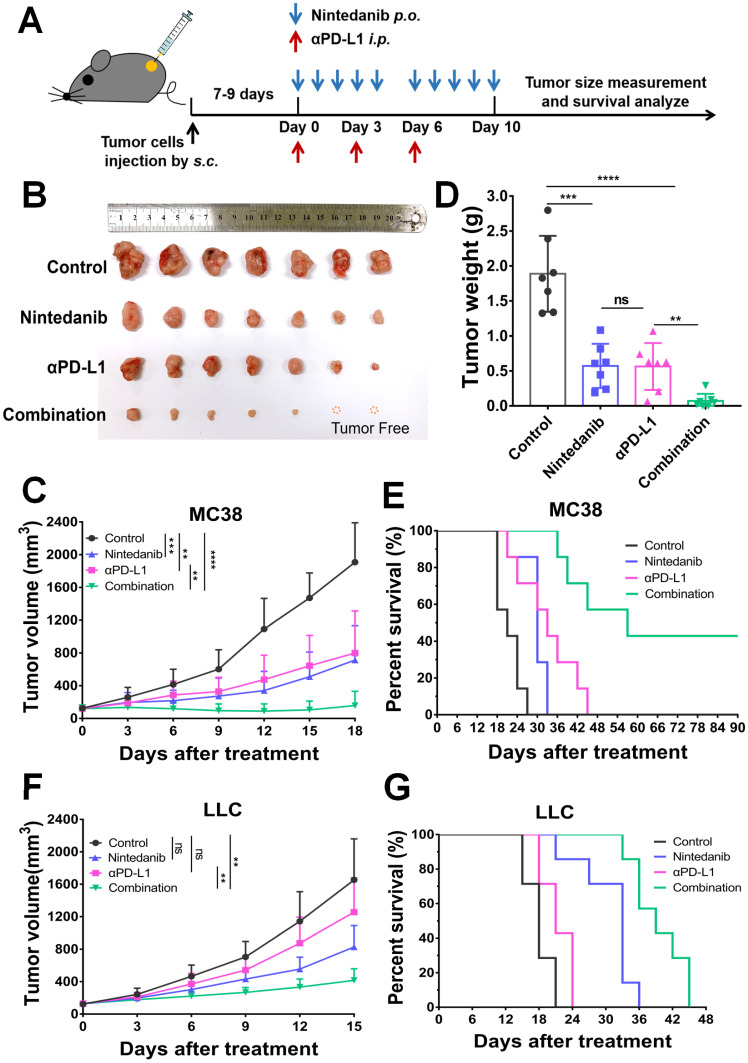
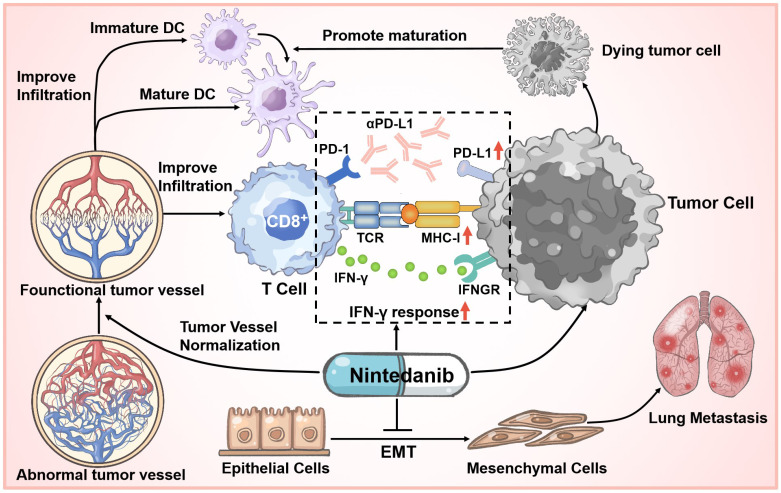
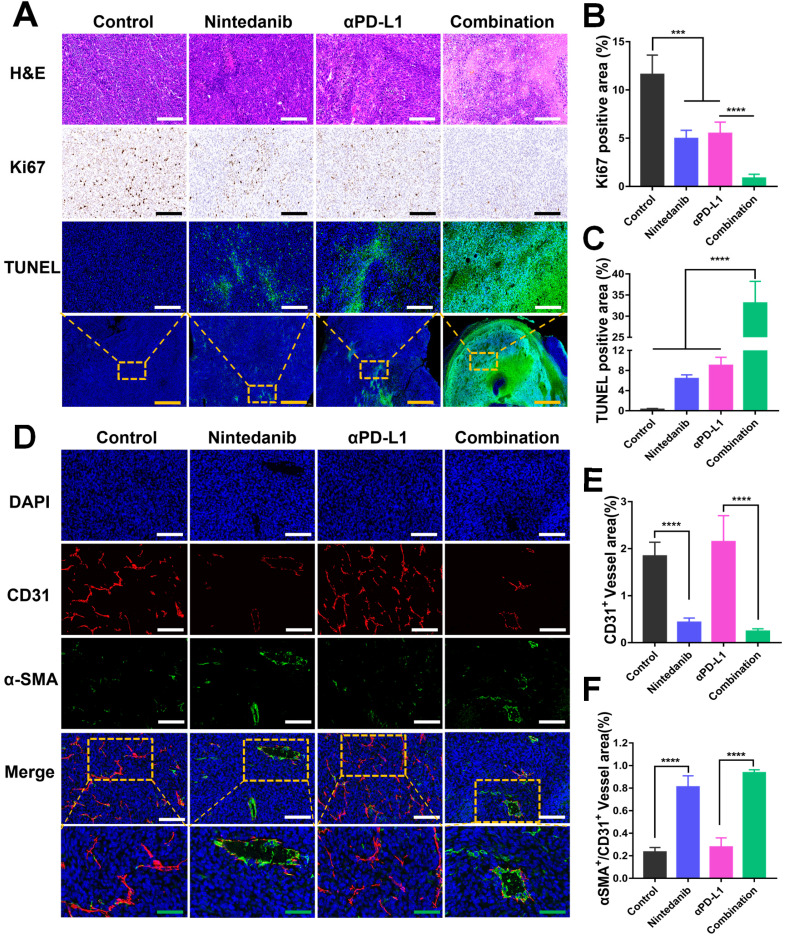
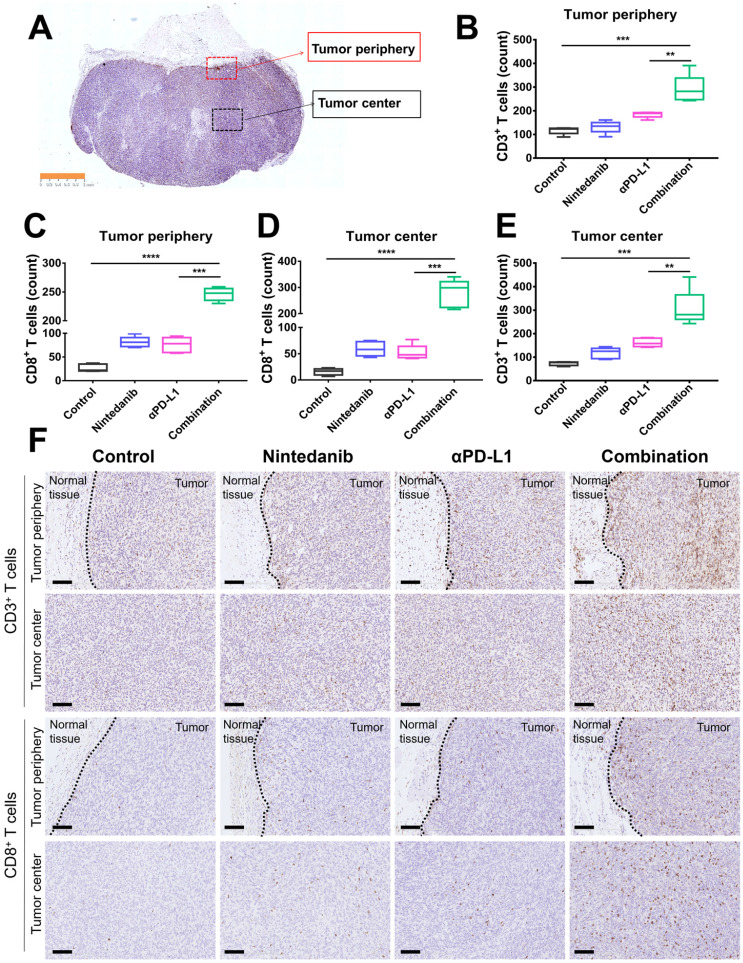
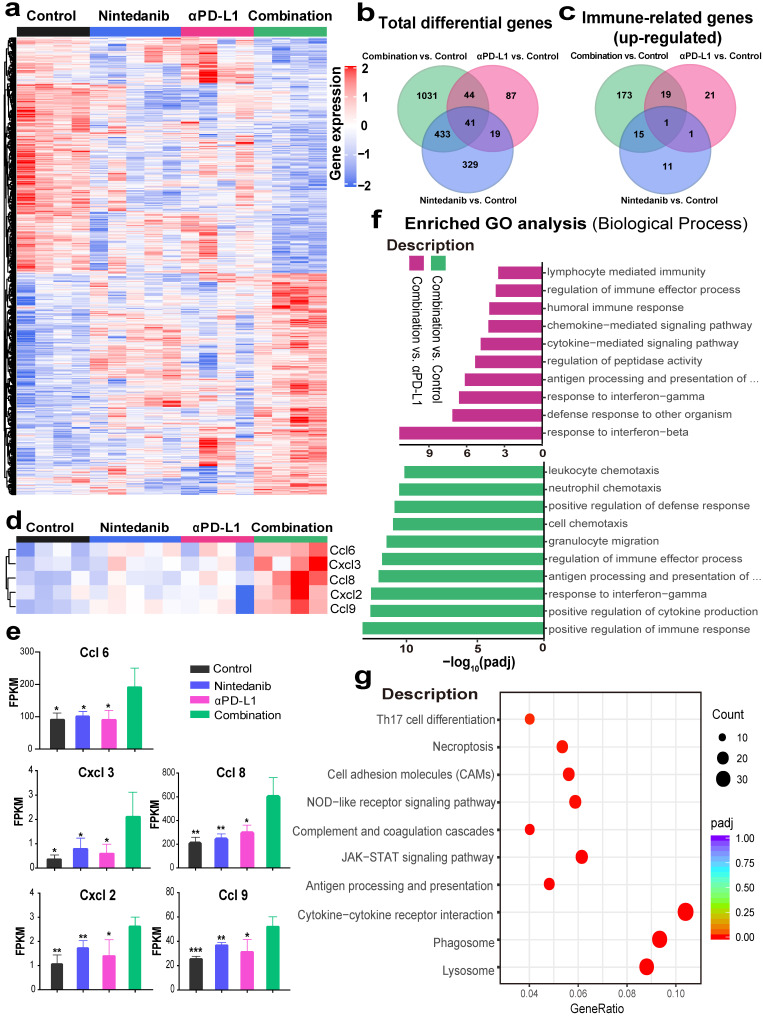
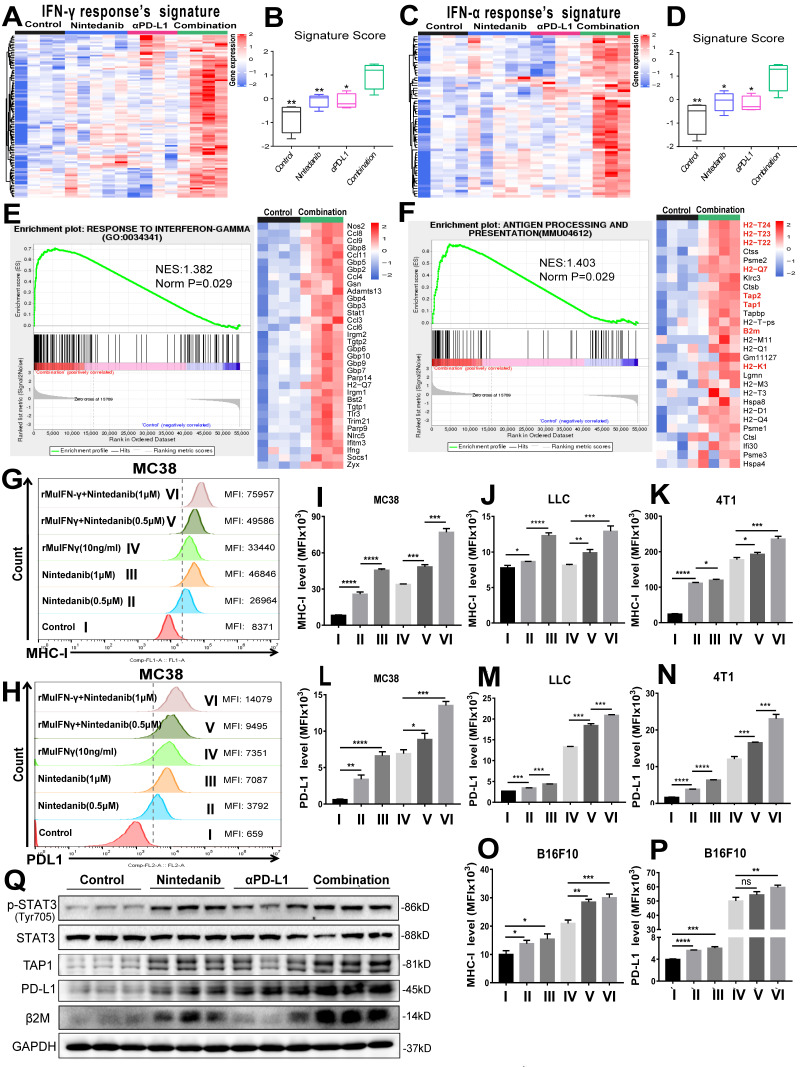
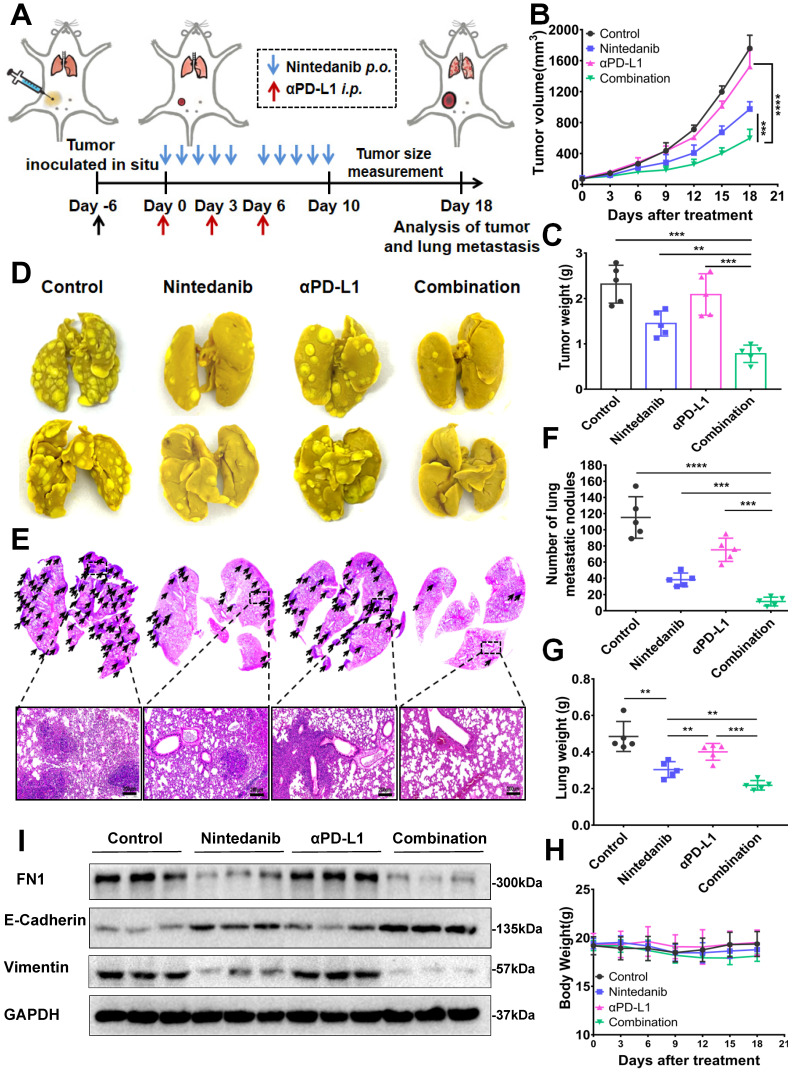
Immune checkpoint inhibitors (ICIs), such as programmed cell death protein 1 (PD-1)/programmed death-ligand 1 (PD-L1), have been widely applied in clinical and scientific research. Despite their effective antitumor effects in clinical tumor therapy, most tumors are still resistant to ICIs and long-term benefits are lacking. In addition, tumor patients complicated with interstitial lung disease limit the application of ICI therapy. Therefore, for these cases, there is an urgent need to develop new methods to relieve lung complications and enhance the efficacy of ICI therapy. Nintedanib, a potent triple angiokinase inhibitor approved for the treatment of progressive fibrotic interstitial lung disease. However, its immunotherapy synergy properties and mechanism are still pending further exploration. To explore the therapeutic potential of nintedanib and αPD-L1 combination therapy, MC38, LLC, and 4T1 tumor models were used to investigate antitumor and antimetastatic activities . An idiopathic pulmonary fibrosis-tumor bearing model was used to evaluate the effect of the synergy therapy on tumor model complicated with lung disease. Moreover, RNA-seq, immunohistochemistry, and flow cytometry were utilized to analyze the effect of combination treatment on the tumor microenvironment. The bioactivity following different treatments was determined by western blotting, CCK-8, and flow cytometry. In this study, nintedanib and αPD-L1 synergy therapy exhibited significant antitumor, antimetastatic and anti-pulmonary fibrosis effects. Both and experiments revealed that these effects included promoting vessel normalization, increasing infiltration and activation of immune cells in tumors, enhancing the response of interferon-gamma, and activating the MHC class I-mediated antigen presentation process. Moreover, our results showed an increased expression of PD-L1 and promoted phosphorylation of STAT3 after nintedanib (1 µM) treatment. The combination of nintedanib and αPD-L1 increased ICI therapy responses, relieved lung complications and further activated the tumor immune microenvironment; thus, exhibiting a notable antitumor effect. Accordingly, the nintedanib synergy strategy is expected to be a promising candidate therapy for tumor patients complicated with interstitial lung disease in clinical practice.
免疫检查点抑制剂(ICIs),如程序性细胞死亡蛋白 1(PD-1)/程序性死亡配体 1(PD-L1),已广泛应用于临床和科学研究。尽管它们在肿瘤临床治疗中具有有效的抗肿瘤作用,但大多数肿瘤仍然对 ICI 具有抗性,并且缺乏长期获益。此外,患有间质性肺病的肿瘤患者限制了 ICI 治疗的应用。因此,对于这些情况,迫切需要开发新的方法来缓解肺部并发症并增强 ICI 治疗的疗效。尼达尼布是一种强效的三激酶抑制剂,已被批准用于治疗进行性纤维化间质性肺病。然而,其免疫治疗协同作用特性和机制仍有待进一步探索。为了探索尼达尼布和 αPD-L1 联合治疗的治疗潜力,使用 MC38、LLC 和 4T1 肿瘤模型研究了抗肿瘤和抗转移活性。使用特发性肺纤维化-肿瘤荷瘤模型评估协同治疗对伴有肺部疾病的肿瘤模型的影响。此外,通过 RNA-seq、免疫组织化学和流式细胞术分析了联合治疗对肿瘤微环境的影响。通过 Western blot、CCK-8 和流式细胞术测定不同处理后的生物活性。在这项研究中,尼达尼布和 αPD-L1 协同治疗表现出显著的抗肿瘤、抗转移和抗肺纤维化作用。体内和体外实验均表明,这些作用包括促进血管正常化、增加肿瘤中免疫细胞的浸润和激活、增强干扰素-γ的反应以及激活 MHC 类 I 介导的抗原呈递过程。此外,我们的结果表明,尼达尼布(1 μM)处理后 PD-L1 表达增加,并促进 STAT3 磷酸化。尼达尼布与 αPD-L1 的联合使用增加了 ICI 治疗的反应,缓解了肺部并发症,并进一步激活了肿瘤免疫微环境;因此,表现出显著的抗肿瘤作用。因此,尼达尼布协同策略有望成为临床实践中伴有间质性肺病的肿瘤患者的一种有前途的候选治疗方法。