Fu Jiang, Yu Li, Wang Zixu, Chen Haoyu, Zhang Song, Zhou Haining
Department of Thoracic Surgery, Suining Central Hospital, Suining, China.
School of Medical and Life Science, Chengdu University of Traditional Chinese Medicine, Chengdu, China.
Medicine (Baltimore). 2025 Feb 7;104(6):e41415. doi: 10.1097/MD.0000000000041415.
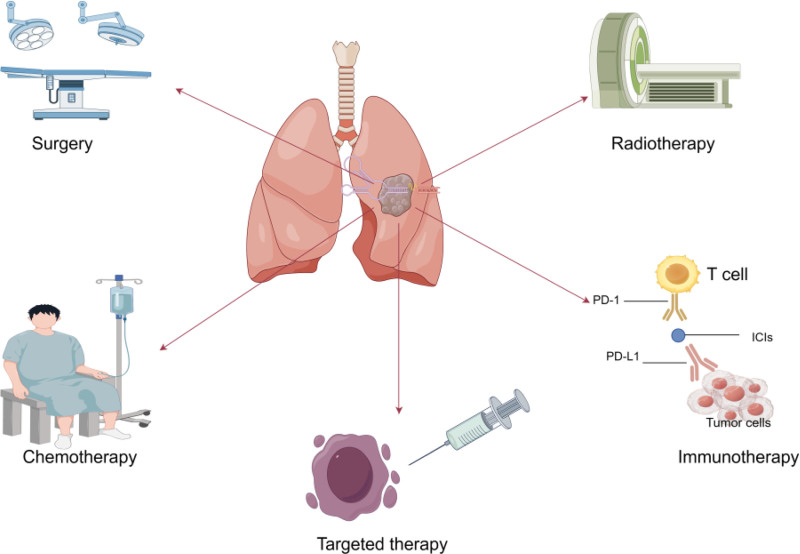
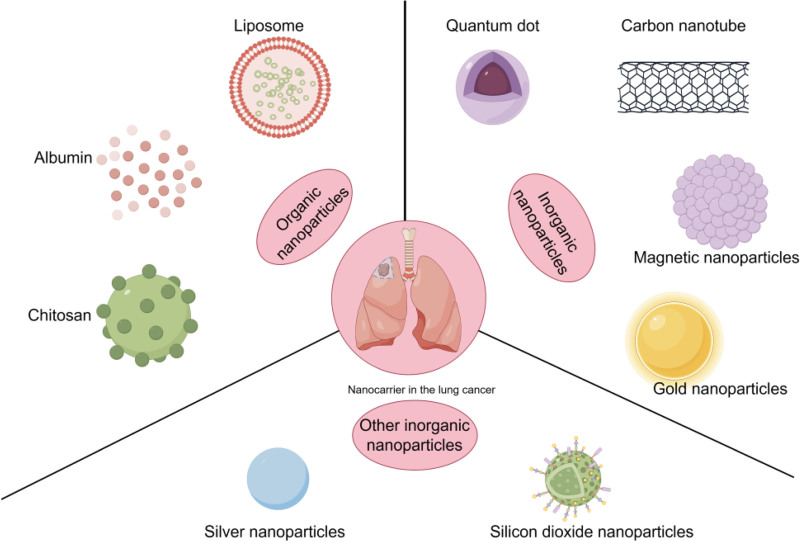
Lung cancer is one of the most common malignant tumors, with the highest morbidity and mortality rates. Currently, significant progress has been made in the treatment of lung cancer, which has effectively improved the overall prognosis of patients, but there are still many problems, such as tumor recurrence, drug resistance, and serious complications. With the rapid development of nanotechnology in the field of medicine, it breaks through the inherent limitations of traditional cancer treatments and shows great potential in tumor treatment. To address the drawbacks of traditional therapeutic means, nanodrug delivery systems can release drugs under specific conditions, thus realizing tumor-targeted drug delivery, which improves the antitumor effect of drugs. In this paper, we review the current treatments for lung cancer and further discuss the advantages and common carriers of nanodrug delivery systems. We also summarize the latest research progress of nanotargeted drug delivery systems in the field of lung cancer therapy, discuss the problems faced in their clinical translation, and look forward to future development opportunities and directions.
肺癌是最常见的恶性肿瘤之一,发病率和死亡率最高。目前,肺癌治疗已取得显著进展,有效改善了患者的总体预后,但仍存在许多问题,如肿瘤复发、耐药性和严重并发症。随着纳米技术在医学领域的快速发展,它突破了传统癌症治疗的固有局限性,在肿瘤治疗中显示出巨大潜力。为了解决传统治疗手段的弊端,纳米药物递送系统可以在特定条件下释放药物,从而实现肿瘤靶向药物递送,提高药物的抗肿瘤效果。本文综述了肺癌的当前治疗方法,并进一步讨论了纳米药物递送系统的优势和常见载体。我们还总结了纳米靶向药物递送系统在肺癌治疗领域的最新研究进展,讨论了其临床转化中面临的问题,并展望了未来的发展机遇和方向。