Department of Medical Oncology, Chongqing University Cancer Hospital, Chongqing 400030, China.
Chongqing Key Laboratory for Intelligent Oncology in Breast Cancer, Chongqing University Cancer Hospital, Chongqing 400030, China.
Theranostics. 2022 Jan 1;12(2):842-858. doi: 10.7150/thno.66575. eCollection 2022.
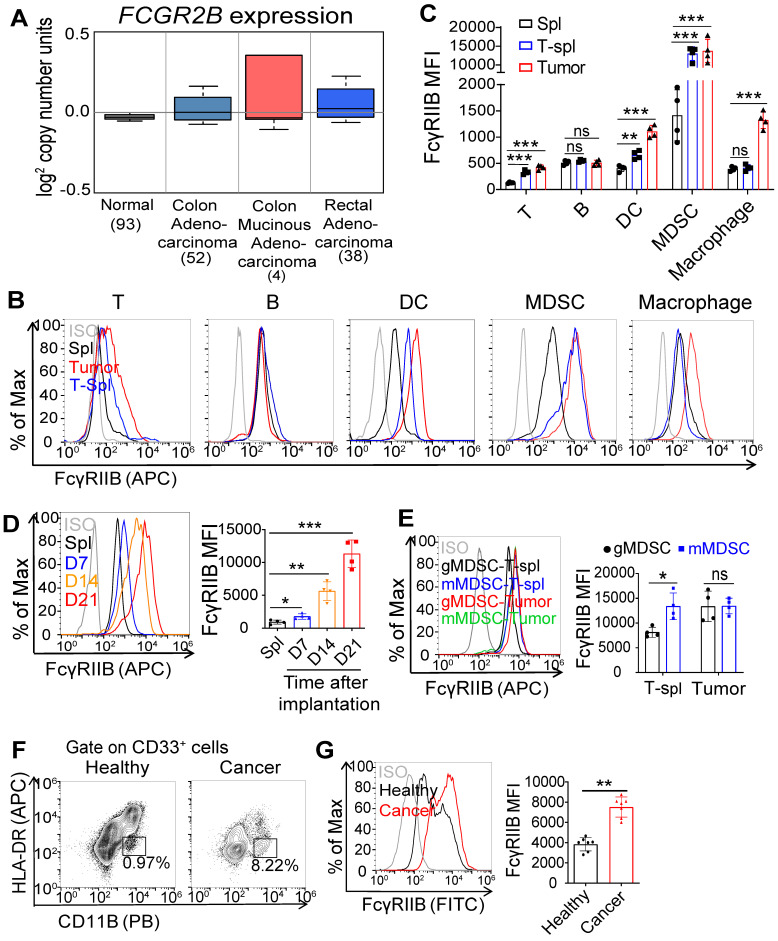
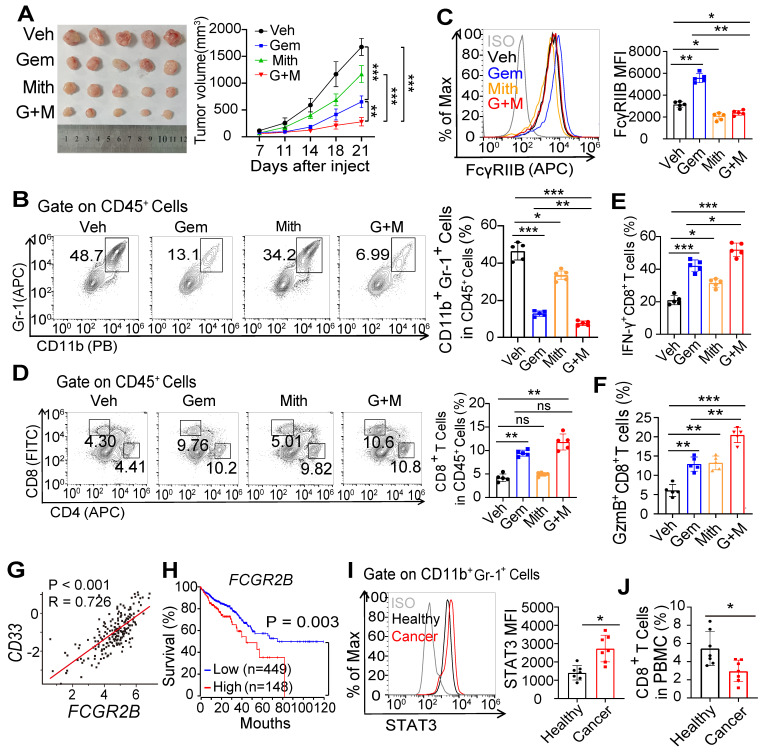
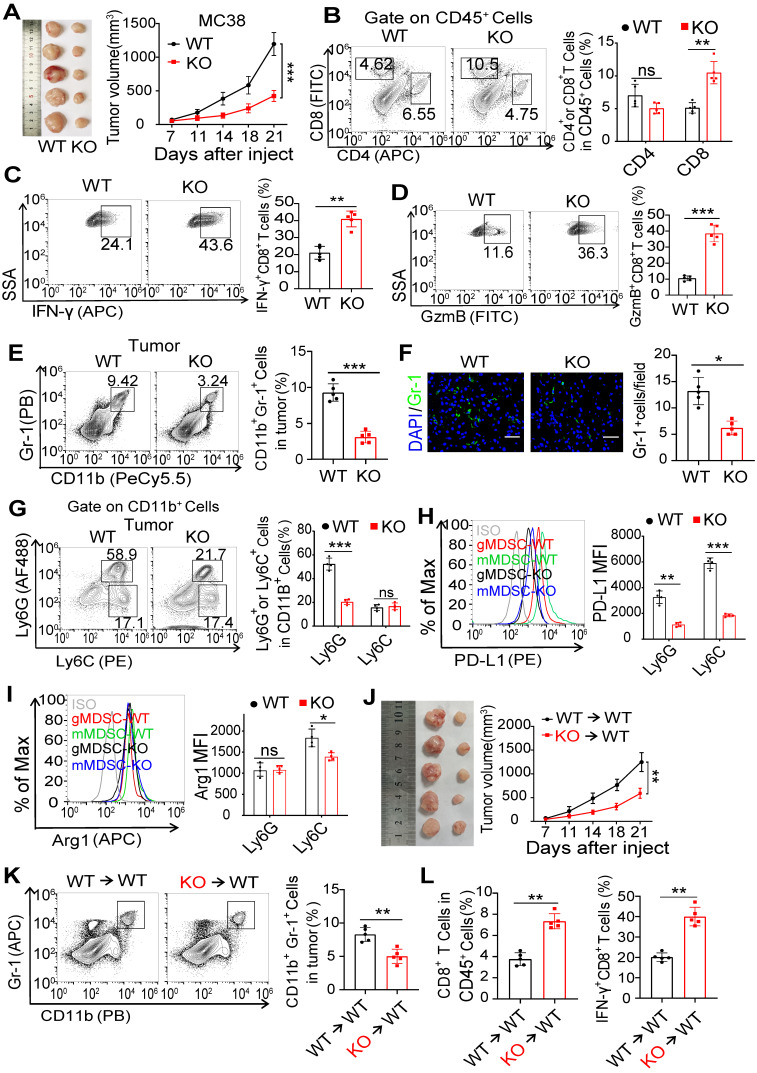
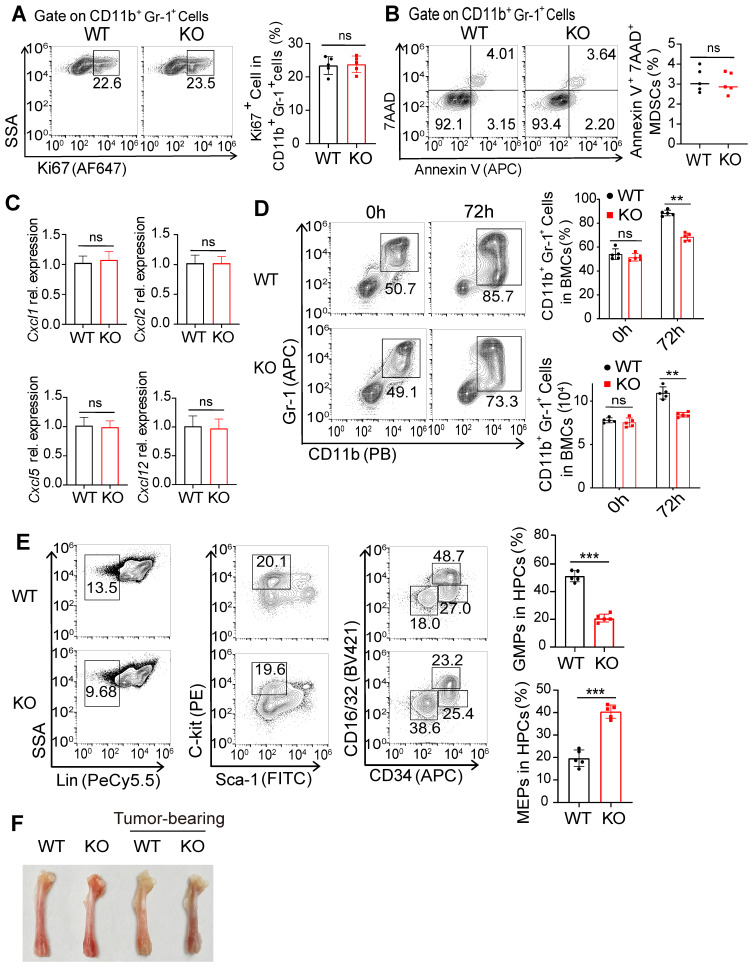
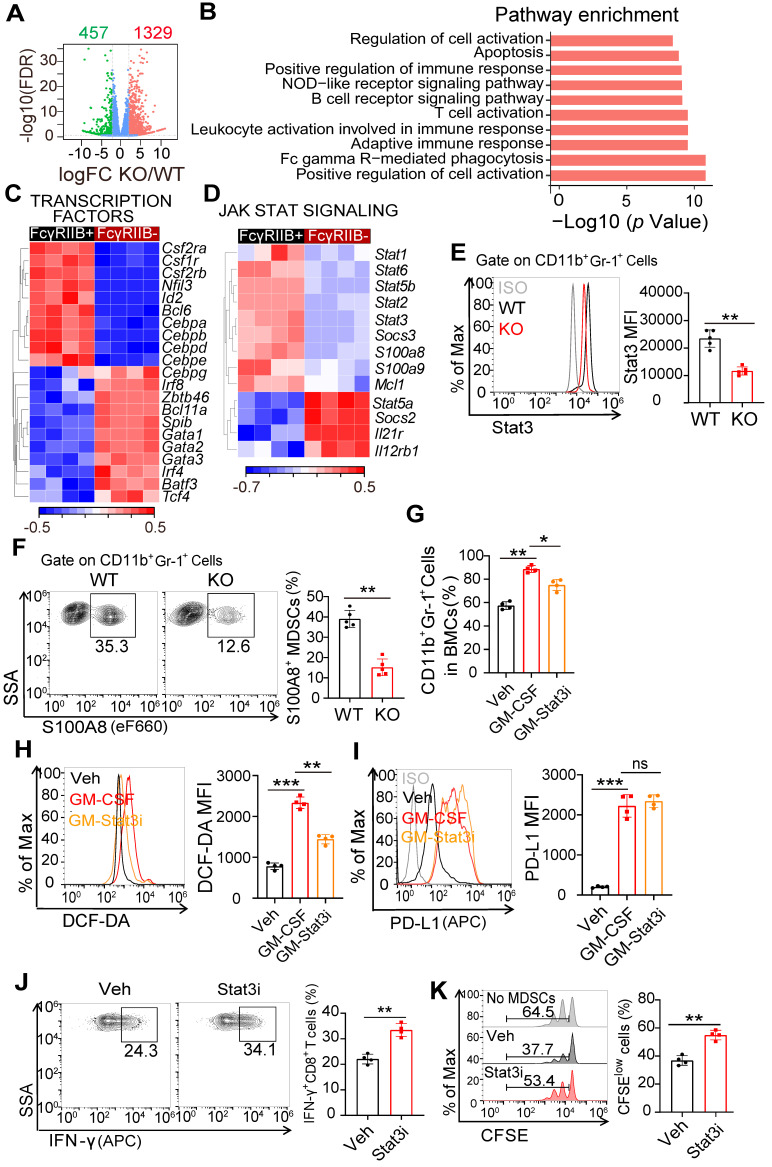
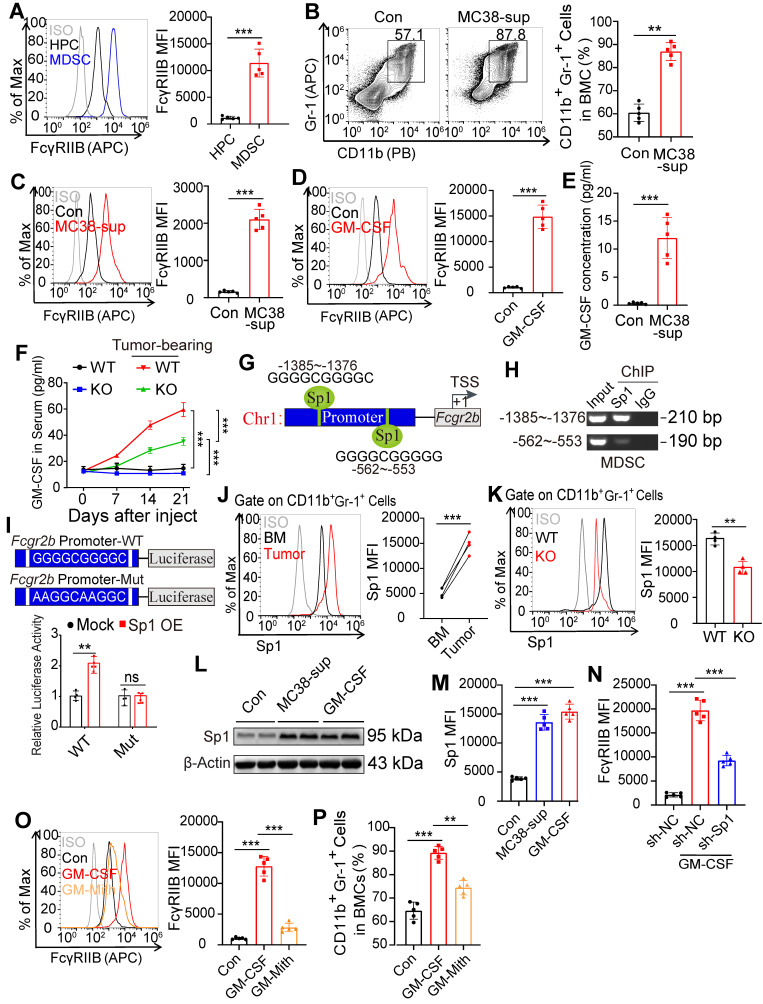
FcγRIIB, the sole inhibitory receptor of the Fc gamma receptor family, plays pivotal roles in innate and adaptive immune responses. However, the expression and function of FcγRIIB in myeloid-derived suppressor cells (MDSCs) remains unknown. This study aimed to investigate whether and how FcγRIIB regulates the immunosuppressive activity of MDSCs during cancer development. The MC38 and B16-F10 tumor-bearing mouse models were established to investigate the role of FcγRIIB during tumor progression. FcγRIIB-deficient mice, adoptive cell transfer, mRNA-sequencing and flow cytometry analysis were used to assess the role of FcγRIIB on immunosuppressive activity and differentiation of MDSCs. Here we show that FcγRIIB was upregulated in tumor-infiltrated MDSCs. FcγRIIB-deficient mice showed decreased accumulation of MDSCs in the tumor microenvironment (TME) compared with wild-type mice. FcγRIIB was required for the differentiation and immunosuppressive activity of MDSCs. Mechanistically, tumor cell-derived granulocyte-macrophage colony stimulating factor (GM-CSF) increased the expression of FcγRIIB on hematopoietic progenitor cells (HPCs) by activating specificity protein 1 (Sp1), subsequently FcγRIIB promoted the generation of MDSCs from HPCs Stat3 signaling. Furthermore, blockade of Sp1 dampened MDSC differentiation and infiltration in the TME and enhanced the anti-tumor therapeutic efficacy of gemcitabine. These results uncover an unrecognized regulatory role of the FcγRIIB in abnormal differentiation of MDSCs during cancer development and suggest a potential therapeutic target for anti-tumor therapy.
FcγRIIB 是 Fcγ 受体家族中唯一的抑制性受体,在先天和适应性免疫反应中发挥关键作用。然而,FcγRIIB 在髓系来源的抑制性细胞(MDSCs)中的表达和功能尚不清楚。本研究旨在探讨 FcγRIIB 是否以及如何调节 MDSCs 在癌症发展过程中的免疫抑制活性。
建立了 MC38 和 B16-F10 荷瘤小鼠模型,以研究 FcγRIIB 在肿瘤进展过程中的作用。使用 FcγRIIB 缺陷小鼠、过继细胞转移、mRNA 测序和流式细胞术分析来评估 FcγRIIB 对 MDSCs 免疫抑制活性和分化的作用。
在这里,我们显示 FcγRIIB 在肿瘤浸润的 MDSCs 中上调。与野生型小鼠相比,FcγRIIB 缺陷小鼠肿瘤微环境(TME)中 MDSCs 的积累减少。FcγRIIB 是 MDSCs 分化和免疫抑制活性所必需的。在机制上,肿瘤细胞衍生的粒细胞-巨噬细胞集落刺激因子(GM-CSF)通过激活特异性蛋白 1(Sp1)增加造血祖细胞(HPC)上 FcγRIIB 的表达,随后 FcγRIIB 通过 Stat3 信号促进 HPC 向 MDSCs 的生成。此外,Sp1 阻断剂可抑制 TME 中 MDSC 的分化和浸润,并增强吉西他滨的抗肿瘤治疗效果。
这些结果揭示了 FcγRIIB 在癌症发展过程中对 MDSCs 异常分化的未被认识的调节作用,并为抗肿瘤治疗提供了一个潜在的治疗靶点。