Wilson R D, O'Connor D L
Cumming School of Medicine, Department of Obstetrics and Gynecology, University of Calgary, FMC NT 435, 1403 29 St NW, Calgary, Alberta, Canada.
Department of Nutritional Sciences, University of Toronto, Toronto, Ontario, Canada.
Prev Med Rep. 2021 Oct 25;24:101617. doi: 10.1016/j.pmedr.2021.101617. eCollection 2021 Dec.
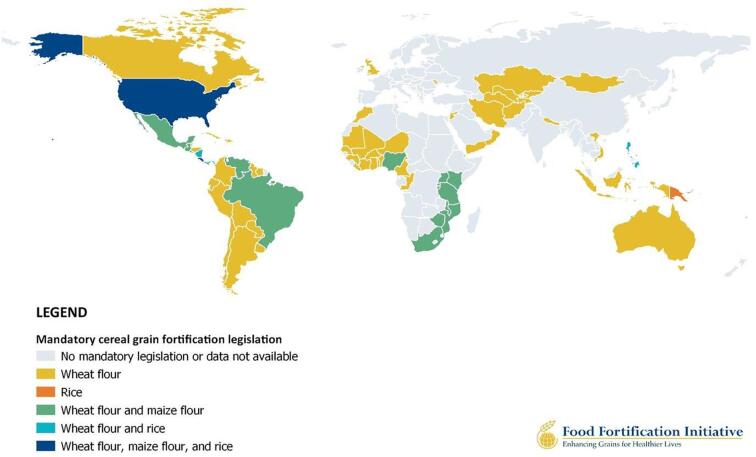
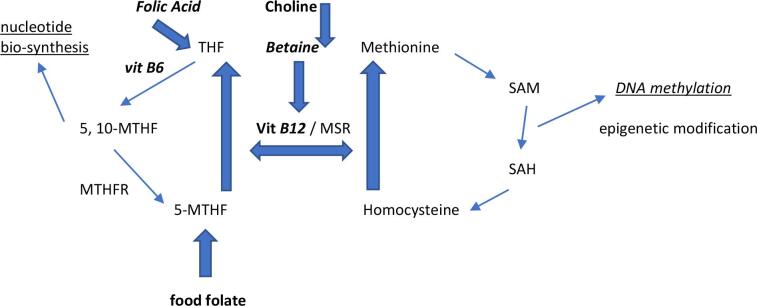
More evidence is available for maternal intake, absorption, distribution, tissue specific concentrations, and pregnancy outcomes with folic acid (fortification/supplementation) during preconception - first trimester. This Quality Improvement prevention review used expert guidelines/opinions, systematic reviews, randomized control trials/controlled clinical trials, and observational case control/case series studies, published in English, from 1990 to August 2021. Optimization for an oral maternal folic acid supplementation is difficult because it relies on folic acid dose, type of folate supplement, bio-availability of the folate from foods, timing of supplementation initiation, maternal metabolism/genetic factors, and many other factors. There is continued use of high dose pre-food fortification 'RCT evidenced-based' folic acid supplementation for NTD recurrence pregnancy prevention. Innovation requires preconception and pregnancy use of 'carbon one nutrient' supplements (folic acid, vitamin B12, B6, choline), using the appropriate evidence, need to be considered. The consideration and adoption of directed personalized approaches for maternal complex risk could use serum folate testing for supplementation dosing choice. Routine daily folic acid dosing for low-risk women should consider a multivitamin with 0.4 mg of folic acid starting 3 months prior to conception until completion of breastfeeding. Routine folic acid dosing or preconception measurement of maternal serum folate (after 4-6 weeks of folate supplementation) could be considered for maternal complex risk group with genetic/medical/surgical co-morbidities. These new approaches for folic acid oral supplementation are required to optimize benefit (decreasing folate sensitive congenital anomalies; childhood morbidity) and minimizing potential maternal and childhood risk.
关于孕前至孕早期叶酸(强化/补充)的母体摄入、吸收、分布、组织特异性浓度及妊娠结局,有更多证据可供参考。本质量改进预防综述采用了1990年至2021年8月以英文发表的专家指南/意见、系统评价、随机对照试验/对照临床试验以及观察性病例对照/病例系列研究。优化口服母体叶酸补充剂存在困难,因为这依赖于叶酸剂量、叶酸补充剂类型、食物中叶酸的生物利用度、补充剂开始使用的时间、母体代谢/遗传因素以及许多其他因素。对于预防神经管缺陷复发妊娠,仍持续使用基于随机对照试验证据的高剂量孕前食物强化叶酸补充剂。创新需要在孕前和孕期使用“一碳营养素”补充剂(叶酸、维生素B12、B6、胆碱),且需考虑适当的证据。对于母体复杂风险,考虑并采用定向个性化方法时可通过血清叶酸检测来选择补充剂剂量。低风险女性的常规每日叶酸剂量应考虑从受孕前3个月开始直至母乳喂养结束,服用含0.4毫克叶酸的复合维生素。对于有遗传/医学/外科合并症的母体复杂风险组,可考虑进行常规叶酸剂量补充或在补充叶酸4 - 6周后测量母体血清叶酸。需要这些新的叶酸口服补充方法来优化益处(降低叶酸敏感型先天性异常;儿童发病率)并将潜在的母体和儿童风险降至最低。