Chuang Han-Wen, Wang Tse-Yen, Huang Chih-Chia, Wei I-Hua
Graduate Institute of Biomedical Sciences, China Medical University, Taichung, Taiwan.
Department of Post-baccalaureate Chinese Medicine, China Medical University, Taichung, Taiwan.
Chin Med. 2022 Jan 5;17(1):9. doi: 10.1186/s13020-021-00549-5.
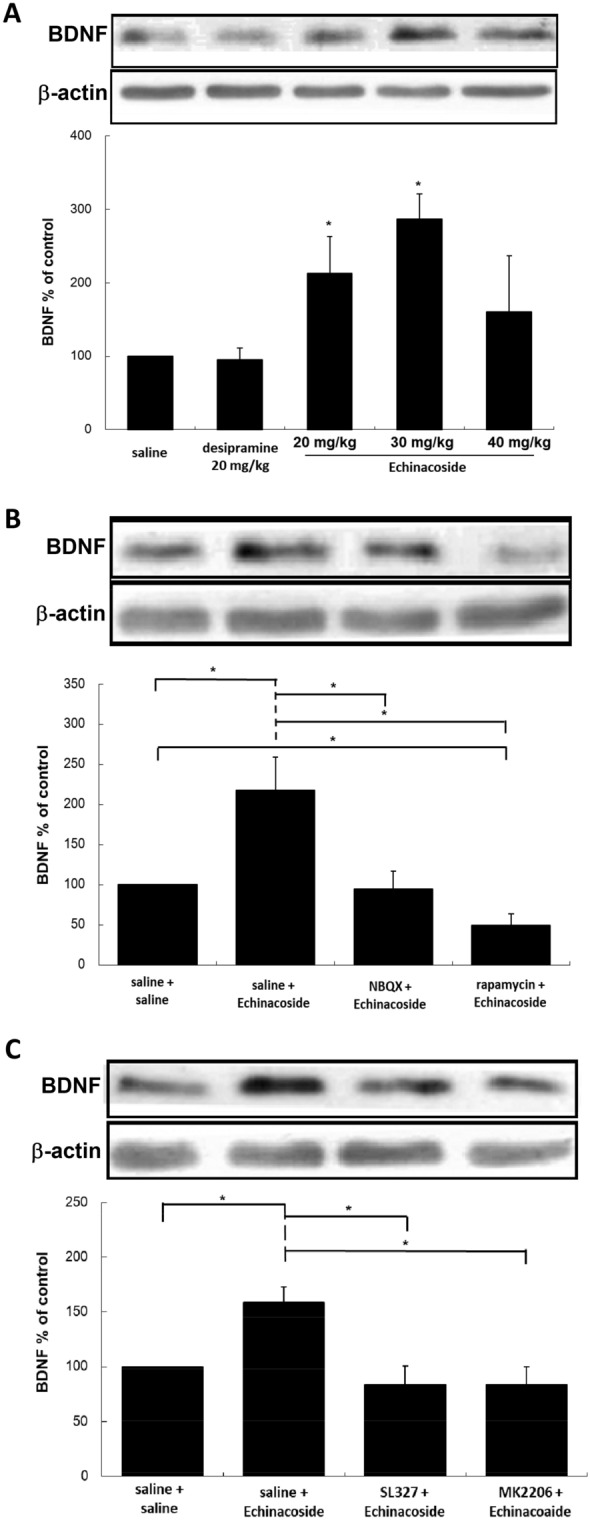
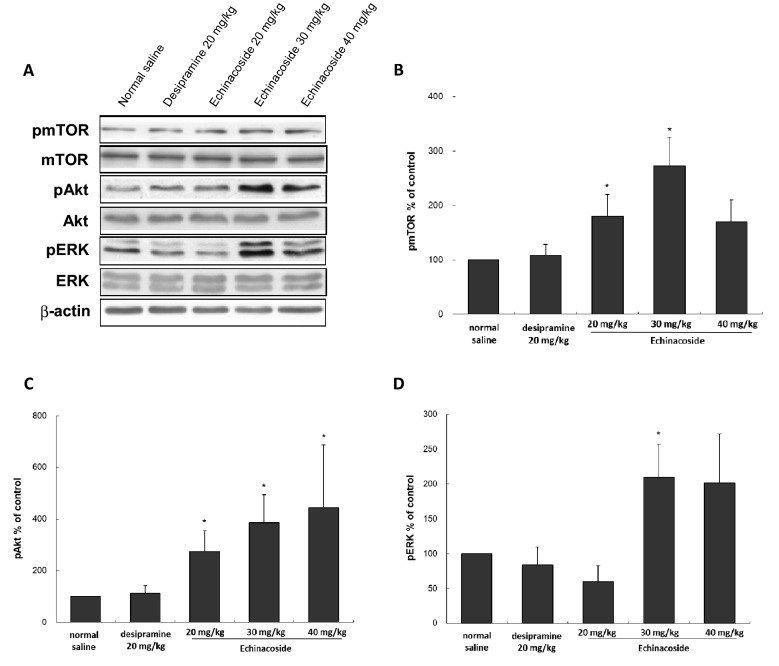
Several natural products have been demonstrated to be effective in the treatment of depressive disorders. Echinacoside, a naturally occurring phenol extracted from Cistanche tubulosa, Echinacea angustifolia, and Cistanche spp, has a wide range of physiological effects, such as antioxidation, neuroprotection, anti-inflammatory, and immunoregulation, which are closely related to depression. In addition, echinacoside can activate protein kinase B (Akt), extracellular signal-regulated kinase (ERK), and brain-derived neurotrophic factor (BDNF) in the brain. A key downstream event of the Akt, ERK, and BDNF signaling pathways, namely mechanistic target of rapamycin (mTOR) signaling, plays a crucial role in generating an rapid antidepressant effect. Thus, echinacoside is a promising therapeutic agent for depression. However, research regarding the role of echinacoside in antidepressant effect and brain mTOR activation remains lacking.
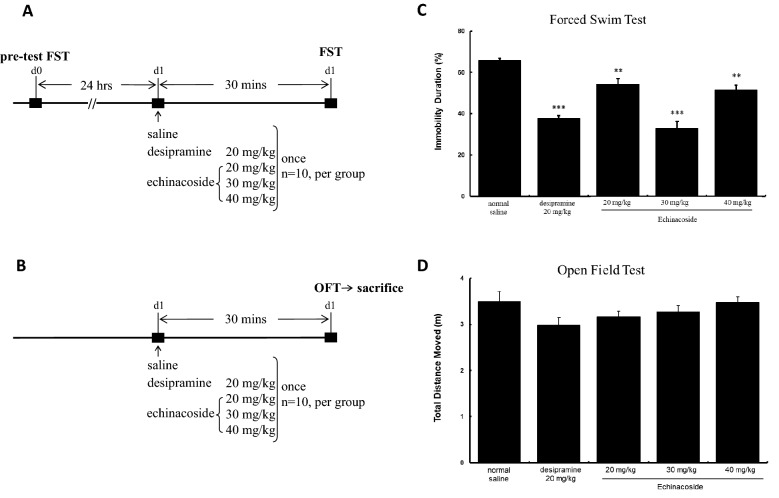
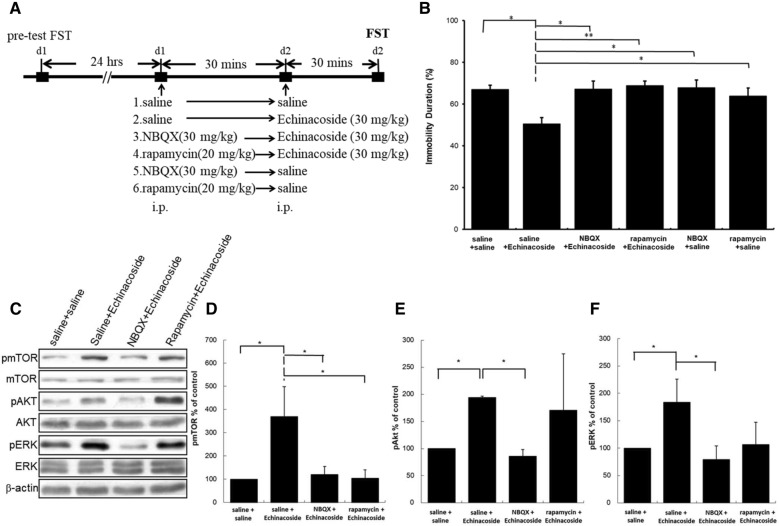
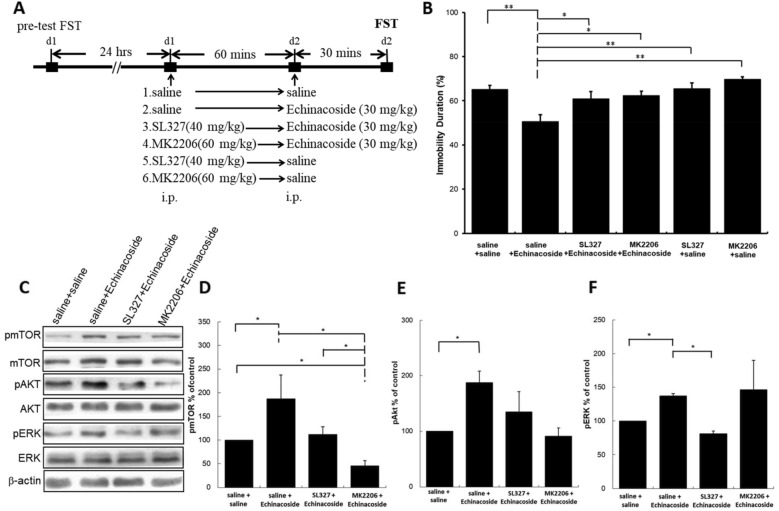
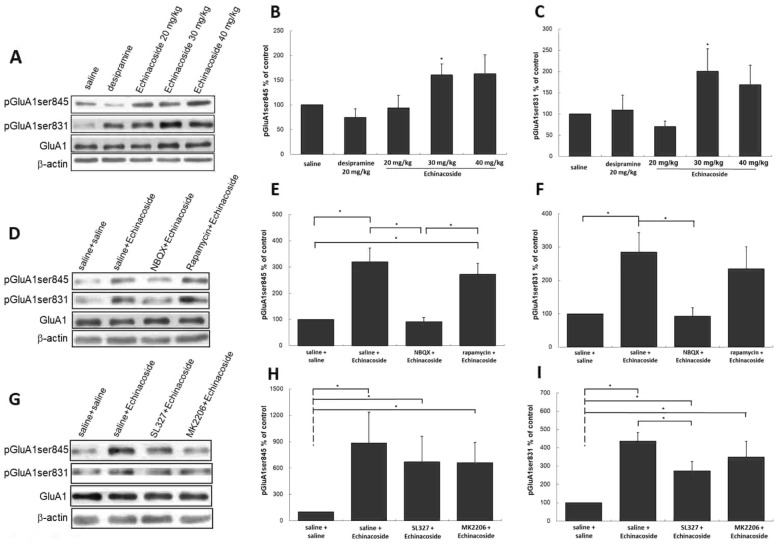
The forced swimming test and Western blot analysis in C57BL/6 mice was used to investigate the antidepressant-like activities of echinacoside and the underlying mechanism involved inα-amino3-hydroxy-5-methyl-4-isoxazolepropionic acid receptor (AMPAR)-Akt/ERK-mTOR pathway.
We confirmed the suggestions by previous reports that echinacoside activates Akt/ERK signaling and further demonstrated that echinacoside could provide antidepressant-like effects in mice via the activation of AMPAR-Akt/ERK-mTOR pathway in the hippocampus.
To the best of our knowledge, our study is the first to reveal that echinacoside is a potential treatment for depressive disorders. Moreover, the present study suggests a mechanism for the neuroprotective effect of echinacoside.
几种天然产物已被证明对抑郁症具有治疗作用。松果菊苷是一种从管花肉苁蓉、狭叶松果菊和肉苁蓉属植物中提取的天然酚类物质,具有广泛的生理作用,如抗氧化、神经保护、抗炎和免疫调节,这些作用与抑郁症密切相关。此外,松果菊苷可激活大脑中的蛋白激酶B(Akt)、细胞外信号调节激酶(ERK)和脑源性神经营养因子(BDNF)。Akt、ERK和BDNF信号通路的一个关键下游事件,即雷帕霉素机制性靶点(mTOR)信号,在产生快速抗抑郁作用中起关键作用。因此,松果菊苷是一种有前途的抑郁症治疗药物。然而,关于松果菊苷在抗抑郁作用和大脑mTOR激活中的作用的研究仍然缺乏。
采用C57BL/6小鼠的强迫游泳试验和蛋白质免疫印迹分析,研究松果菊苷的抗抑郁样活性及其在α-氨基-3-羟基-5-甲基-4-异恶唑丙酸受体(AMPAR)-Akt/ERK-mTOR通路中的潜在机制。
我们证实了先前报道中松果菊苷激活Akt/ERK信号的观点,并进一步证明松果菊苷可通过激活海马体中的AMPAR-Akt/ERK-mTOR通路在小鼠中产生抗抑郁样作用。
据我们所知,我们的研究首次揭示松果菊苷是抑郁症的一种潜在治疗方法。此外,本研究提出了松果菊苷神经保护作用的机制。