Key Laboratory of New Animal Drug Project, Gansu Province/Key Laboratory of Veterinary Pharmaceutical Development, Ministry of Agriculture and Rural Affairs/Lanzhou Institute of Husbandry and Pharmaceutical Sciences of Chinese Academy of Agriculture Sciences, No. 335, Qilihe District, Lanzhou, 730050, People's Republic of China.
Zhengzhou Key Laboratory of Immunopharmacology of effective components of Chinese Veterinary Medicine, College of Veterinary Medicine, Henan University of Animal Husbandry and Economy, 450046, Zhengzhou, People's Republic of China.
BMC Pharmacol Toxicol. 2022 Jan 4;23(1):2. doi: 10.1186/s40360-021-00543-5.
Py-mulin is a new pleuromutilin derivative with potent antibacterial activities in vitro and in vivo, suggesting this compound may lead to a promising antibacterial drug after further development. The present study is aimed to evaluate the acute and subacute oral toxicity, and the genotoxicity with the standard Ames test according to standard protocols.
Acute oral toxicity of Py-mulin was determined using Kunming mice. The 28-day repeated dose oral toxicity study in SD rats was performed according to OECD guideline No. 407. The bacterial reverse mutation (Ames test) was carried out using four Salmonella typhimurium (S. typhimurium) strains TA97, TA98, TA100 and TA1535 with and without S9 metabolic activation.
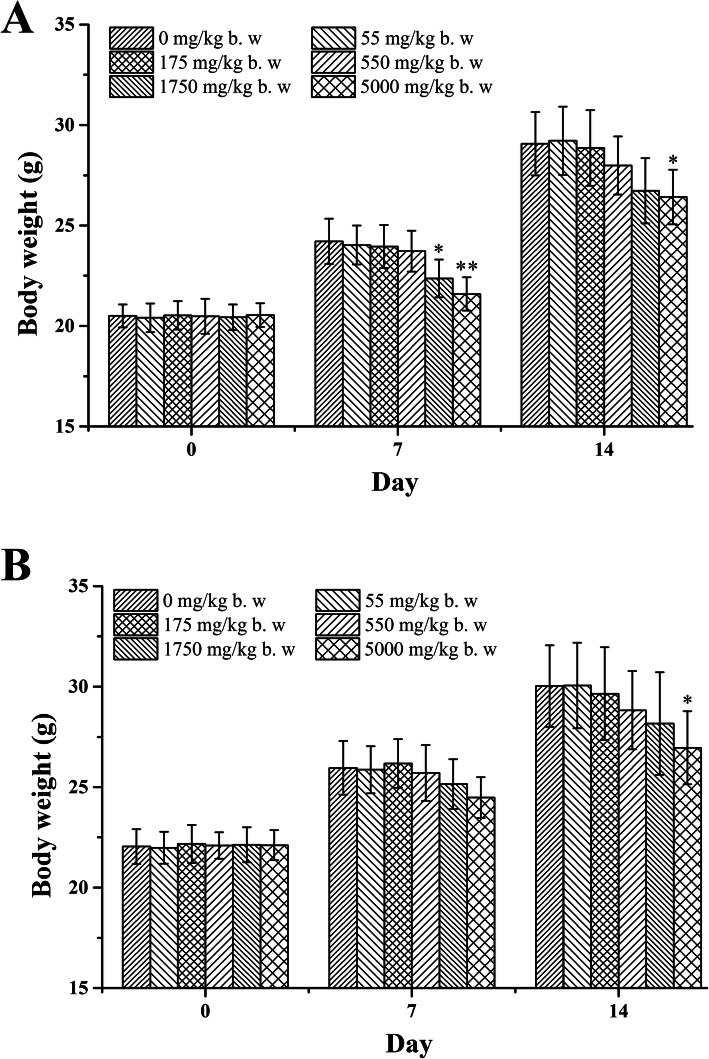
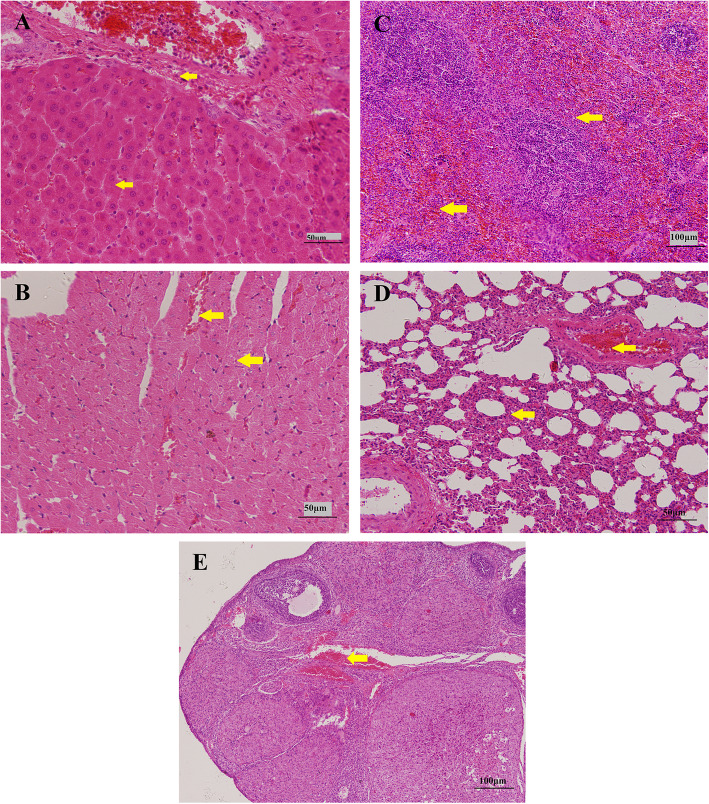
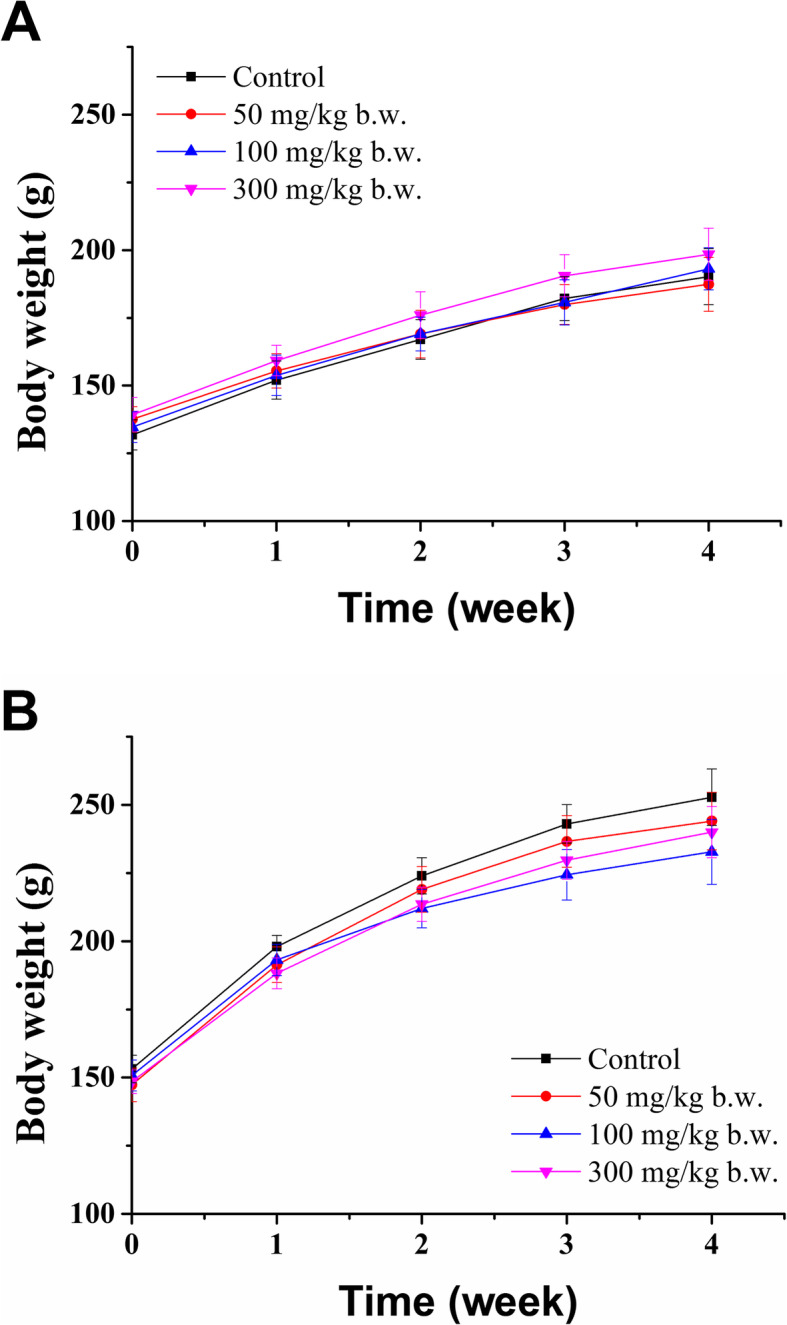
The LD values in acute oral toxicity were 2973 mg/kg (female mice) and 3891 mg/kg (male mice) calculated by the Bliss method. In subacute toxicity study, 50 mg/kg Py-mulin did not induce any abnormality in body weight, food consumption, clinical sign, hematology, clinical chemistry, organ weight, and histopathology in all of the treatment groups. However, high doses of Py-mulin (100 and 300 mg/kg) displayed slightly hepatotoxicity to female rats. Furthermore, Py-mulin did not significantly increase the number of revertant colonies of four standard S. typhimurium strains with the doses of 0.16-1000 μg/plate in the Ames study.
Based on our findings, our study provides some information for the safety profile of Py-mulin.
Py-mulin 是一种新型截短侧耳素衍生物,具有强大的体外和体内抗菌活性,这表明该化合物在进一步开发后可能成为一种有前途的抗菌药物。本研究旨在按照标准方案评估 Py-mulin 的急性和亚急性口服毒性以及标准 Ames 试验的遗传毒性。
采用昆明小鼠测定 Py-mulin 的急性口服毒性。根据 OECD 指南 No.407 进行 SD 大鼠 28 天重复剂量口服毒性研究。采用 4 株鼠伤寒沙门氏菌(TA97、TA98、TA100 和 TA1535)进行细菌回复突变(Ames 试验),并在有或无 S9 代谢活化的情况下进行。
根据 Bliss 法计算,急性口服毒性的 LD 值分别为 2973mg/kg(雌性小鼠)和 3891mg/kg(雄性小鼠)。在亚急性毒性研究中,50mg/kg Py-mulin 未引起各治疗组雌性小鼠体重、食物消耗、临床症状、血液学、临床化学、器官重量和组织病理学的任何异常。然而,高剂量的 Py-mulin(100 和 300mg/kg)对雌性大鼠显示出轻微的肝毒性。此外,在 Ames 研究中,Py-mulin 剂量在 0.16-1000μg/平板范围内,未显著增加四个标准鼠伤寒沙门氏菌菌株回复突变菌落的数量。
根据我们的研究结果,本研究为 Py-mulin 的安全性概况提供了一些信息。