Department of Physiology, Medical University of Bialystok, Bialystok, Poland.
Obes Rev. 2022 May;23(5):e13413. doi: 10.1111/obr.13413. Epub 2022 Jan 5.
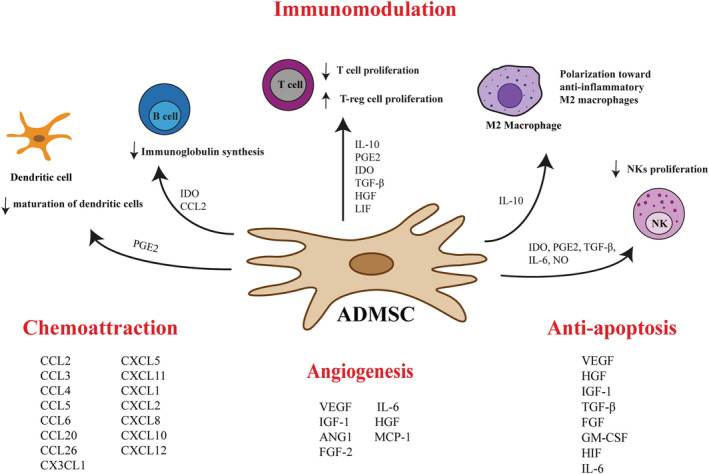
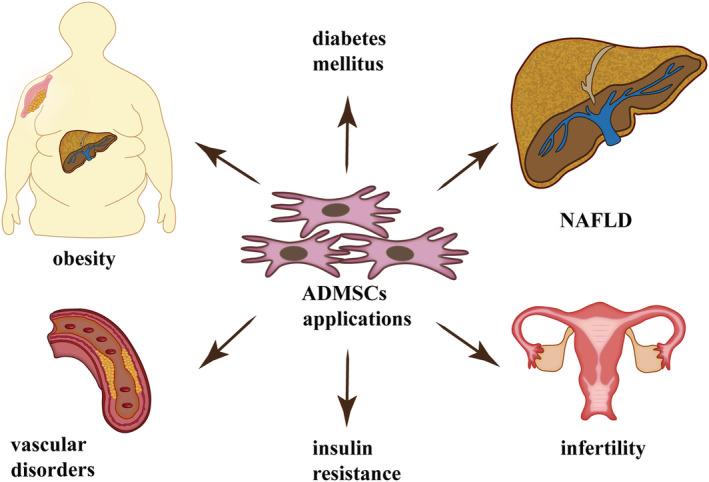
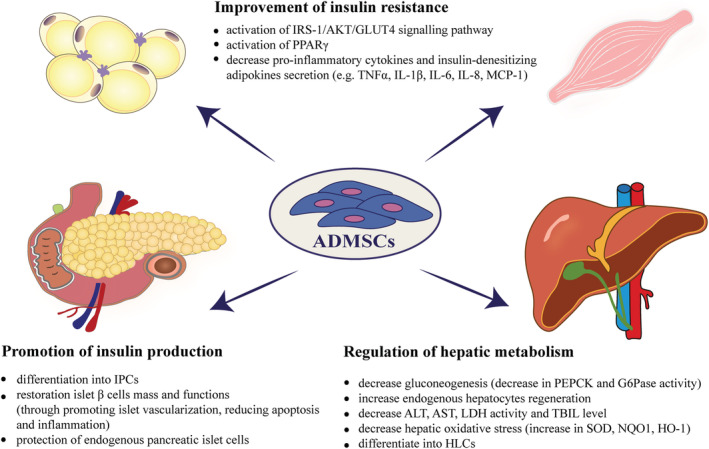
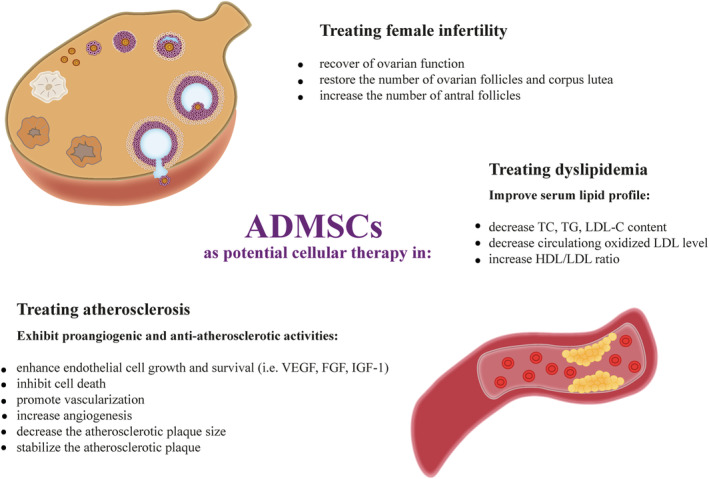
Obesity is a critical risk factor for the development of metabolic diseases, and its prevalence is increasing worldwide. Stem cell-based therapies have become a promising tool for therapeutic intervention. Among them are adipose-derived mesenchymal stem cells (ADMSCs), secreting numerous bioactive molecules, like growth factors, cytokines, and chemokines. Their unique features, including immunosuppressive and immunomodulatory properties, make them an ideal candidates for clinical applications. Numerous experimental studies have shown that ADMSCs can improve pancreatic islet cell viability and function, ameliorate hyperglycemia, improve insulin sensitivity, restore liver function, counteract dyslipidemia, lower pro-inflammatory cytokines, and reduce oxidative stress in the animal models. These results prompted scientists to use ADMSCs clinically. However, up to date, there have been few clinical studies or ongoing trails using ADMSCs to treat metabolic disorders such as type 2 diabetes mellitus (T2DM) or liver cirrhosis. Most human studies have implemented autologous ADMSCs with minimal risk of cellular rejection. Because the functionality of ADMSCs is significantly reduced in subjects with obesity and/or metabolic syndrome, their efficacy is questioned. ADMSCs transplantation may offer a potential therapeutic approach for the treatment of metabolic complications of obesity, but randomized controlled trials are required to establish their safety and efficacy in humans prior to routine clinical use.
肥胖是代谢性疾病发展的关键危险因素,其患病率在全球范围内呈上升趋势。基于干细胞的疗法已成为治疗干预的一种有前途的手段。其中包括脂肪来源的间充质干细胞(ADMSCs),它们分泌许多生物活性分子,如生长因子、细胞因子和趋化因子。它们独特的特性,包括免疫抑制和免疫调节特性,使它们成为临床应用的理想候选者。大量的实验研究表明,ADMSCs 可以提高胰岛细胞的活力和功能,改善高血糖,提高胰岛素敏感性,恢复肝功能,对抗血脂异常,降低促炎细胞因子,并减轻动物模型中的氧化应激。这些结果促使科学家将 ADMSCs 用于临床。然而,迄今为止,使用 ADMSCs 治疗 2 型糖尿病(T2DM)或肝硬化等代谢紊乱的临床研究或正在进行的试验很少。大多数人类研究都采用了自体 ADMSCs,细胞排斥的风险最小。由于肥胖和/或代谢综合征患者的 ADMSCs 功能显著降低,其疗效受到质疑。ADMSCs 移植可能为肥胖代谢并发症的治疗提供一种潜在的治疗方法,但需要进行随机对照试验,以确定其在人类中的安全性和疗效,然后才能常规临床应用。