Szychowiak Piotr, Villageois-Tran Khanh, Patrier Juliette, Timsit Jean-François, Ruppé Étienne
Université de Paris, IAME, INSERM, 75018, Paris, France.
Service de Médecine Intensive-Réanimation, Centre Hospitalier Régional Universitaire de Tours, 37000, Tours, France.
Ann Intensive Care. 2022 Jan 5;12(1):3. doi: 10.1186/s13613-021-00976-5.
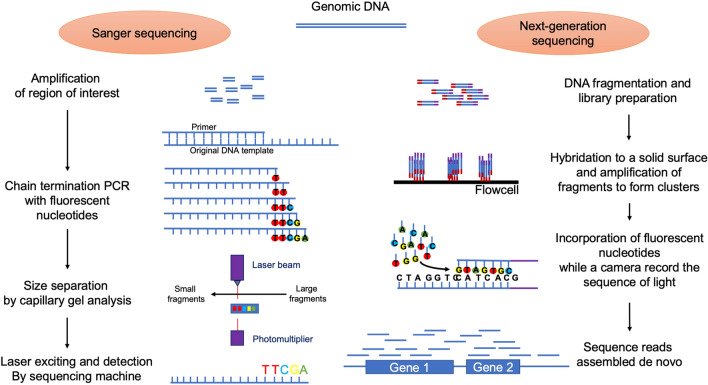
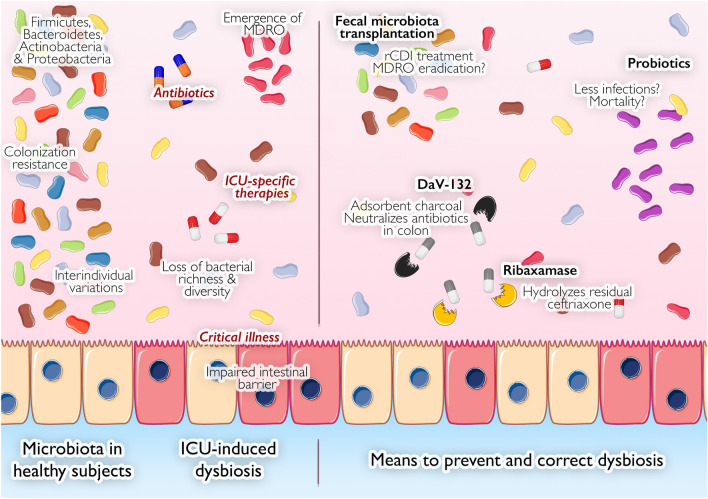
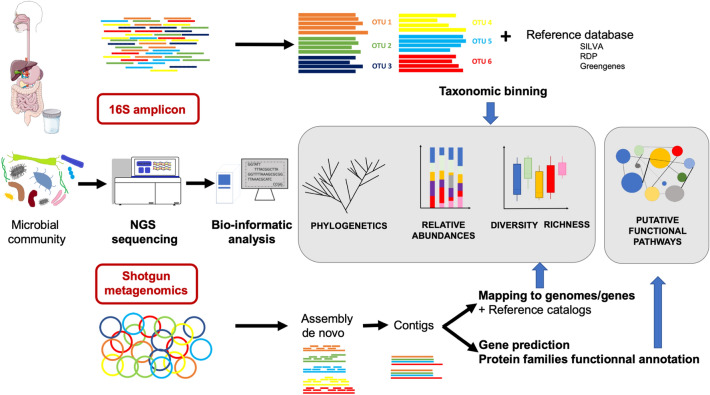
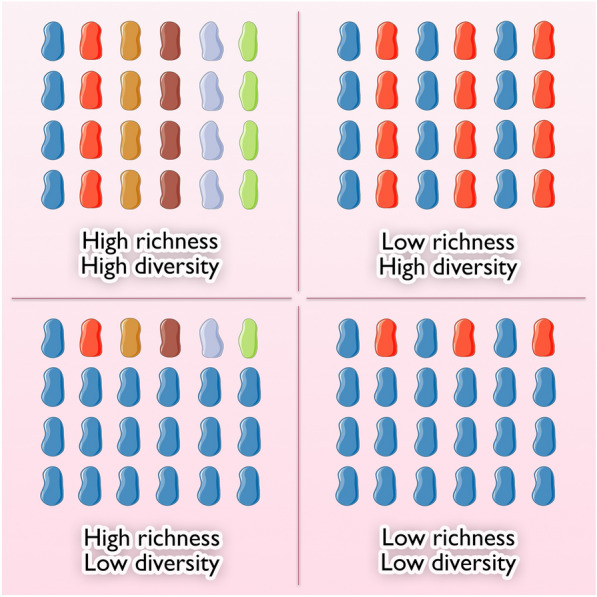
The composition of the gut microbiota is highly dynamic and changes according to various conditions. The gut microbiota mainly includes difficult-to-cultivate anaerobic bacteria, hence knowledge about its composition has significantly arisen from culture-independent methods based on next-generation sequencing (NGS) such as 16S profiling and shotgun metagenomics. The gut microbiota of patients hospitalized in intensive care units (ICU) undergoes many alterations because of critical illness, antibiotics, and other ICU-specific medications. It is then characterized by lower richness and diversity, and dominated by opportunistic pathogens such as Clostridioides difficile and multidrug-resistant bacteria. These alterations are associated with an increased risk of infectious complications or death. Specifically, at the time of writing, it appears possible to identify distinct microbiota patterns associated with severity or infectivity in COVID-19 patients, paving the way for the potential use of dysbiosis markers to predict patient outcomes. Correcting the microbiota disturbances to avoid their consequences is now possible. Fecal microbiota transplantation is recommended in recurrent C. difficile infections and microbiota-protecting treatments such as antibiotic inactivators are currently being developed. The growing interest in the microbiota and microbiota-associated therapies suggests that the control of the dysbiosis could be a key factor in the management of critically ill patients. The present narrative review aims to provide a synthetic overview of microbiota, from healthy individuals to critically ill patients. After an introduction to the different techniques used for studying the microbiota, we review the determinants involved in the alteration of the microbiota in ICU patients and the latter's consequences. Last, we assess the means to prevent or correct microbiota alteration.
肠道微生物群的组成具有高度动态性,并会根据各种条件发生变化。肠道微生物群主要包括难以培养的厌氧菌,因此,关于其组成的知识主要来自基于下一代测序(NGS)的非培养方法,如16S基因测序分析和鸟枪法宏基因组学。由于危重病、抗生素和其他重症监护病房(ICU)特有的药物,入住ICU的患者的肠道微生物群会发生许多改变。其特征是丰度和多样性较低,以艰难梭菌等机会性病原体和多重耐药菌为主。这些改变与感染性并发症或死亡风险增加相关。具体而言,在撰写本文时,似乎有可能识别出与COVID-19患者的严重程度或传染性相关的不同微生物群模式,为利用生态失调标志物预测患者预后铺平了道路。现在有可能纠正微生物群紊乱以避免其后果。对于复发性艰难梭菌感染,推荐进行粪便微生物群移植,目前正在开发如抗生素灭活剂等保护微生物群的治疗方法。对微生物群和微生物群相关疗法的兴趣日益浓厚,这表明控制生态失调可能是危重症患者管理的关键因素。本叙述性综述旨在对从健康个体到危重症患者的微生物群进行综合概述。在介绍了用于研究微生物群的不同技术后,我们回顾了ICU患者微生物群改变的相关决定因素及其后果。最后,我们评估预防或纠正微生物群改变的方法。