School of Engineering, Brown University, Providence, Rhode Island, United States of America.
Beetham Eye Institute, Joslin Diabetes Center, Boston, Massachusetts, United States of America.
PLoS Comput Biol. 2022 Jan 5;18(1):e1009728. doi: 10.1371/journal.pcbi.1009728. eCollection 2022 Jan.
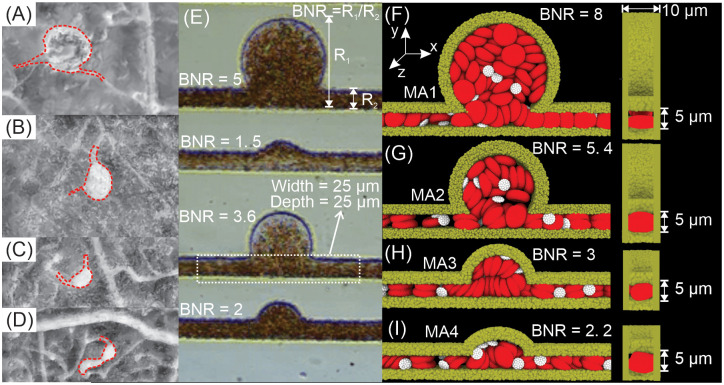
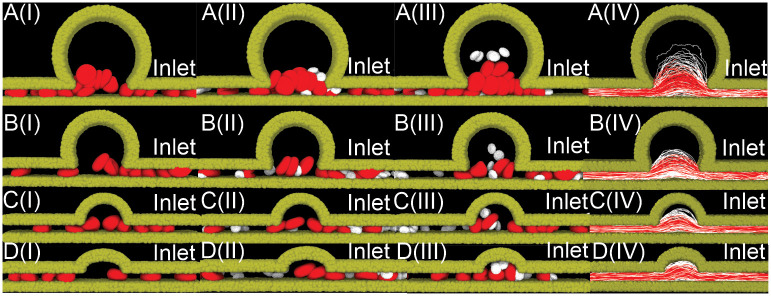
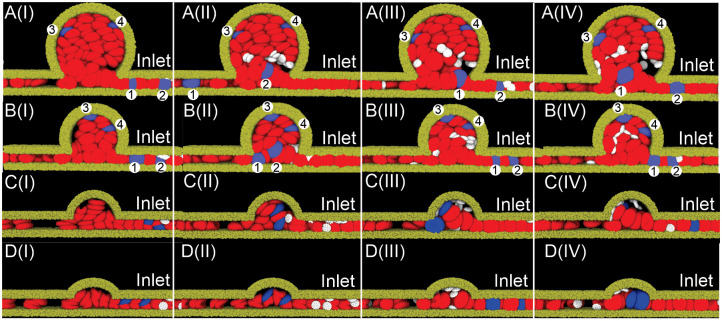
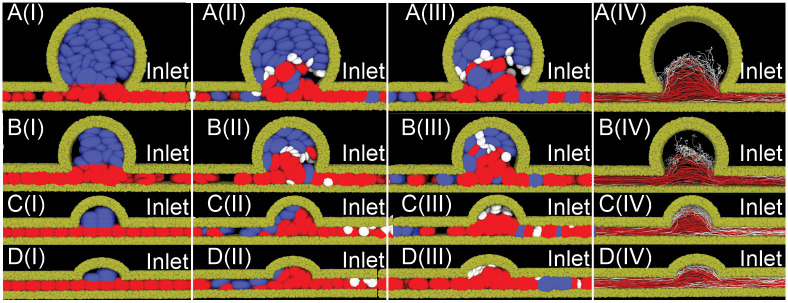
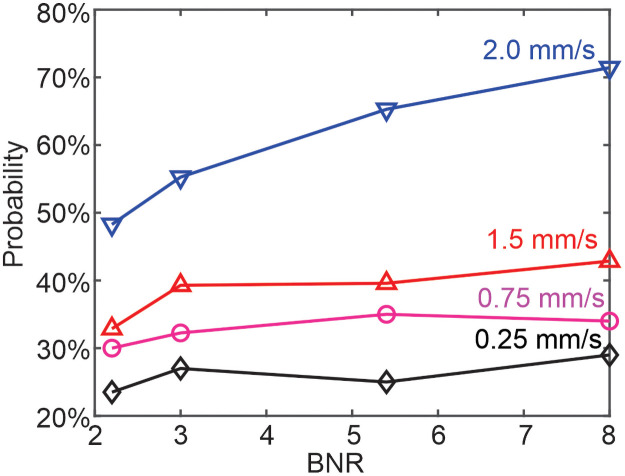
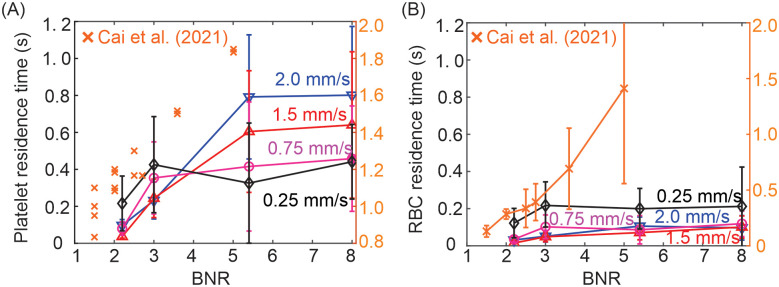
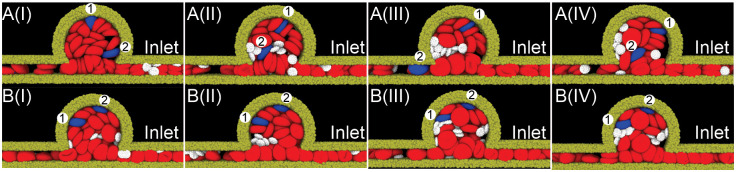
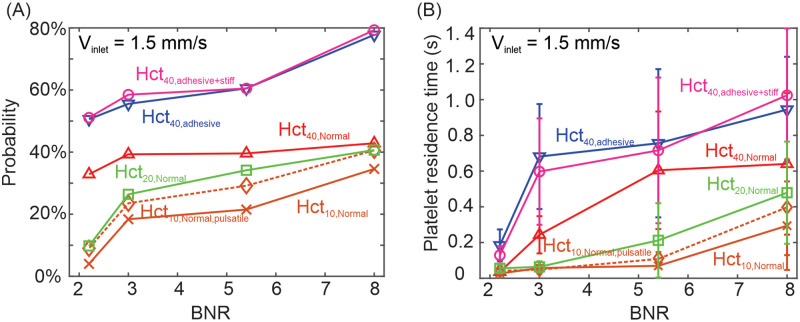
Microaneurysms (MAs) are one of the earliest clinically visible signs of diabetic retinopathy (DR). MA leakage or rupture may precipitate local pathology in the surrounding neural retina that impacts visual function. Thrombosis in MAs may affect their turnover time, an indicator associated with visual and anatomic outcomes in the diabetic eyes. In this work, we perform computational modeling of blood flow in microchannels containing various MAs to investigate the pathologies of MAs in DR. The particle-based model employed in this study can explicitly represent red blood cells (RBCs) and platelets as well as their interaction in the blood flow, a process that is very difficult to observe in vivo. Our simulations illustrate that while the main blood flow from the parent vessels can perfuse the entire lumen of MAs with small body-to-neck ratio (BNR), it can only perfuse part of the lumen in MAs with large BNR, particularly at a low hematocrit level, leading to possible hypoxic conditions inside MAs. We also quantify the impacts of the size of MAs, blood flow velocity, hematocrit and RBC stiffness and adhesion on the likelihood of platelets entering MAs as well as their residence time inside, two factors that are thought to be associated with thrombus formation in MAs. Our results show that enlarged MA size, increased blood velocity and hematocrit in the parent vessel of MAs as well as the RBC-RBC adhesion promote the migration of platelets into MAs and also prolong their residence time, thereby increasing the propensity of thrombosis within MAs. Overall, our work suggests that computational simulations using particle-based models can help to understand the microvascular pathology pertaining to MAs in DR and provide insights to stimulate and steer new experimental and computational studies in this area.
微动脉瘤 (MAs) 是糖尿病视网膜病变 (DR) 最早出现的临床可见迹象之一。MA 渗漏或破裂可能会引发周围神经视网膜的局部病变,从而影响视觉功能。MA 中的血栓形成可能会影响其周转时间,这是与糖尿病眼中视觉和解剖结果相关的一个指标。在这项工作中,我们对含有各种 MA 的微通道中的血流进行计算建模,以研究 DR 中 MA 的病理学。本研究中采用的基于粒子的模型可以明确表示红细胞 (RBC) 和血小板及其在血流中的相互作用,这是在体内非常难以观察到的过程。我们的模拟表明,虽然来自母血管的主要血流可以用小体颈比 (BNR) 灌注整个 MA 管腔,但在 BNR 较大的 MA 中,它只能灌注管腔的一部分,特别是在低血细胞比容水平下,导致 MA 内部可能出现缺氧状态。我们还定量评估了 MA 的大小、血流速度、血细胞比容和 RBC 刚性和粘附对血小板进入 MA 以及它们在 MA 内停留时间的可能性的影响,这两个因素被认为与 MA 中的血栓形成有关。我们的结果表明,MA 尺寸增大、MA 母血管中的血流速度和血细胞比容增加以及 RBC-RBC 粘附促进了血小板向 MA 的迁移,并延长了它们在 MA 内的停留时间,从而增加了 MA 内血栓形成的倾向。总体而言,我们的工作表明,使用基于粒子的模型进行计算模拟可以帮助理解与 DR 中 MA 相关的微血管病理学,并提供见解来刺激和引导该领域的新实验和计算研究。