Population Health and Optimal Health Practices Axis, 36896CHU de Québec-Université Laval Research Centre, Québec, QC, Canada.
Department of Social and Preventive Medicine, 4440Université Laval, Québec, QC, Canada.
Transcult Psychiatry. 2022 Jun;59(3):312-336. doi: 10.1177/13634615211066698. Epub 2022 Jan 6.
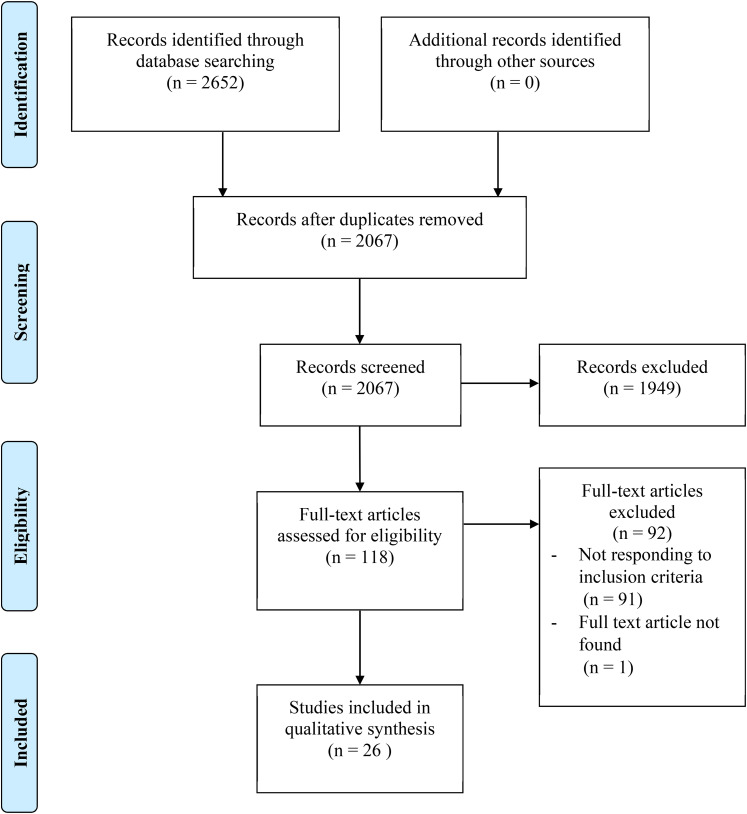
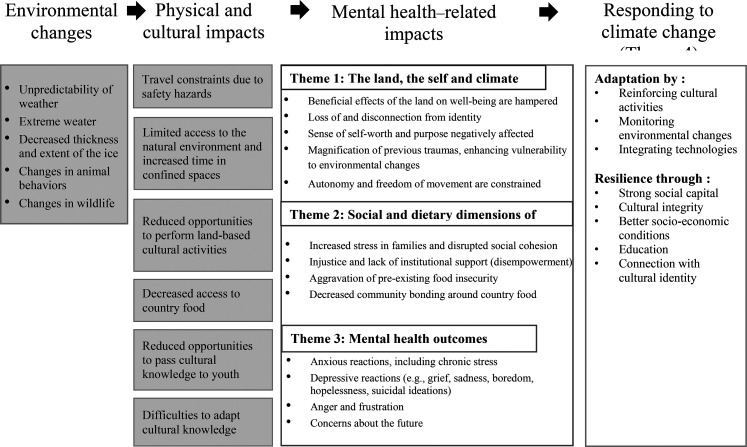
Climate change is disproportionally impacting the Circumpolar North, with particular impacts among Indigenous populations. Environmental changes are felt in many aspects of daily life of Northern communities, including both physical and mental health. Thus, health institutions from around the Arctic must meet emerging needs, while the phenomenon remains marginal to their southern counterparts. In this systematic review, we aimed to review current scientific knowledge on the mental health impacts of climate change in Indigenous Peoples across the Circumpolar North. Seven databases were searched. Original peer-reviewed research articles were included if they addressed links between climate change and mental health in Arctic or Subarctic Indigenous Populations. After extraction, data were synthesized using thematic analysis. Of the 26 articles that met inclusion criteria, 16 focused on Canadian Inuit communities and 21 were exclusively qualitative. Being on the land was identified as a central determinant of wellbeing. Immediate impacts of climate change on mental health were felt through restricted mobility and disrupted livelihoods. Effects on mental health were further felt through changes in culture and identity, food insecurity, interpersonal stress and conflicts, and housing problems. Various ways in how communities and individuals are coping with these effects were reported. Understanding climate-related pathways of mental health risks in the Arctic is crucial to better identify vulnerable groups and to foster resilience. Clinicians can play a role in recognizing and providing support for patients affected by these disruptions. Policies sensitive to the climate-mental health relationship must be advocated for.
气候变化对环北极地区的影响不成比例,对原住民群体的影响尤其严重。环境变化在北极社区的日常生活的许多方面都能感受到,包括身心健康。因此,来自北极地区的卫生机构必须满足新出现的需求,而这一现象在他们的南方同行中仍然处于边缘地位。在这项系统评价中,我们旨在回顾当前关于气候变化对环北极地区原住民心理健康影响的科学知识。我们搜索了七个数据库。如果原始同行评审的研究文章涉及北极或亚北极原住民群体中气候变化与心理健康之间的联系,则将其纳入。在提取后,我们使用主题分析对数据进行了综合分析。在符合纳入标准的 26 篇文章中,有 16 篇关注加拿大因纽特社区,21 篇则完全是定性的。生活在陆地上被确定为幸福的核心决定因素。气候变化对心理健康的直接影响是通过限制流动性和破坏生计来感受到的。文化和身份的变化、粮食不安全、人际压力和冲突以及住房问题进一步影响了心理健康。报告了社区和个人应对这些影响的各种方式。了解北极地区与气候相关的心理健康风险途径对于更好地确定弱势群体和培养韧性至关重要。临床医生可以在识别和为受这些干扰影响的患者提供支持方面发挥作用。必须倡导制定对气候-心理健康关系敏感的政策。