MGH Institute of Health Professions School of Nursing, 36 1st Avenue, Boston, MA 02129, US.
SFPE Foundation, 9711 Washingtonian Blvd, Gaithersburg, MD 20878, US.
Ann Glob Health. 2023 Oct 6;89(1):66. doi: 10.5334/aogh.4105. eCollection 2023.
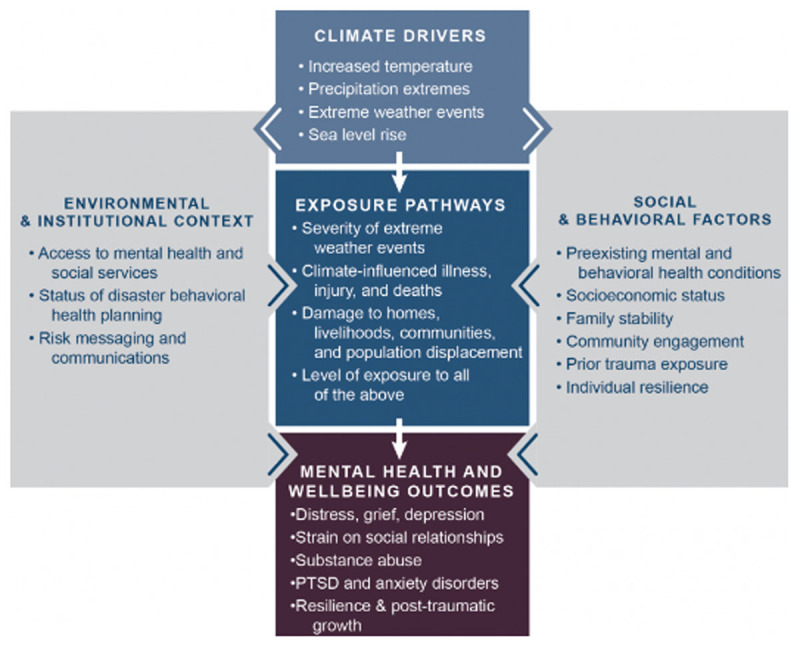
Climate change has been shown to be directly linked to multiple physiological sequelae and to impact health consequences. However, the impact of climate change on mental health globally, particularly among vulnerable populations, is less well understood.
To explore the mental health impacts of climate change in vulnerable populations globally.
We performed an integrative literature review to identify published articles that addressed the research question: The Vulnerable Populations Conceptual Model served as a theoretical model during the review process and data synthesis.
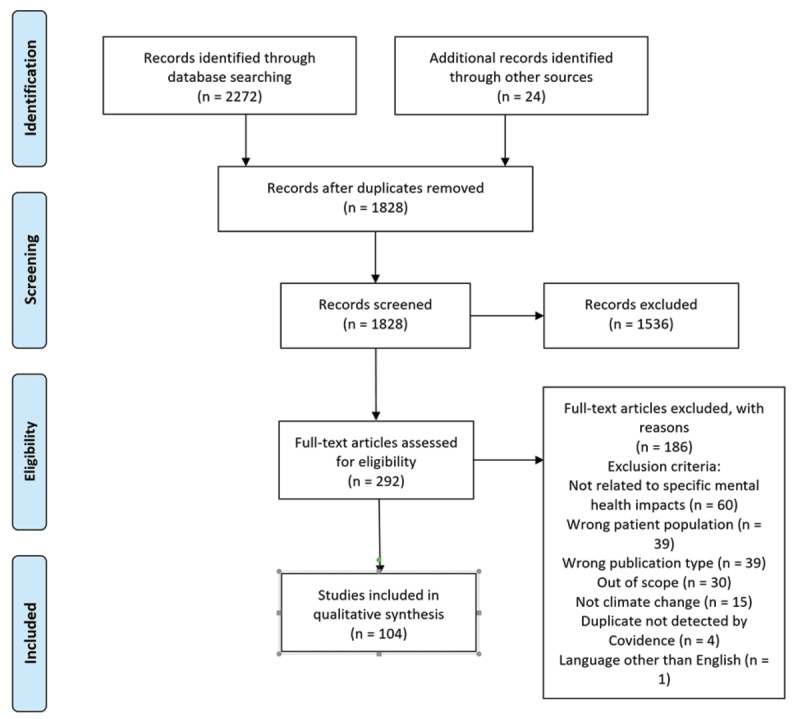
FINDINGS/RESULTS: One hundred and four articles were selected for inclusion in this review after a comprehensive review of 1828 manuscripts. Articles were diverse in scope and populations addressed. Land-vulnerable persons (either due to occupation or geographic location), Indigenous persons, children, older adults, and climate migrants were among the vulnerable populations whose mental health was most impacted by climate change. The most prevalent mental health responses to climate change included solastalgia, suicidality, depression, anxiety/eco-anxiety, PTSD, substance use, insomnia, and behavioral disturbance.
Mental health professionals including physicians, nurses, physician assistants and other healthcare providers have the opportunity to mitigate the mental health impacts of climate change among vulnerable populations through assessment, preventative education and care. An inclusive and trauma-informed response to climate-related disasters, use of validated measures of mental health, and a long-term therapeutic relationship that extends beyond the immediate consequences of climate change-related events are approaches to successful mental health care in a climate-changing world.
气候变化已被证明与多种生理后果直接相关,并对健康后果产生影响。然而,气候变化对全球脆弱人群心理健康的影响还不太清楚。
探讨气候变化对全球脆弱人群心理健康的影响。
我们进行了综合文献综述,以确定发表的文章,这些文章解决了研究问题:脆弱人群概念模型在审查过程和数据综合中作为理论模型。
结果/发现:在全面审查了 1828 篇手稿后,选择了 104 篇文章纳入本综述。文章的范围和涉及的人群各不相同。土地脆弱人群(由于职业或地理位置)、土著人民、儿童、老年人和气候移民是受气候变化对心理健康影响最大的脆弱人群之一。对气候变化最常见的心理健康反应包括思乡症、自杀意念、抑郁、焦虑/生态焦虑、创伤后应激障碍、物质使用、失眠和行为障碍。
包括医生、护士、医师助理和其他医疗保健提供者在内的心理健康专业人员有机会通过评估、预防教育和护理来减轻脆弱人群中气候变化对心理健康的影响。对与气候相关的灾害采取包容和创伤知情的应对措施,使用经过验证的心理健康衡量标准,以及建立长期的治疗关系,超越与气候变化相关事件的直接后果,这些都是在气候变化的世界中进行成功心理健康护理的方法。