Senior Department of Cardiology, The Sixth Medical Center, Chinese PLA General Hospital and Chinese PLA Medical School, Beijing, 100853, China.
Department of Geriatrics, The Second Medical Center, Chinese PLA General Hospital, Beijing, 100853, China.
Cardiovasc Diabetol. 2022 Jan 6;21(1):3. doi: 10.1186/s12933-021-01443-y.
With the advancement of the world population aging, more attention should be paid to the prognosis of elderly patients with acute coronary syndrome (ACS). Triglyceride-glucose (TyG) index is a reliable indicator of insulin resistance (IR) and is closely related to traditional risk factors of cardiovascular disease (CVD). However, the effect of TyG index on the prognosis of long-term adverse events in elderly ACS patients has not been reported. This study evaluated the prognostic power of TyG index in predicting adverse events in elderly ACS patients.
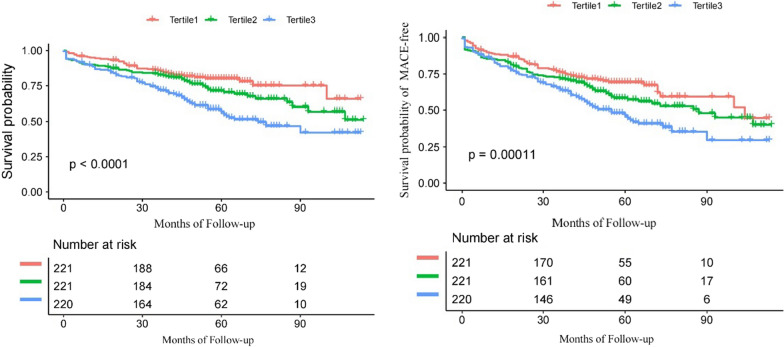
In this study, 662 ACS patients > 80 years old who were hospitalized from January 2006 to December 2012 were enrolled consecutively and the general clinical data and baseline blood biochemical indicators were collected. The follow-up time after discharge was 40-120 months (median, 63 months; interquartile range, 51‒74 months). In addition, the following formula was used to calculate the TyG index: Ln [fasting TG (mg/dL) × FBG (mg/dL)/2], and patients were divided into three groups according to the tertile of the TyG index.
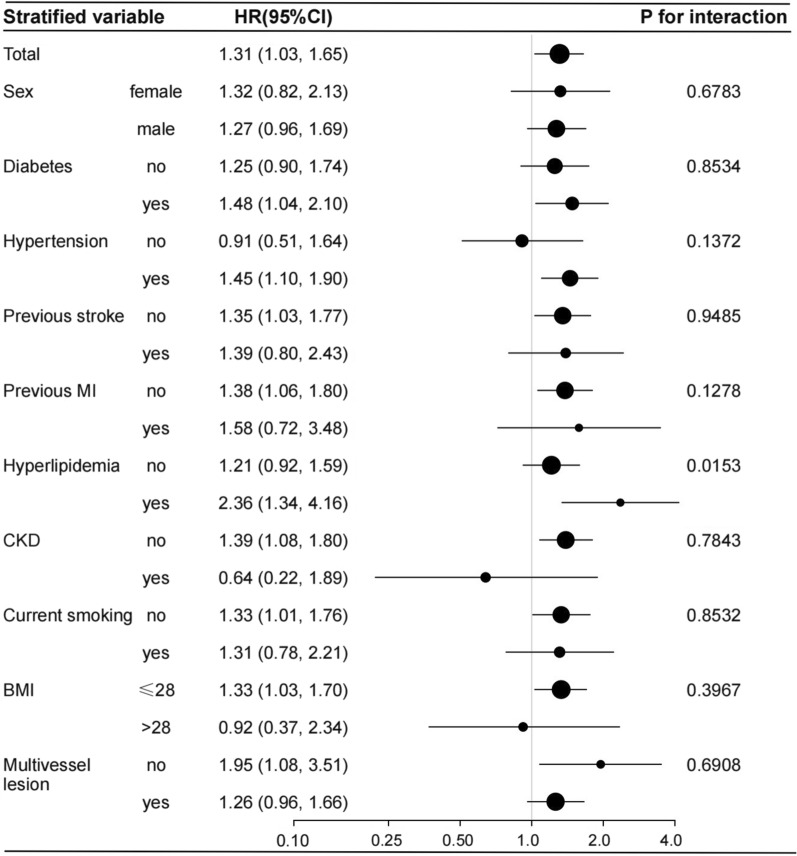
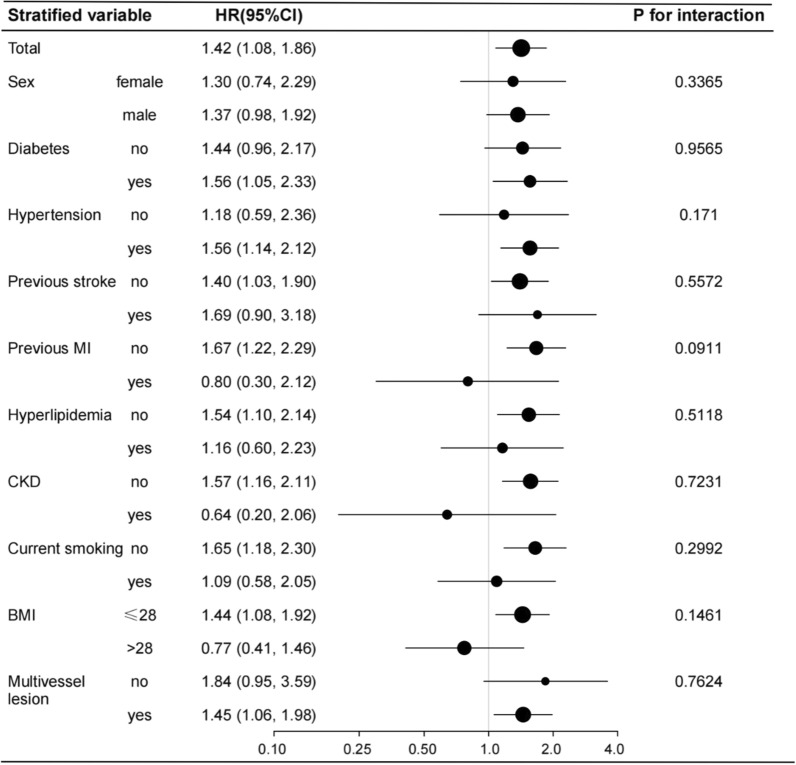
The mean age of the subjects was 81.87 ± 2.14 years, the proportion of females was 28.10%, and the mean TyG index was 8.76 ± 0.72. The TyG index was closely associated with the traditional risk factors of CVD. In the fully-adjusted Cox regression model, the Hazard ratio (95% CI) of all-cause mortality (in tertile 3) was 1.64 (1.06, 2.54) and major adverse cardiac event (MACE) (in tertile 3) was 1.36 (1.05, 1.95) for each SD increase in the TyG index. The subgroup analyses also confirmed the significant association of the TyG index and long-term prognosis.
The TyG index is an independent predictor of long-term all-cause mortality and MACE in elderly ACS patients.
随着世界人口老龄化的推进,人们应该更加关注老年急性冠状动脉综合征(ACS)患者的预后。三酰甘油-葡萄糖(TyG)指数是胰岛素抵抗(IR)的可靠指标,与心血管疾病(CVD)的传统危险因素密切相关。然而,TyG 指数对老年 ACS 患者长期不良事件预后的影响尚未有报道。本研究旨在评估 TyG 指数对预测老年 ACS 患者不良事件的预后价值。
本研究连续纳入了 2006 年 1 月至 2012 年 12 月期间住院的 662 例年龄>80 岁的 ACS 患者,收集了一般临床数据和基线血液生化指标。出院后随访时间为 40-120 个月(中位数,63 个月;四分位间距,51-74 个月)。此外,采用以下公式计算 TyG 指数:Ln[空腹三酰甘油(mg/dL)×空腹血糖(mg/dL)/2],并根据 TyG 指数的三分位数将患者分为三组。
受试者的平均年龄为 81.87±2.14 岁,女性比例为 28.10%,平均 TyG 指数为 8.76±0.72。TyG 指数与 CVD 的传统危险因素密切相关。在完全调整的 Cox 回归模型中,TyG 指数每增加 1 个标准差,全因死亡率(三分位 3 组)的危险比(95%CI)为 1.64(1.06,2.54),主要不良心脏事件(MACE)(三分位 3 组)为 1.36(1.05,1.95)。亚组分析也证实了 TyG 指数与长期预后的显著相关性。
TyG 指数是老年 ACS 患者长期全因死亡率和 MACE 的独立预测因子。