Key Laboratory of Southern Subtropical Plant Diversity, Fairy Lake Botanical Garden, Shenzhen & Chinese Academy of Sciences, Shenzhen, 518004, China.
State Key Laboratory of Agricultural Genomics, BGI-Shenzhen, Shenzhen, 518083, China.
New Phytol. 2022 Apr;234(1):295-310. doi: 10.1111/nph.17949. Epub 2022 Feb 9.
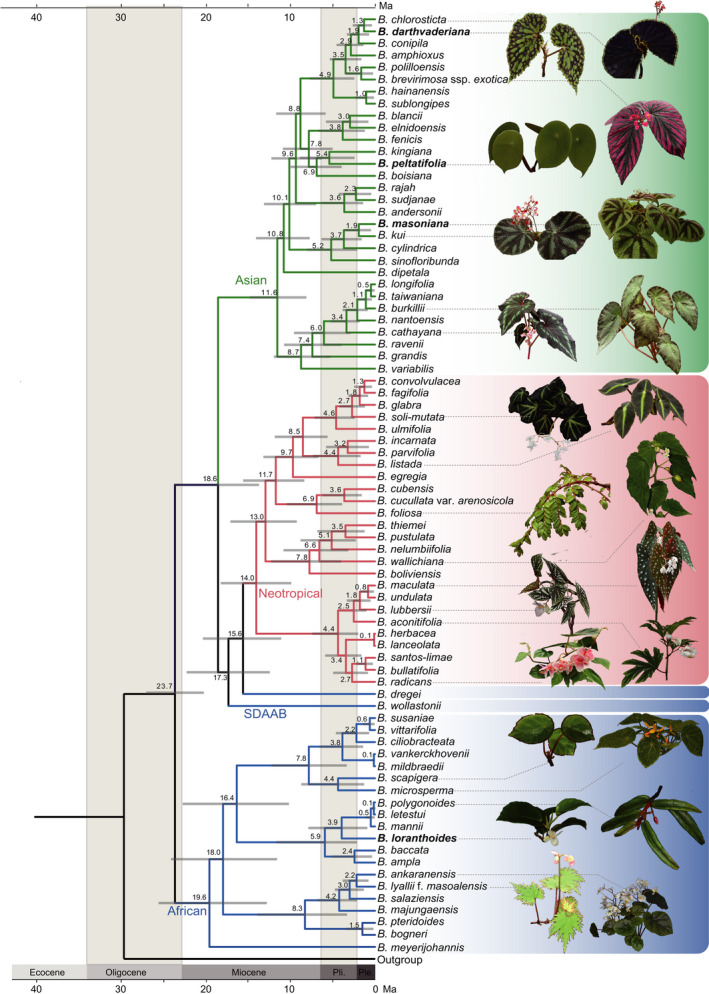
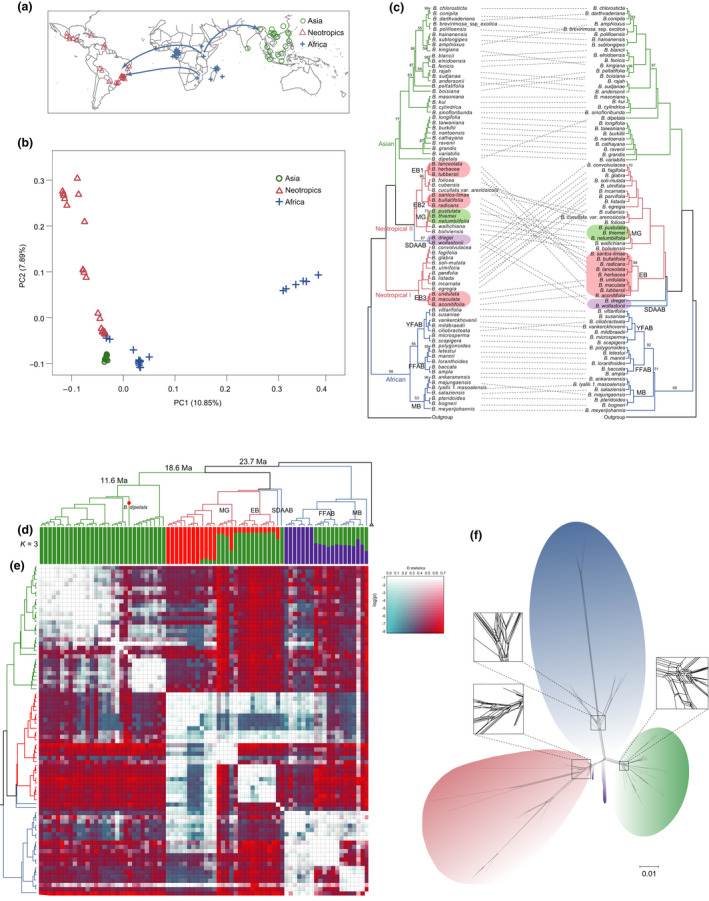
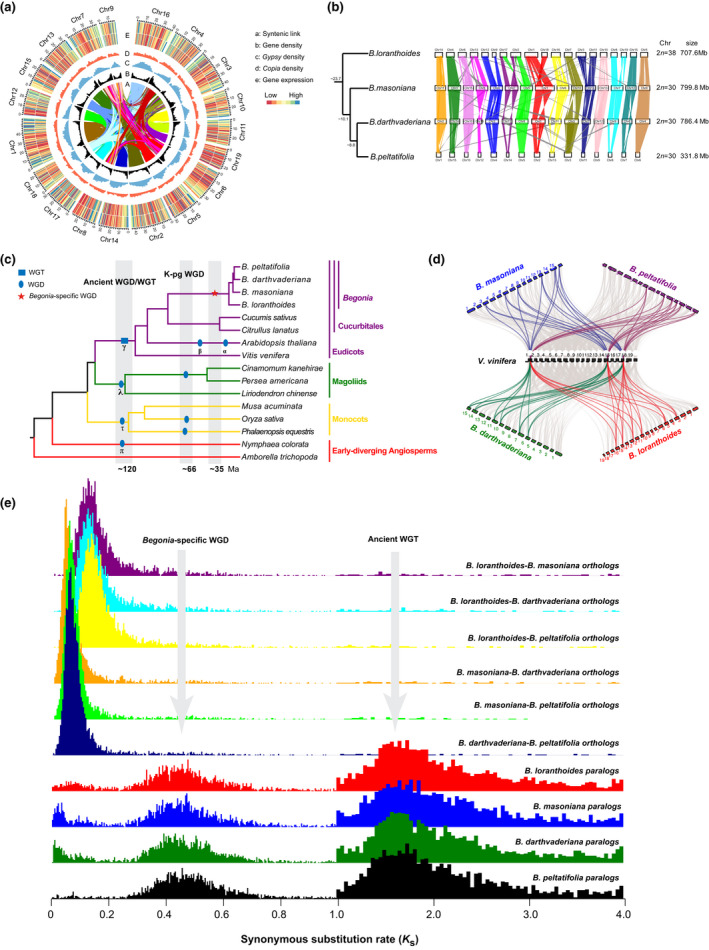
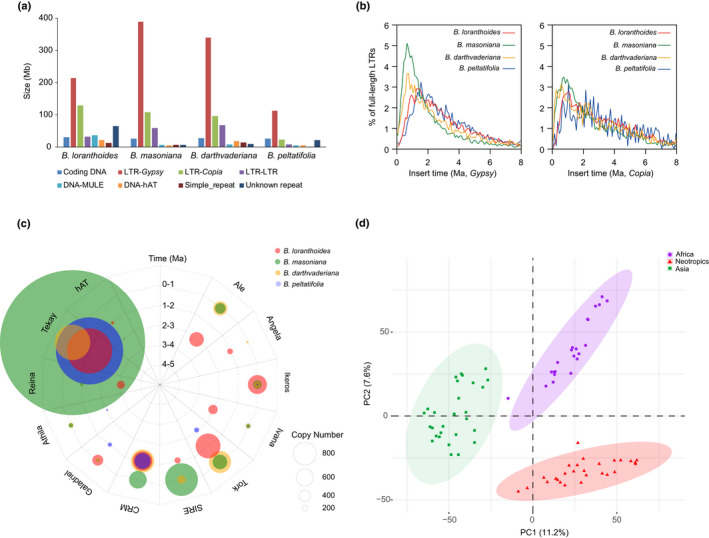
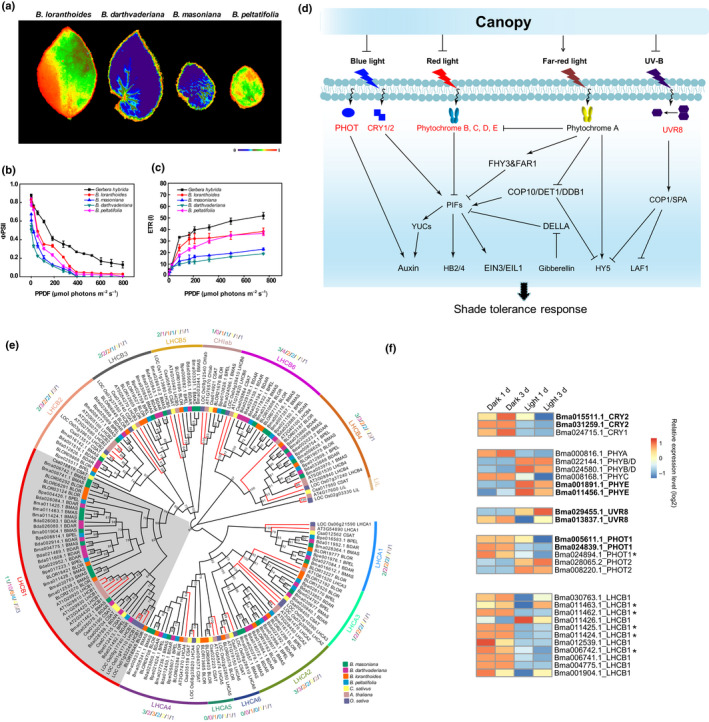
Clarifying the evolutionary processes underlying species diversification and adaptation is a key focus of evolutionary biology. Begonia (Begoniaceae) is one of the most species-rich angiosperm genera with c. 2000 species, most of which are shade-adapted. Here, we present chromosome-scale genome assemblies for four species of Begonia (B. loranthoides, B. masoniana, B. darthvaderiana and B. peltatifolia), and whole genome shotgun data for an additional 74 Begonia representatives to investigate lineage evolution and shade adaptation of the genus. The four genome assemblies range in size from 331.75 Mb (B. peltatifolia) to 799.83 Mb (B. masoniana), and harbor 22 059-23 444 protein-coding genes. Synteny analysis revealed a lineage-specific whole-genome duplication (WGD) that occurred just before the diversification of Begonia. Functional enrichment of gene families retained after WGD highlights the significance of modified carbohydrate metabolism and photosynthesis possibly linked to shade adaptation in the genus, which is further supported by expansions of gene families involved in light perception and harvesting. Phylogenomic reconstructions and genomics studies indicate that genomic introgression has also played a role in the evolution of Begonia. Overall, this study provides valuable genomic resources for Begonia and suggests potential drivers underlying the diversity and adaptive evolution of this mega-diverse clade.
阐明物种多样化和适应的进化过程是进化生物学的一个主要焦点。秋海棠属(秋海棠科)是被子植物中物种最丰富的属之一,约有 2000 个种,其中大多数是适应阴凉环境的。在这里,我们为四个秋海棠物种(三叶秋海棠、滇南秋海棠、大武斗秋海棠和美丽秋海棠)提供了染色体水平的基因组组装,以及另外 74 个秋海棠代表物种的全基因组鸟枪法数据,以研究该属的谱系进化和阴凉适应。这四个基因组组装的大小从 331.75Mb(美丽秋海棠)到 799.83Mb(滇南秋海棠)不等,共包含 22059-23444 个蛋白质编码基因。共线性分析显示,在秋海棠分化之前发生了一次谱系特异性的全基因组复制(WGD)。WGD 后保留的基因家族的功能富集突出了碳水化合物代谢和光合作用的修饰可能与该属的阴凉适应有关,这进一步得到了参与光感知和捕获的基因家族扩张的支持。系统发育重建和基因组学研究表明,基因组的基因渗入也在秋海棠的进化中发挥了作用。总的来说,这项研究为秋海棠提供了有价值的基因组资源,并为该巨型多样化分支的多样性和适应性进化提供了潜在的驱动力。