National Institute on Minority Health and Health Disparities, National Institutes of Health, 9000 Rockville Pike, Building 3, Floor 5, Room E08, Bethesda, MD, 20892, USA.
Division of General Internal Medicine, Department of Medicine, University of California San Francisco (UCSF), 3333 California St., Suite 335, San Francisco, CA, 94143-0856, USA.
Trials. 2022 Jan 8;23(1):25. doi: 10.1186/s13063-021-05945-8.
An often heard and justifiable concern of ethnic minorities is related to researchers' lack of attention to sharing the results of a study with participants after the study has concluded. Few studies have examined the effects of returning overall study results on participants' attitudes, especially among populations underrepresented in research. Among Latina research participants, providing a summary of study results could enhance participation in research. We assess Latina breast cancer survivors' reactions to receiving study results and their attitudes about participating in future studies.
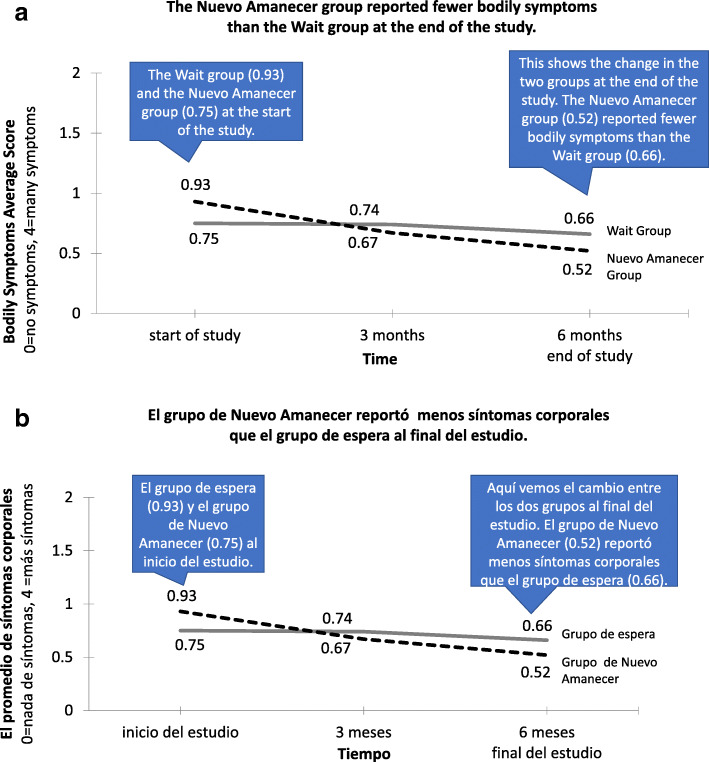
For this cross-sectional survey study, all women who had participated in two behavioral randomized controlled trials (RCTs) were mailed a letter summarizing the study results (using written and graphic formats) and a questionnaire assessing problems and understanding the results, importance of sharing results, willingness to participate in future studies, and format preferences for receiving the results. A postage-paid envelope for returning the completed questionnaire was included. Logistic regression examined the associations of age, education, and rural/urban residence on format preferences and willingness to participate. The survey sample consisted of 304 low-income, predominantly Spanish-speaking Latina breast cancer survivors (151 from urban and 153 from rural communities) who had participated in two RCTs testing a stress management program designed for Latina breast cancer survivors.
Ninety-two women returned the questionnaires (30.3%). Most of the women (91.1%) indicated that they had no trouble understanding the results of the study, and 97% agreed that it is very/extremely important for researchers to share the study result with the participants. The majority (60.2%) reported that receiving the results increased their willingness to participate in future studies. About half (51.7%) did not have a format preference, 37.4% preferred written summaries, and 10.9% preferred graphs.
This study is an important first step to understanding the impact of returning study results among a population that is underrepresented in research. Returning the results of studies and understanding the impact of doing so is consistent with maintaining community involvement in all phases of research. The findings suggest that sharing aggregate research results in simple language yields few problems in participants' understanding of the results and is viewed as important by participants.
ClinicalTrials.gov NCT02931552 Date registered: October 13, 2016 and NCT01383174 Date registered: June 28, 2011.
少数民族经常听到并认为合理的一个担忧是,研究人员在研究结束后没有注意与参与者分享研究结果。很少有研究调查过将研究的总体结果返还给参与者对参与者态度的影响,尤其是在研究中代表性不足的人群中。在拉丁裔研究参与者中,提供研究结果摘要可以增强他们参与研究的意愿。我们评估了拉丁裔乳腺癌幸存者对收到研究结果的反应以及他们对参与未来研究的态度。
在这项横断面调查研究中,所有参加过两项行为随机对照试验(RCT)的女性都收到了一封总结研究结果的信(使用书面和图表格式)以及一份调查问卷,评估她们对研究结果的理解和问题、分享研究结果的重要性、参与未来研究的意愿以及对接收结果的格式偏好。还包括一个用于退回已完成问卷的邮资已付信封。逻辑回归分析了年龄、教育程度和城乡居住对格式偏好和参与意愿的影响。调查样本由 304 名低收入、以西班牙语为主的拉丁裔乳腺癌幸存者(城市 151 名,农村 153 名)组成,她们参加了两项 RCT,测试了为拉丁裔乳腺癌幸存者设计的应激管理方案。
92 名女性返回了问卷(30.3%)。大多数女性(91.1%)表示她们理解研究结果没有困难,97%的女性同意研究人员与参与者分享研究结果非常/极其重要。大多数(60.2%)人表示收到结果后增加了参与未来研究的意愿。约一半(51.7%)的人没有格式偏好,37.4%的人更喜欢书面摘要,10.9%的人更喜欢图表。
这项研究是了解在研究中代表性不足的人群中返还研究结果的影响的重要的第一步。返回研究结果并了解这样做的影响符合在研究的所有阶段保持社区参与的原则。研究结果表明,用简单的语言分享汇总研究结果很少会导致参与者对结果的理解出现问题,并且被参与者视为重要。
ClinicalTrials.gov NCT02931552 注册日期:2016 年 10 月 13 日和 NCT01383174 注册日期:2011 年 6 月 28 日。