Institute of Stem Cell and Translational Cancer Research, Chang Gung Memorial Hospital at Linkou, Taoyuan, Taiwan.
Department of Anatomic Pathology, Chang Gung Memorial Hospital at Linkou, Taoyuan, Taiwan.
Oncogene. 2022 Feb;41(8):1155-1165. doi: 10.1038/s41388-021-02138-0. Epub 2022 Jan 9.
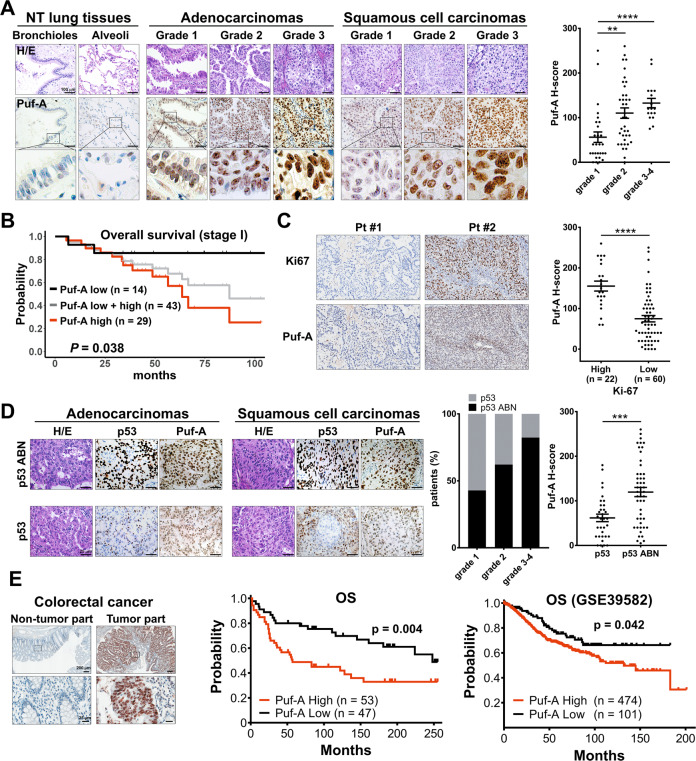
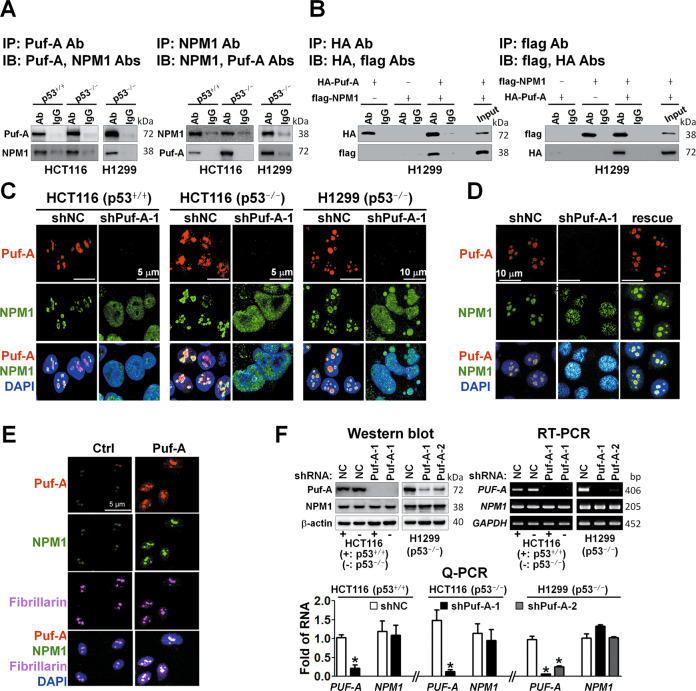
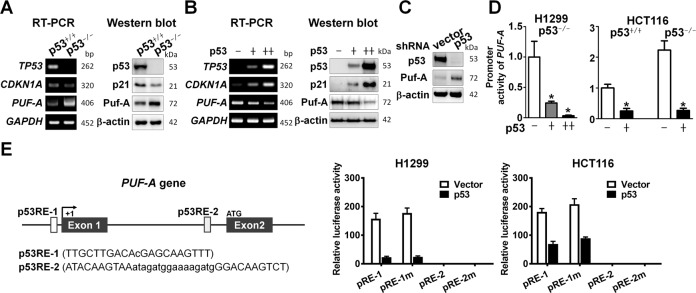
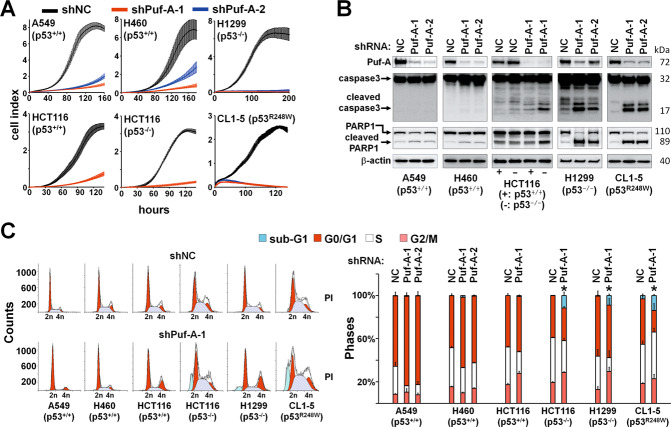
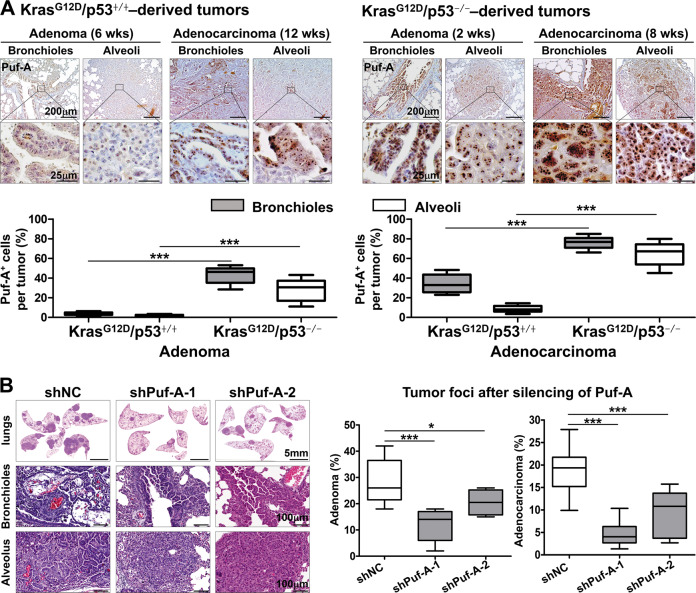
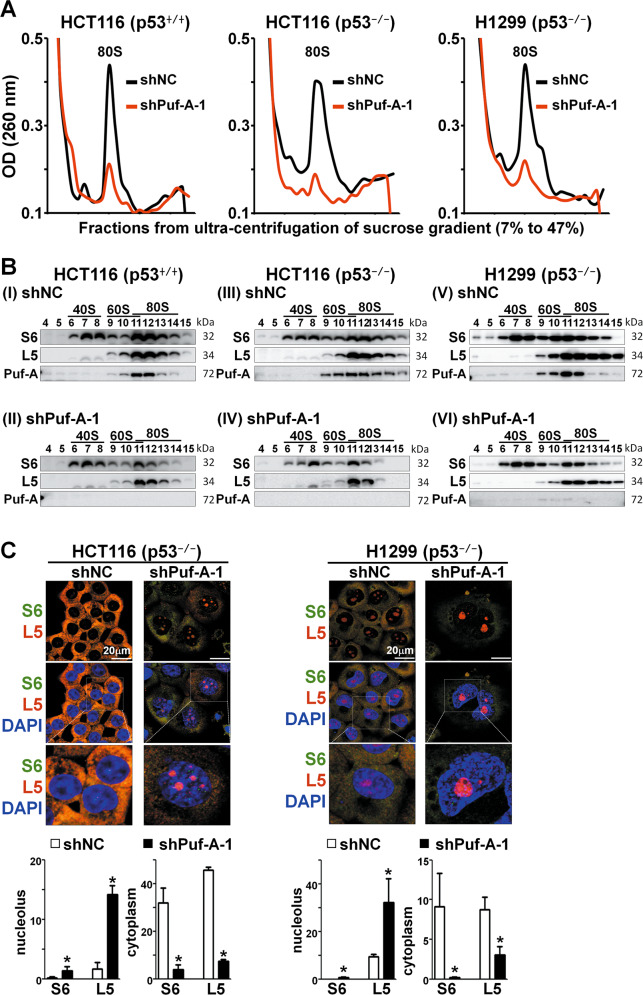
Previously, we identified Puf-A as a novel member of Puf-family RNA-binding proteins; however, its biological functions remain obscure. Analysis of tumor samples of non-small cell lung cancer (NSCLC) showed that high Puf-A expression correlated with high histology grade and abnormal p53 status. Kaplan-Meier curve for overall survival revealed high expression of Puf-A to predict poor prognosis in stage I NSCLC. Among patients with colorectal cancer, high Puf-A expression also showed an adverse impact on overall survival. In lung cancer cell lines, downregulation of p53 increased Puf-A expression, and upregulation of p53 dampened its expression. However, luciferase reporter assays indicated that PUF-A locus harbored the p53-response element, but regulated Puf-A transcription indirectly. In vivo suppression of p53 in CCSP-rtTA/TetO-Cre/LSL-Kras/p53 conditional mutant mice accelerated the progression of the Kras-driven lung cancer, along with enhanced expression of Puf-A. Importantly, intranasal delivery of shPuf-A to the inducible Kras/p53 mice suppressed tumor progression. Puf-A silencing led to marked decreases in the 80S ribosomes, along with decrease in S6 and L5 in the cytoplasm and accumulation in the nucleolus. Based on immunofluorescence staining and immunoprecipitation studies, Puf-A interacted with NPM1 in nucleolus. Puf-A silencing resulted in NPM1 translocation from nucleolus to nucleoplasm and this disruption of NPM1 localization was reversed by a rescue experiment. Mechanistically, Puf-A silencing altered NPM1 localization, leading to the retention of ribosomal proteins in nucleolus and diminished ribosome biogenesis, followed by cell-cycle arrest/cell death. Puf-A is a potential theranostic target for cancer therapy and an important player in cancer progression.
先前,我们鉴定了 Puf-A 是 Puf 家族 RNA 结合蛋白的一个新成员;然而,其生物学功能尚不清楚。非小细胞肺癌(NSCLC)肿瘤样本分析表明,高 Puf-A 表达与高组织学分级和异常 p53 状态相关。总体生存的 Kaplan-Meier 曲线表明,I 期 NSCLC 中 Puf-A 的高表达预示着预后不良。在结直肠癌患者中,Puf-A 的高表达也对总体生存有不利影响。在肺癌细胞系中,p53 的下调增加了 Puf-A 的表达,而上调 p53 则抑制了其表达。然而,荧光素酶报告基因检测表明,PUF-A 基因座含有 p53 反应元件,但间接调节 Puf-A 转录。在 CCSP-rtTA/TetO-Cre/LSL-Kras/p53 条件性突变小鼠中体内抑制 p53 加速了 Kras 驱动的肺癌的进展,同时增强了 Puf-A 的表达。重要的是,向诱导型 Kras/p53 小鼠鼻腔内递送 shPuf-A 抑制了肿瘤的进展。Puf-A 沉默导致 80S 核糖体明显减少,细胞质中 S6 和 L5 减少,核仁中积累。基于免疫荧光染色和免疫沉淀研究,Puf-A 与核仁中的 NPM1 相互作用。Puf-A 沉默导致 NPM1 从核仁到核质的易位,这种 NPM1 定位的破坏通过挽救实验得到逆转。从机制上讲,Puf-A 沉默改变了 NPM1 的定位,导致核糖体蛋白在核仁中保留和核糖体生物发生减少,随后细胞周期停滞/细胞死亡。Puf-A 是癌症治疗的潜在治疗靶点,也是癌症进展的重要参与者。