Al-Attar Atef M
Princess Dr. Najla Bint Saud Al-Saud Center for Excellence Research in Biotechnology, King Abdulaziz University, Jeddah, Saudi Arabia.
Department of Biological Sciences, Faculty of Sciences, King Abdulaziz University, Jeddah, Saudi Arabia.
Saudi J Biol Sci. 2022 Jan;29(1):660-665. doi: 10.1016/j.sjbs.2021.10.037. Epub 2021 Oct 22.
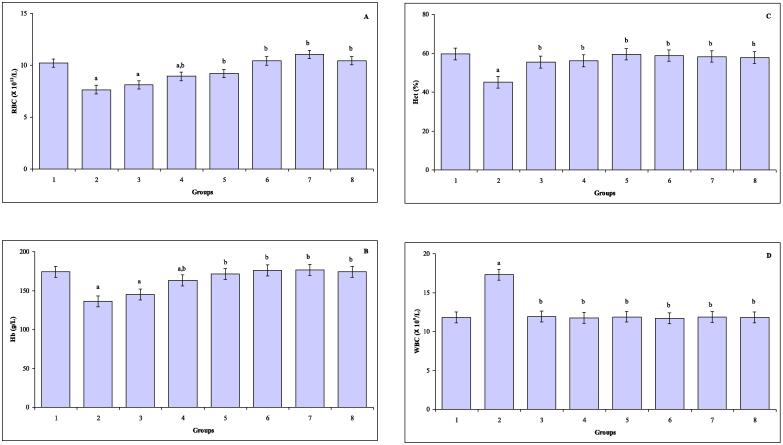
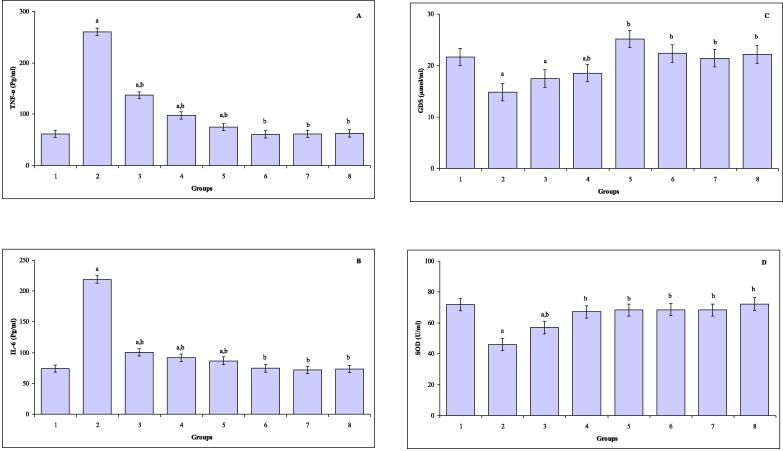
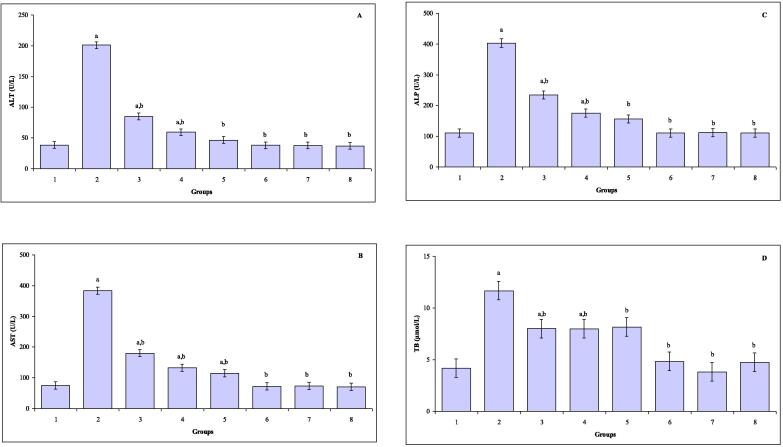
Currently, living organisms are increasingly exposed to many toxic chemicals in the environment. These substances pose a threat to human life, other living organisms and ecosystem. In fact, there is an increasing requirement to search for safe therapeutic sources today. Medicinal plants and natural products have become of great importance globally because of their therapeutic potential and medicinal properties, as well as their availability and the absence of harmful side effects for most of them. The present study was designed to explore the potential protective effect of curcumin (CUR) and thymoquinone (TQ) in male rats exposed to thioacetamide (TAA). The experimental mice were divided into eight groups. Group 1 was served as control. Group 2 was exposed to 50 mg/ kg body weight of TAA. Group 3 was exposed to CUR and TAA. Mice of group 4 were treated with TQ and TAA. Mice of group 5 were exposed to CUR plus TQ and TAA. Group 6 was supplemented with CUR. Group 7 was subjected to TQ. Mice of group 8 were treated with CUR and TQ. Hematological and biochemical alterations were evaluated after one month. Significant increases of white blood corpuscles (WBC), alanine aminotransferase (ALT), aspartate aminotransferase (AST), alkaline phosphatase (ALP), total bilirubin (TB), tumor necrosis factor-α (TNF-α) and interleukin-6 (IL-6) values were observed in group 2, while the values of red blood corpuscles (RBC), hemoglobin (Hb(, hematocrit (Hct), glutathione (GSH) and superoxide dismutase (SOD) were statistically decreased. Treatment with CUR, TQ and their combination inhibited the hematological and biochemical alterations induced by TAA toxicity. Moreover, the most protective effect was observed in mice treated with CUR plus TQ. These new results suggested that the protective effect of CUR and TQ attributed to their antioxidant properties.
目前,生物有机体越来越多地暴露于环境中的许多有毒化学物质中。这些物质对人类生命、其他生物有机体和生态系统构成威胁。事实上,如今寻找安全治疗来源的需求日益增加。药用植物和天然产物因其治疗潜力、药用特性、可得性以及大多数情况下无有害副作用,在全球范围内变得极为重要。本研究旨在探讨姜黄素(CUR)和百里醌(TQ)对硫代乙酰胺(TAA)暴露雄性大鼠的潜在保护作用。实验小鼠分为八组。第1组作为对照组。第2组暴露于50毫克/千克体重的TAA。第3组暴露于CUR和TAA。第4组小鼠用TQ和TAA处理。第5组小鼠暴露于CUR加TQ和TAA。第6组补充CUR。第7组给予TQ。第8组小鼠用CUR和TQ处理。一个月后评估血液学和生化改变。第2组观察到白细胞(WBC)、丙氨酸转氨酶(ALT)、天冬氨酸转氨酶(AST)、碱性磷酸酶(ALP)、总胆红素(TB)、肿瘤坏死因子-α(TNF-α)和白细胞介素-6(IL-6)值显著升高,而红细胞(RBC)、血红蛋白(Hb)、血细胞比容(Hct)、谷胱甘肽(GSH)和超氧化物歧化酶(SOD)值在统计学上降低。用CUR、TQ及其组合进行治疗可抑制TAA毒性诱导的血液学和生化改变。此外,在CUR加TQ处理的小鼠中观察到最显著的保护作用。这些新结果表明,CUR和TQ的保护作用归因于它们的抗氧化特性。