Barbosa Mélanie A G, Xavier Cristina P R, Pereira Rúben F, Petrikaitė Vilma, Vasconcelos M Helena
Cancer Drug Resistance Group, IPATIMUP-Institute of Molecular Pathology and Immunology, University of Porto, 4200-135 Porto, Portugal.
i3S-Instituto de Investigação e Inovação em Saúde, Universidade do Porto, 4200-135 Porto, Portugal.
Cancers (Basel). 2021 Dec 31;14(1):190. doi: 10.3390/cancers14010190.
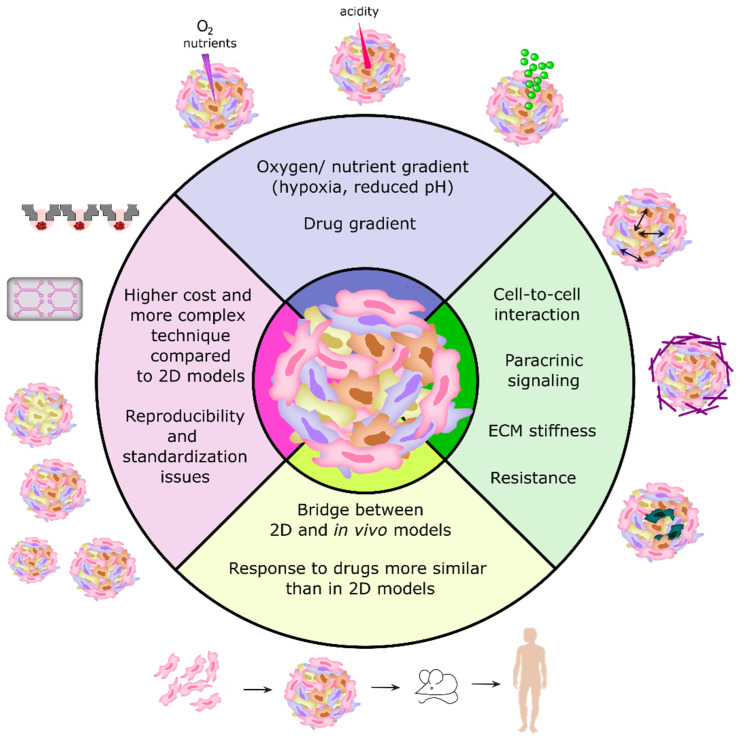
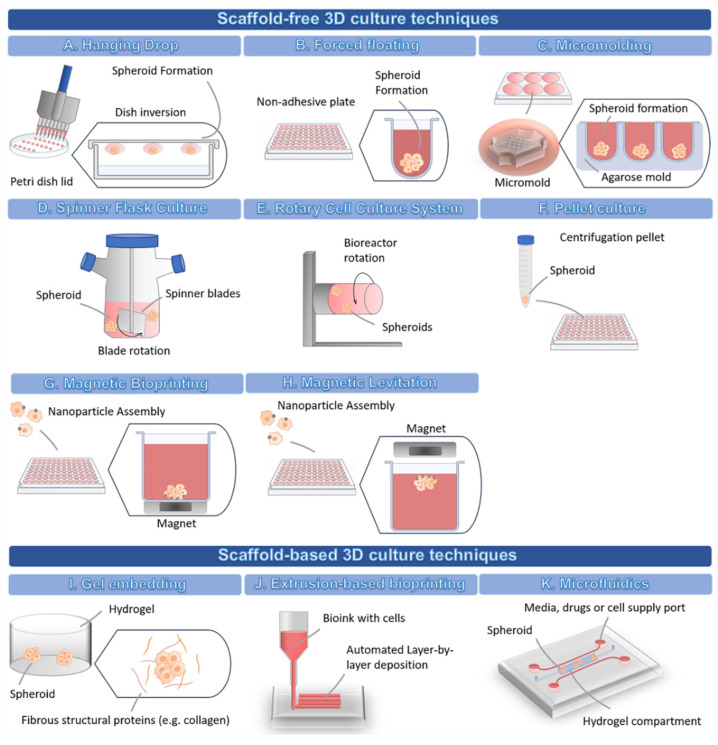
Today, innovative three-dimensional (3D) cell culture models have been proposed as viable and biomimetic alternatives for initial drug screening, allowing the improvement of the efficiency of drug development. These models are gaining popularity, given their ability to reproduce key aspects of the tumor microenvironment, concerning the 3D tumor architecture as well as the interactions of tumor cells with the extracellular matrix and surrounding non-tumor cells. The development of accurate 3D models may become beneficial to decrease the use of laboratory animals in scientific research, in accordance with the European Union's regulation on the 3R rule (Replacement, Reduction, Refinement). This review focuses on the impact of 3D cell culture models on cancer research, discussing their advantages, limitations, and compatibility with high-throughput screenings and automated systems. An insight is also given on the adequacy of the available readouts for the interpretation of the data obtained from the 3D cell culture models. Importantly, we also emphasize the need for the incorporation of additional and complementary microenvironment elements on the design of 3D cell culture models, towards improved predictive value of drug efficacy.
如今,创新的三维(3D)细胞培养模型已被提议作为初始药物筛选的可行且仿生的替代方法,从而提高药物开发效率。鉴于这些模型能够重现肿瘤微环境的关键方面,包括3D肿瘤结构以及肿瘤细胞与细胞外基质和周围非肿瘤细胞的相互作用,它们越来越受欢迎。根据欧盟关于3R规则(替代、减少、优化)的规定,开发精确的3D模型可能有助于减少科研中实验动物的使用。本综述重点关注3D细胞培养模型对癌症研究的影响,讨论其优点、局限性以及与高通量筛选和自动化系统的兼容性。还深入探讨了现有读数对于解释从3D细胞培养模型获得的数据的充分性。重要的是,我们还强调在3D细胞培养模型设计中纳入额外的和互补的微环境元素的必要性,以提高药物疗效的预测价值。