Pandey Kamal, Katuwal Nar Bahadur, Park Nahee, Hur Jin, Cho Young Bin, Kim Seung Ki, Lee Seung Ah, Kim Isaac, Lee Seung-Ryeol, Moon Yong Wha
Hematology and Oncology, Department of Internal Medicine, CHA Bundang Medical Center, CHA University, Seongnam 13488, Korea.
Department of Biomedical Science, The Graduate School, CHA University, Seongnam 13620, Korea.
Cancers (Basel). 2022 Jan 1;14(1):210. doi: 10.3390/cancers14010210.
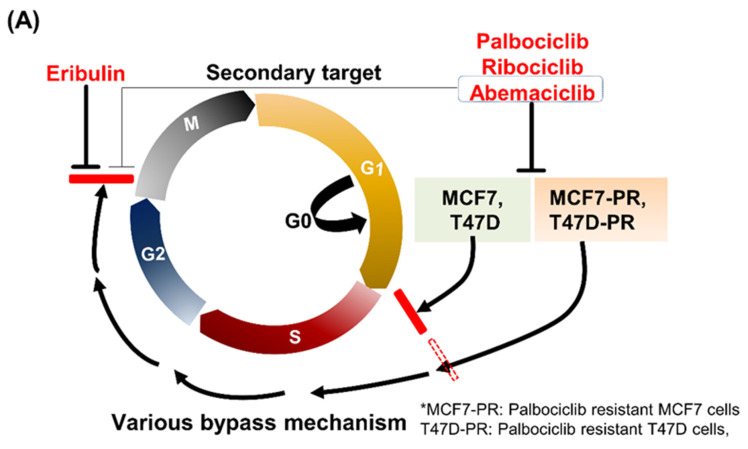
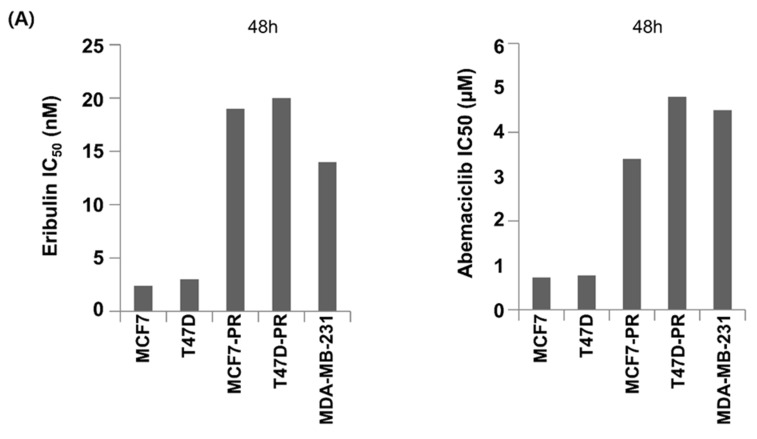
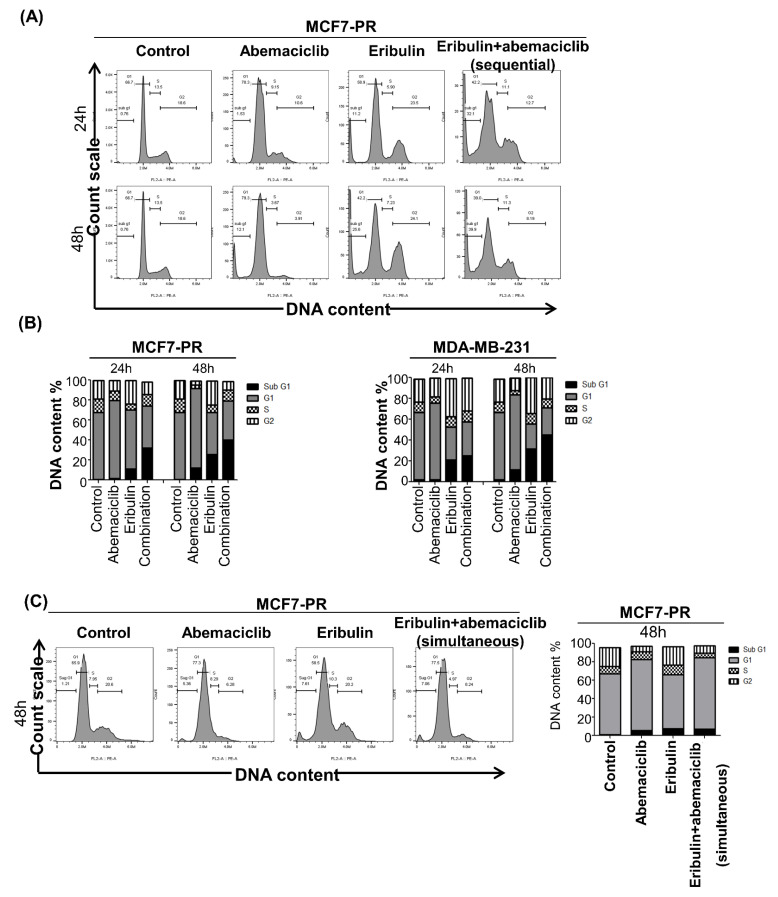
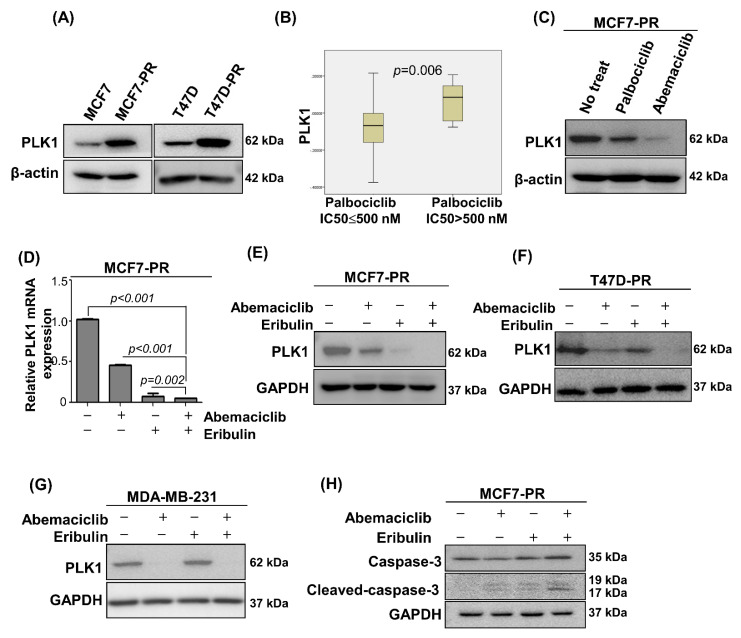
Breast cancer remains a leading cancer burden among women worldwide. Acquired resistance of cyclin-dependent kinase (CDK) 4/6 inhibitors occurs in almost all hormone receptor (HR)-positive subtype cases, comprising 70% of breast cancers, although CDK4/6 inhibitors combined with endocrine therapy are highly effective. CDK4/6 inhibitors are not expected to cooperate with cytotoxic chemotherapy based on the basic cytotoxic chemotherapy mode of action that inhibits rapidly proliferating cells. The palbociclib-resistant preclinical model developed in the current study investigated whether the combination of abemaciclib, CDK4/6 inhibitor with eribulin, an antimitotic chemotherapy could be a strategy to overcome palbociclib-resistant HR-positive breast cancer. The current study demonstrated that sequential abemaciclib treatment following eribulin synergistically suppressed CDK4/6 inhibitor-resistant cells by inhibiting the G2/M cell cycle phase more effectively. The current study showed the significant association of the pole-like kinase 1 (PLK1) level and palbociclib resistance. Moreover, the cumulative PLK1 inhibition in the G2/M phase by each eribulin or abemaciclib proved to be a mechanism of the synergistic effect. The synergistic antitumor effect was also supported by in vivo study. The sequential combination of abemaciclib following eribulin merits further clinical trials to overcome resistance to CDK4/6 inhibitors in HR-positive breast cancer.
乳腺癌仍然是全球女性面临的主要癌症负担。细胞周期蛋白依赖性激酶(CDK)4/6抑制剂的获得性耐药几乎出现在所有激素受体(HR)阳性亚型病例中,这类病例占乳腺癌的70%,尽管CDK4/6抑制剂与内分泌治疗联合使用时效果显著。基于抑制快速增殖细胞的基本细胞毒性化疗作用模式,预计CDK4/6抑制剂不会与细胞毒性化疗协同作用。本研究中建立的帕博西尼耐药临床前模型,探究了阿贝西利(一种CDK4/6抑制剂)与抗有丝分裂化疗药物艾日布林联合使用,是否可以作为克服帕博西尼耐药的HR阳性乳腺癌的一种策略。本研究表明,在艾日布林之后序贯使用阿贝西利,通过更有效地抑制G2/M细胞周期阶段,协同抑制了对CDK4/6抑制剂耐药的细胞。本研究显示了极样激酶1(PLK1)水平与帕博西尼耐药之间的显著关联。此外,艾日布林或阿贝西利在G2/M期对PLK1的累积抑制被证明是协同效应的一种机制。体内研究也支持了这种协同抗肿瘤作用。艾日布林之后序贯使用阿贝西利的联合方案值得进一步开展临床试验,以克服HR阳性乳腺癌对CDK4/6抑制剂的耐药性。