Soltész Beáta, Buglyó Gergely, Németh Nikolett, Szilágyi Melinda, Pös Ondrej, Szemes Tomas, Balogh István, Nagy Bálint
Department of Human Genetics, Faculty of Medicine, University of Debrecen, Egyetem tér 1, H-4032 Debrecen, Hungary.
Geneton Ltd., 841 04 Bratislava, Slovakia.
Int J Mol Sci. 2021 Dec 21;23(1):8. doi: 10.3390/ijms23010008.
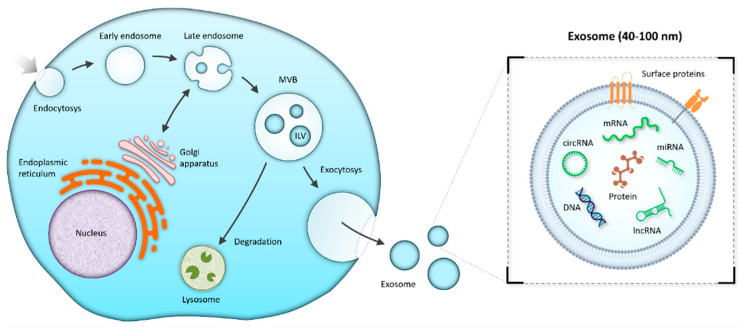
Early detection, characterization and monitoring of cancer are possible by using extracellular vesicles (EVs) isolated from non-invasively obtained liquid biopsy samples. They play a role in intercellular communication contributing to cell growth, differentiation and survival, thereby affecting the formation of tumor microenvironments and causing metastases. EVs were discovered more than seventy years ago. They have been tested recently as tools of drug delivery to treat cancer. Here we give a brief review on extracellular vesicles, exosomes, microvesicles and apoptotic bodies. Exosomes play an important role by carrying extracellular nucleic acids (DNA, RNA) in cell-to-cell communication causing tumor and metastasis development. We discuss the role of extracellular vesicles in the pathogenesis of cancer and their practical application in the early diagnosis, follow up, and next-generation treatment of cancer patients.
通过使用从非侵入性获取的液体活检样本中分离出的细胞外囊泡(EVs),癌症的早期检测、特征描述和监测成为可能。它们在细胞间通讯中发挥作用,促进细胞生长、分化和存活,从而影响肿瘤微环境的形成并导致转移。EVs在七十多年前就被发现了。最近它们已作为治疗癌症的药物递送工具进行了测试。在此,我们对细胞外囊泡、外泌体、微囊泡和凋亡小体进行简要综述。外泌体通过在细胞间通讯中携带细胞外核酸(DNA、RNA)发挥重要作用,从而导致肿瘤和转移的发展。我们讨论细胞外囊泡在癌症发病机制中的作用及其在癌症患者早期诊断、随访和新一代治疗中的实际应用。