Department of Nephrology and Medical Intensive Care, Charité-Universitätsmedizin Berlin, Corporate Member of Freie Universität Berlin and Humboldt-Universität zu Berlin, 10117 Berlin, Germany.
Center for Cardiovascular Research, Charité-Universitätsmedizin Berlin, Corporate Member of Freie Universität Berlin and Humboldt-Universität zu Berlin, 10117 Berlin, Germany.
Int J Mol Sci. 2021 Dec 27;23(1):244. doi: 10.3390/ijms23010244.
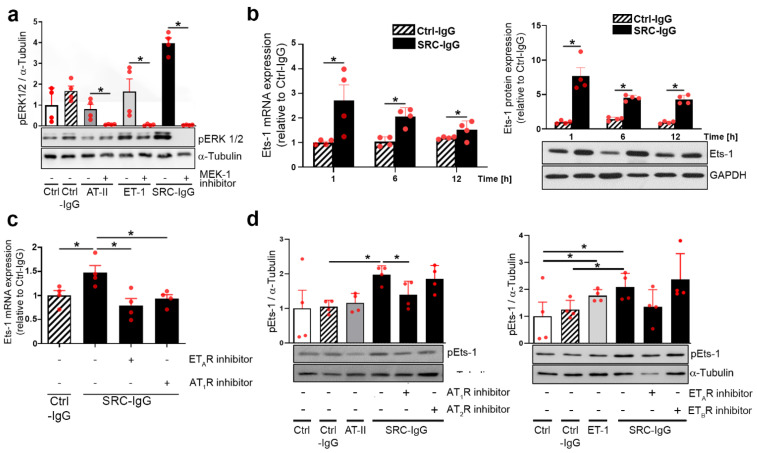
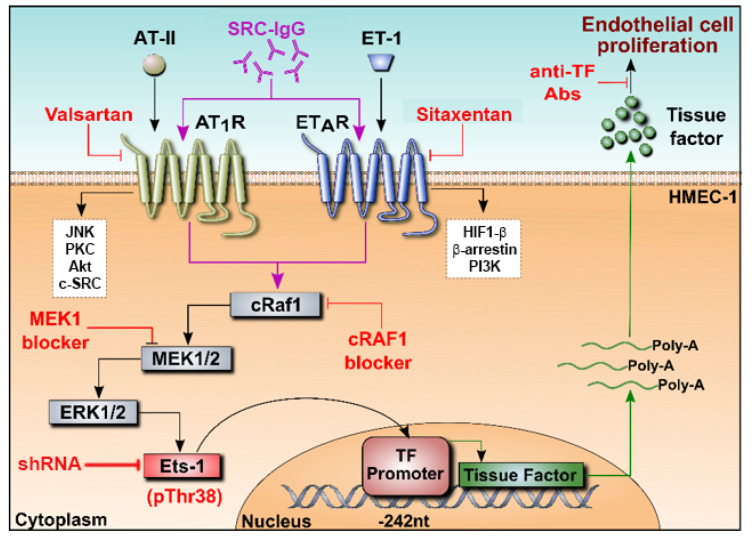
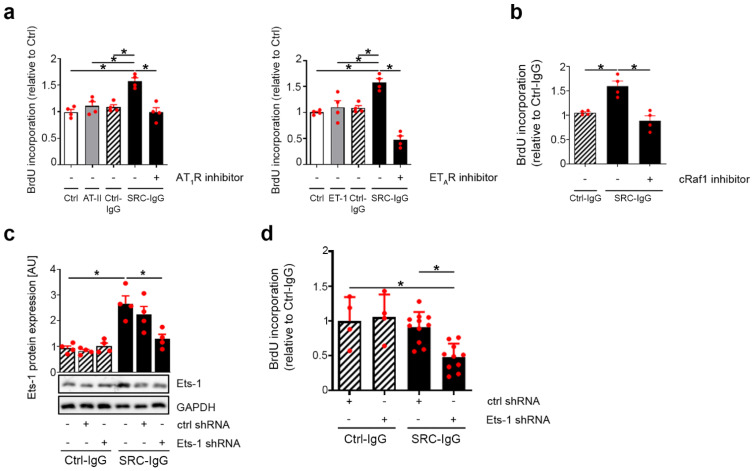
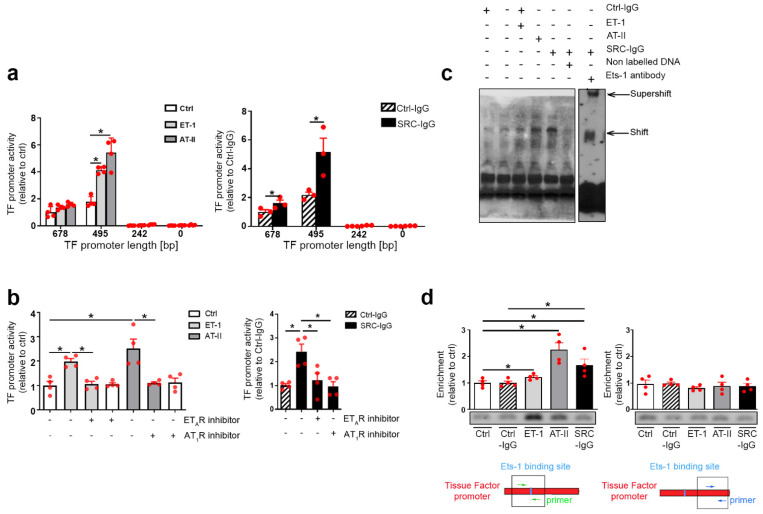
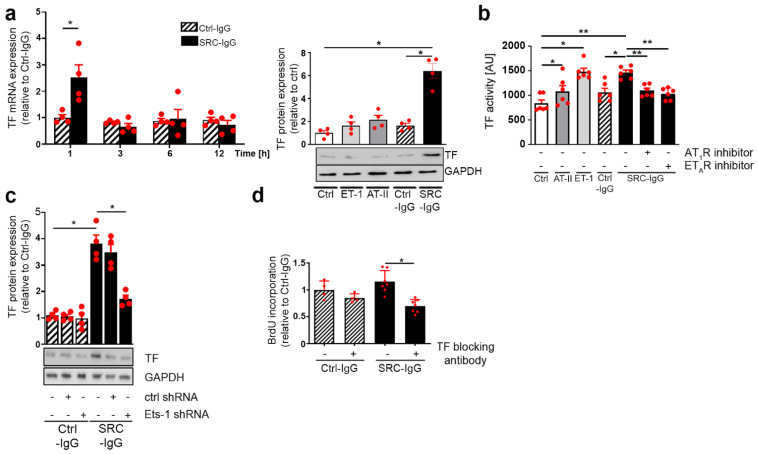
Scleroderma renal crisis (SRC) is an acute life-threatening manifestation of systemic sclerosis (SSc) caused by obliterative vasculopathy and thrombotic microangiopathy. Evidence suggests a pathogenic role of immunoglobulin G (IgG) targeting G-protein coupled receptors (GPCR). We therefore dissected SRC-associated vascular obliteration and investigated the specific effects of patient-derived IgG directed against angiotensin II type 1 (ATR) and endothelin-1 type A receptors (ETR) on downstream signaling events and endothelial cell proliferation. SRC-IgG triggered endothelial cell proliferation via activation of the mitogen-activated protein kinase (MAPK) pathway and subsequent activation of the E26 transformation-specific-1 transcription factor (Ets-1). Either ATR or ETR receptor inhibitors/shRNA abrogated endothelial proliferation, confirming receptor activation and Ets-1 signaling involvement. Binding of Ets-1 to the tissue factor (TF) promoter exclusively induced TF. In addition, TF inhibition prevented endothelial cell proliferation. Thus, our data revealed a thus far unknown link between SRC-IgG-induced intracellular signaling, endothelial cell proliferation and active coagulation in the context of obliterative vasculopathy and SRC. Patients' autoantibodies and their molecular effectors represent new therapeutic targets to address severe vascular complications in SSc.
硬皮病肾危象(SRC)是一种由闭塞性血管病和血栓性微血管病引起的系统性硬化症(SSc)的急性危及生命的表现。有证据表明免疫球蛋白 G(IgG)针对 G 蛋白偶联受体(GPCR)具有致病作用。因此,我们剖析了与 SRC 相关的血管闭塞,并研究了针对血管紧张素 II 型 1(ATR)和内皮素-1 型 A 受体(ETR)的患者源性 IgG 对下游信号事件和内皮细胞增殖的具体影响。SRC-IgG 通过激活丝裂原活化蛋白激酶(MAPK)途径并随后激活 E26 转化特异性-1 转录因子(Ets-1)来触发内皮细胞增殖。ATR 或 ETR 受体抑制剂/shRNA 均可阻断内皮细胞增殖,证实了受体激活和 Ets-1 信号参与。Ets-1 与组织因子(TF)启动子的结合仅诱导 TF。此外,TF 抑制可防止内皮细胞增殖。因此,我们的数据揭示了 SRC-IgG 诱导的细胞内信号、内皮细胞增殖和闭塞性血管病和 SRC 背景下的活跃凝血之间以前未知的联系。患者自身抗体及其分子效应物代表了针对 SSc 中严重血管并发症的新治疗靶点。