Department of Life Science, Biomedi Campus, Dongguk University-Seoul, 32 Dongguk-ro, Ilsandong-gu, Gyeonggi-do, Goyang 10326, Korea.
Int J Mol Sci. 2022 Jan 4;23(1):517. doi: 10.3390/ijms23010517.
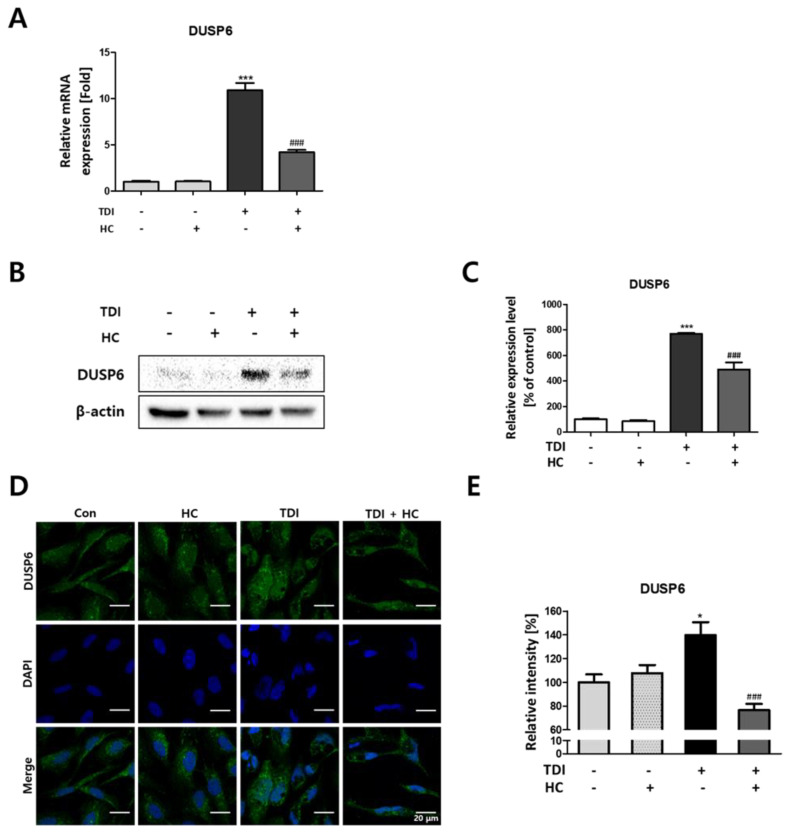
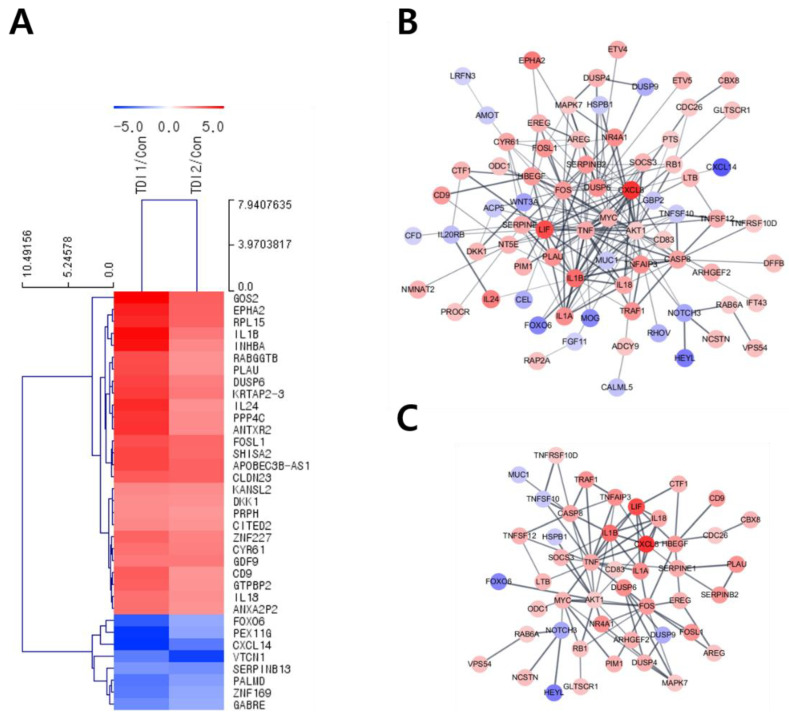
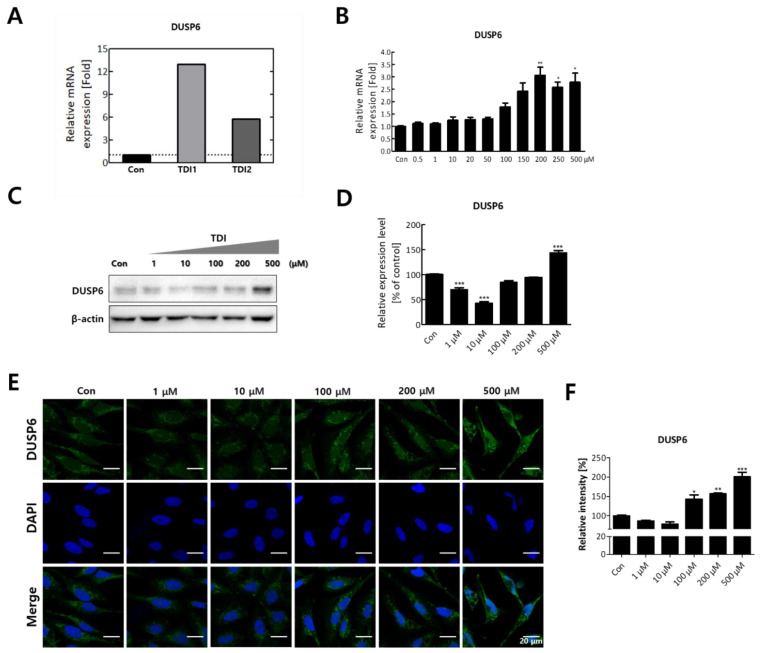
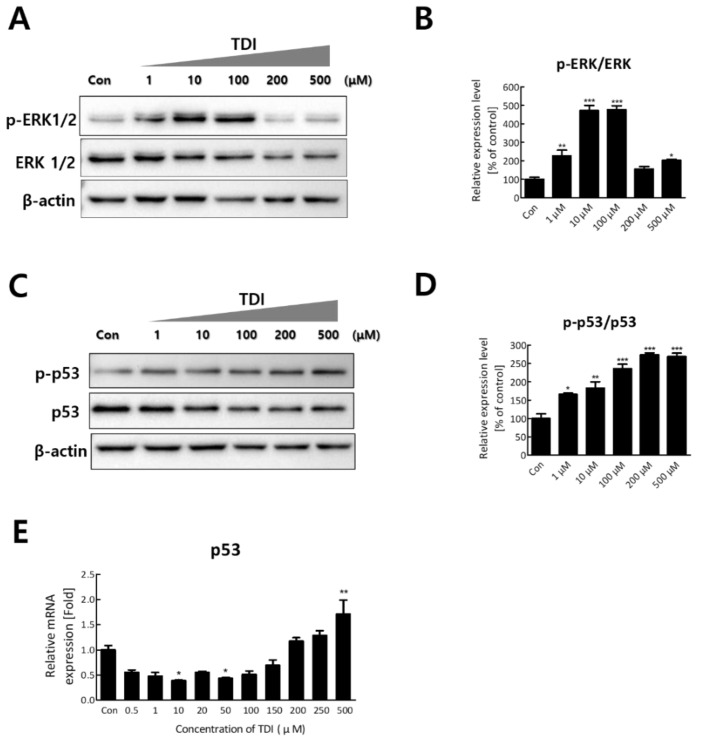
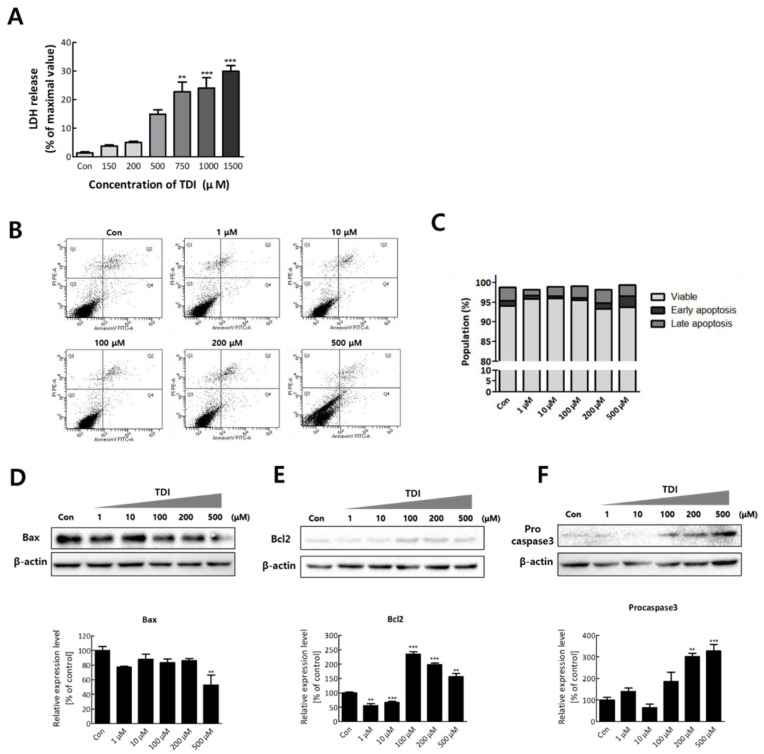
Toluene diisocyanate (TDI), a major intermediate agent used in the manufacturing industry, causes respiratory symptoms when exposed to the human body. In this study, we aimed to determine the molecular mechanism of TDI toxicity. To investigate the impact of TDI exposure on global gene expression, we performed transcriptomic analysis of human bronchial epithelial cells (BEAS-2B) after TDI treatment. Differentially expressed genes (DEGs) were sorted and used for clustering and network analysis. Among DEGs, dual-specificity phosphatase 6 (DUSP6) was one of the genes significantly changed by TDI exposure. To verify the expression level of DUSP6 and its effect on lung cells, the mRNA and protein levels of DUSP6 were analyzed. Our results showed that DUSP6 was dose-dependently upregulated by TDI treatment. Thereby, the phosphorylation of ERK1/2, one of the direct inhibitory targets of DUSP6, was decreased. TDI exposure also increased the mRNA level of p53 along with its protein and activity which trans-activates DUSP6. Since TRPA1 is known as a signal integrator activated by TDI, we analyzed the relevance of TRPA1 receptor in DUSP6 regulation. Our data revealed that up-regulation of DUSP6 mediated by TDI was blocked by a specific antagonist against TRPA1. TDI exposure attenuated the apoptotic response, which suggests that it promotes the survival of cancerous cells. In conclusion, our results suggest that TDI induces DUSP6 and p53, but attenuates ERK1/2 activity through TRPA1 receptor activation, leading to cytotoxicity.
甲苯二异氰酸酯(TDI)是制造业中使用的主要中间体,人体接触后会引起呼吸道症状。在本研究中,我们旨在确定 TDI 毒性的分子机制。为了研究 TDI 暴露对全球基因表达的影响,我们对 TDI 处理后的人支气管上皮细胞(BEAS-2B)进行了转录组分析。对差异表达基因(DEGs)进行排序,并进行聚类和网络分析。在 DEGs 中,双特异性磷酸酶 6(DUSP6)是 TDI 暴露显著改变的基因之一。为了验证 DUSP6 的表达水平及其对肺细胞的影响,分析了 DUSP6 的 mRNA 和蛋白水平。结果表明,TDI 处理可剂量依赖性地上调 DUSP6 的表达。从而,DUSP6 的直接抑制靶标之一 ERK1/2 的磷酸化减少。TDI 暴露还增加了 p53 的 mRNA 水平及其蛋白和活性,p53 可反式激活 DUSP6。由于 TRPA1 是已知的被 TDI 激活的信号整合体,我们分析了 TRPA1 受体在 DUSP6 调节中的相关性。我们的数据表明,TRPA1 受体的特异性拮抗剂阻断了由 TDI 介导的 DUSP6 的上调。TDI 暴露减弱了细胞凋亡反应,这表明它促进了癌细胞的存活。总之,我们的结果表明,TDI 通过激活 TRPA1 受体诱导 DUSP6 和 p53,但抑制 ERK1/2 活性,导致细胞毒性。