Mamonova Daria V, Vasileva Anna A, Petrov Yuri V, Koroleva Alexandra V, Danilov Denis V, Kolesnikov Ilya E, Bikbaeva Gulia I, Bachmann Julien, Manshina Alina A
Institute of Chemistry, Saint-Petersburg State University, 26 Universitetskii Prospect, 198504 Saint-Petersburg, Russia.
Department of Physics, Saint-Petersburg State University, Ulyanovskaya 3, 198504 Saint-Petersburg, Russia.
Nanomaterials (Basel). 2021 Dec 31;12(1):146. doi: 10.3390/nano12010146.
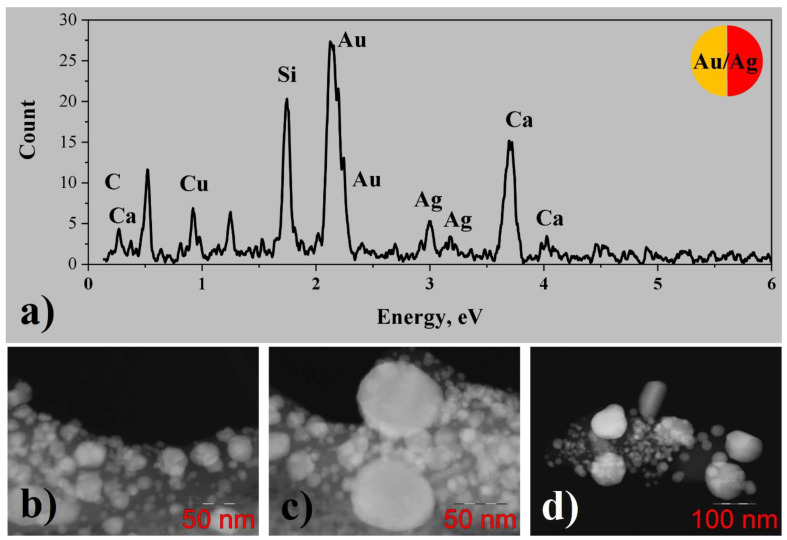
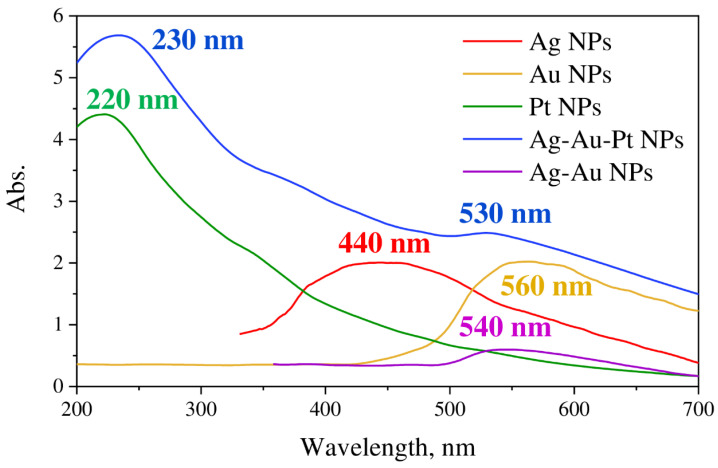
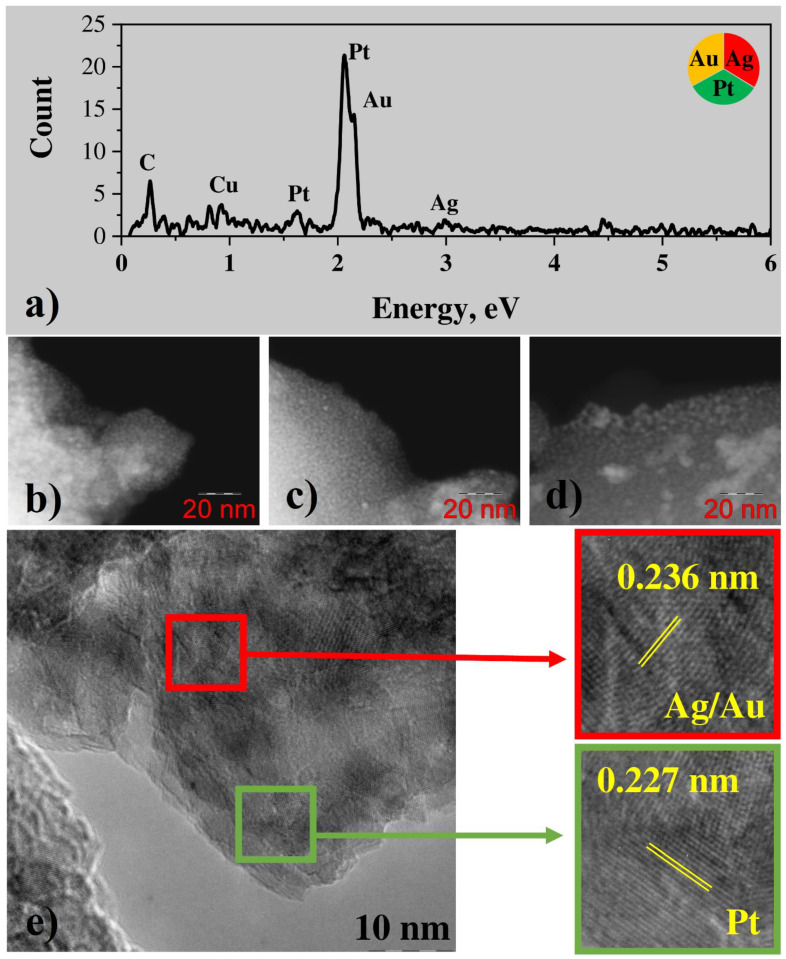
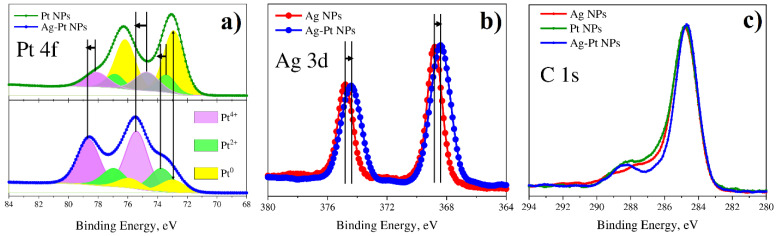
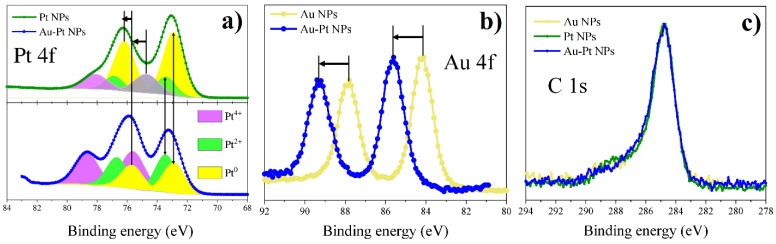
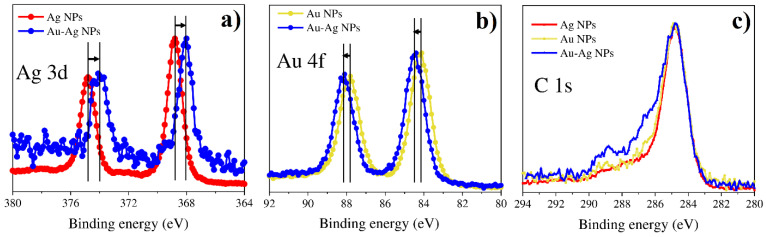
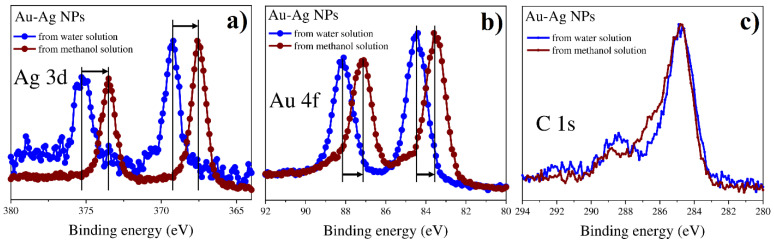
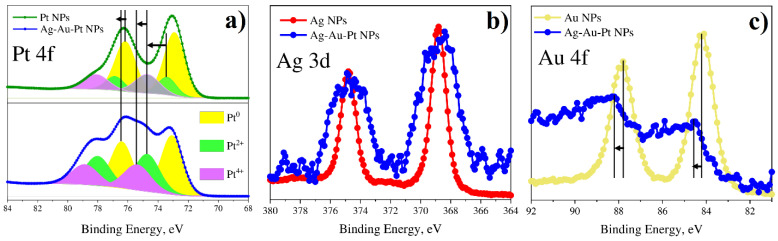
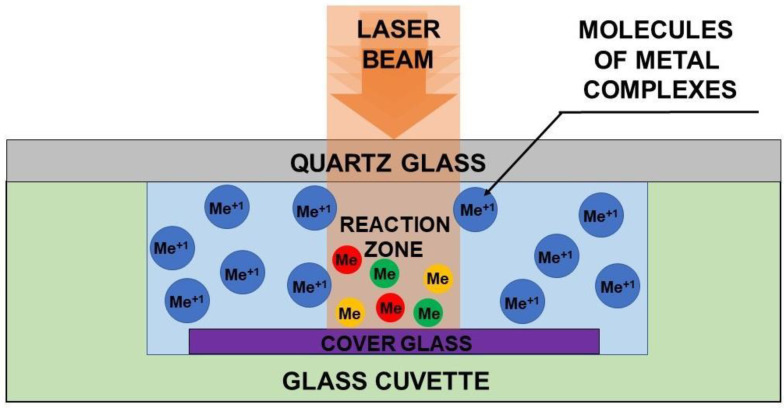
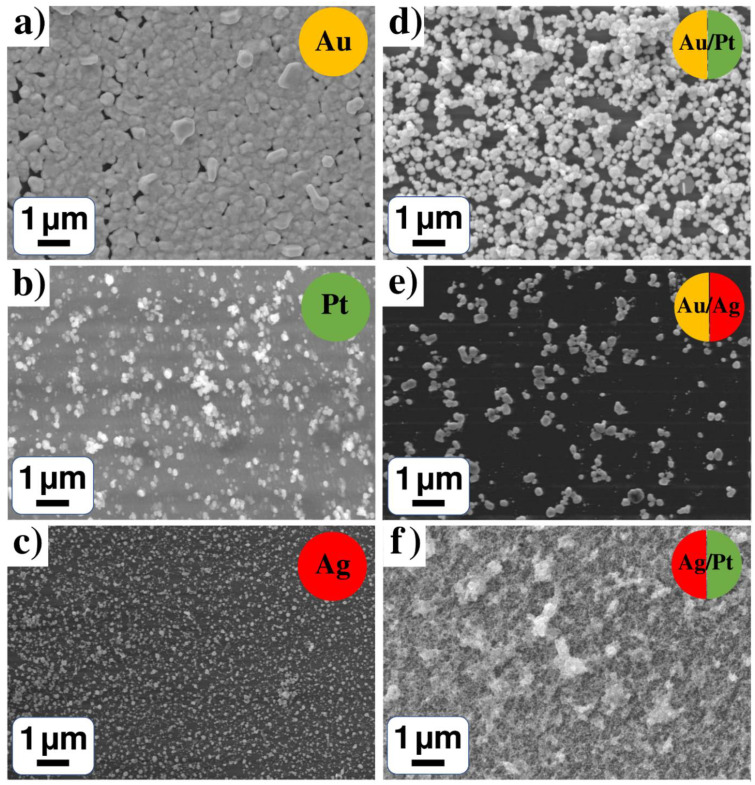
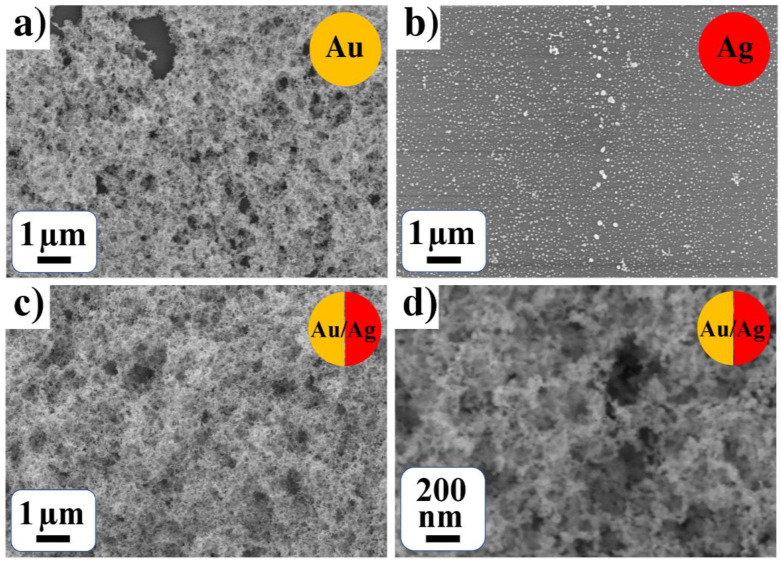
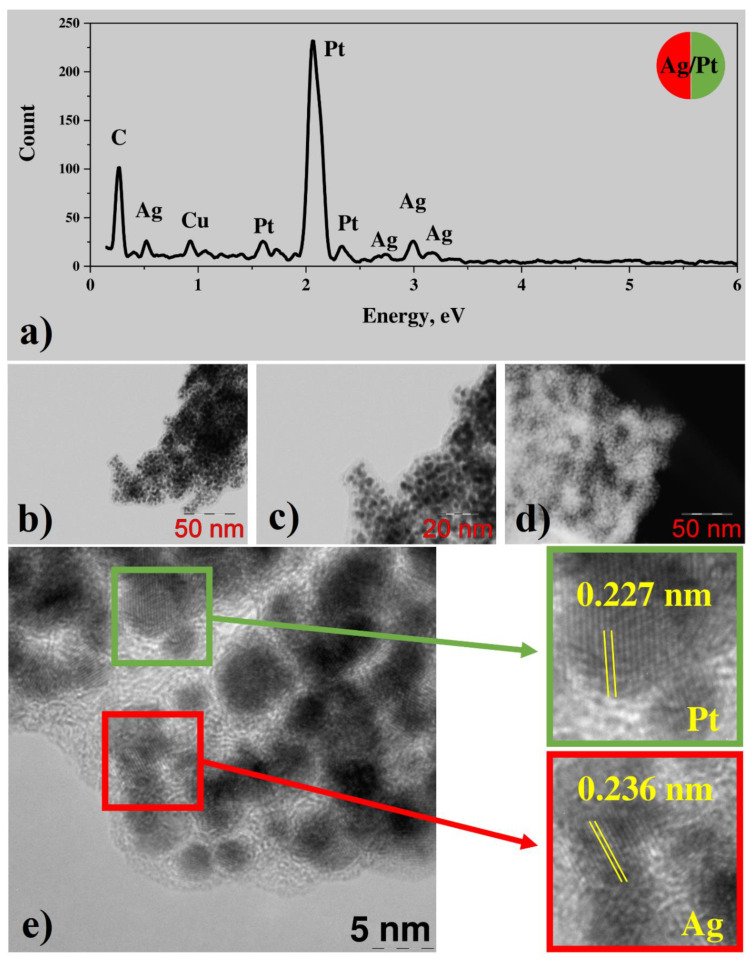
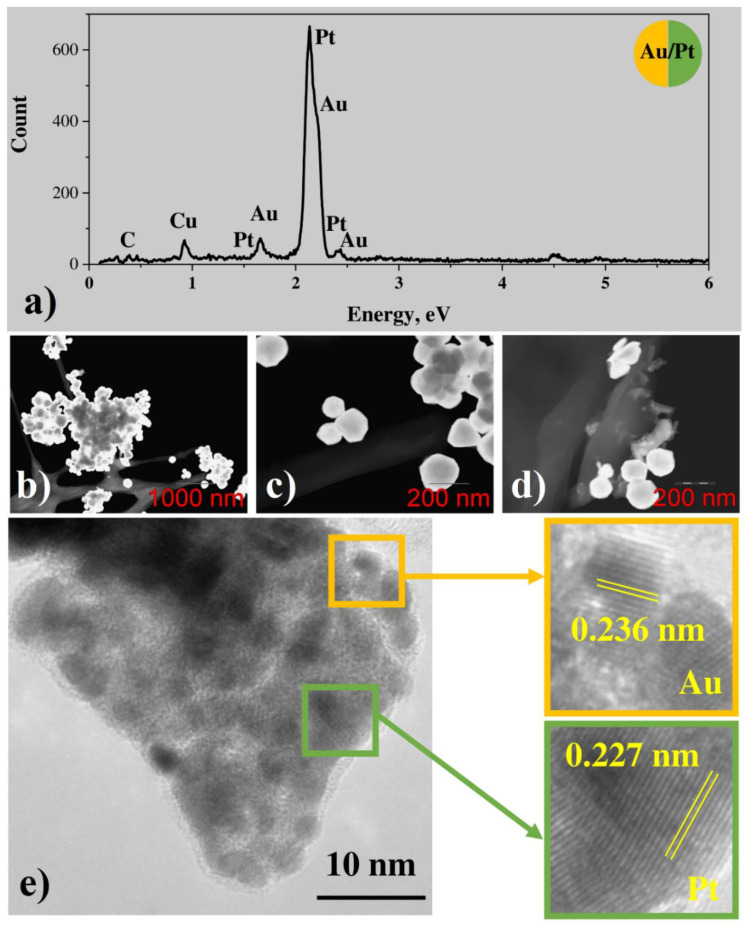
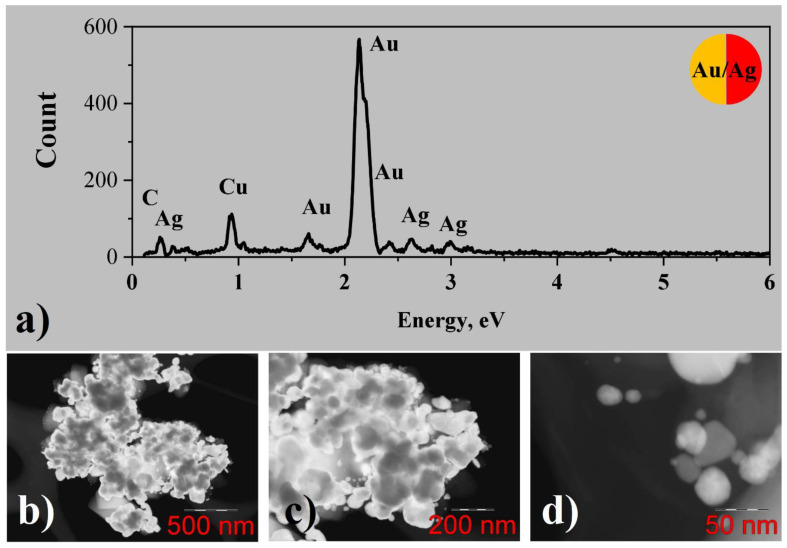
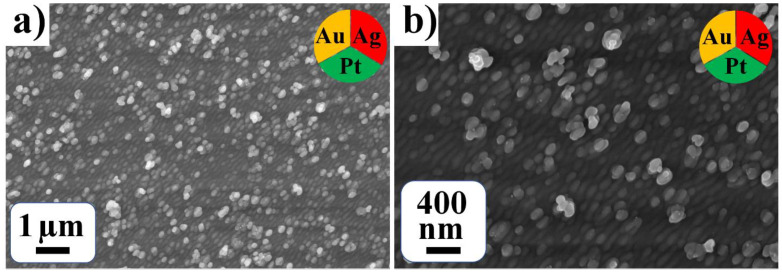
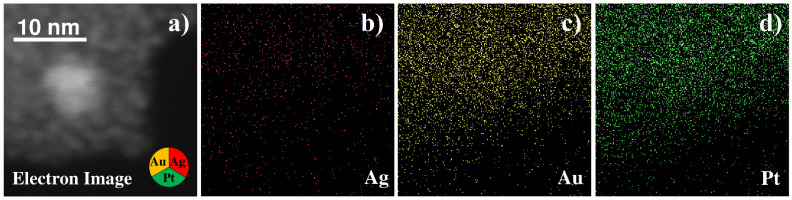
Multimetallic plasmonic systems usually have distinct advantages over monometallic nanoparticles due to the peculiarity of the electronic structure appearing in advanced functionality systems, which is of great importance in a variety of applications including catalysis and sensing. Despite several reported techniques, the controllable synthesis of multimetallic plasmonic nanoparticles in soft conditions is still a challenge. Here, mono-, bi- and tri-metallic nanoparticles were successfully obtained as a result of a single step laser-induced deposition approach from monometallic commercially available precursors. The process of nanoparticles formation is starting with photodecomposition of the metal precursor resulting in nucleation and the following growth of the metal phase. The deposited nanoparticles were studied comprehensively with various experimental techniques such as SEM, TEM, EDX, XPS, and UV-VIS absorption spectroscopy. The size of monometallic nanoparticles is strongly dependent on the type of metal: 140-200 nm for Au, 40-60 nm for Ag, 2-3 nm for Pt. Bi- and trimetallic nanoparticles were core-shell structures representing monometallic crystallites surrounded by an alloy of respective metals. The formation of an alloy phase took place between monometallic nanocrystallites of different metals in course of their growth and agglomeration stage.
由于先进功能系统中出现的电子结构特性,多金属等离子体系统通常比单金属纳米颗粒具有明显优势,这在包括催化和传感在内的各种应用中具有重要意义。尽管已有多种报道的技术,但在温和条件下可控合成多金属等离子体纳米颗粒仍然是一个挑战。在此,通过单步激光诱导沉积方法,从市售的单金属前驱体成功获得了单金属、双金属和三金属纳米颗粒。纳米颗粒的形成过程始于金属前驱体的光分解,从而导致成核以及随后金属相的生长。使用扫描电子显微镜(SEM)、透射电子显微镜(TEM)、能量色散X射线光谱(EDX)、X射线光电子能谱(XPS)和紫外可见吸收光谱等各种实验技术对沉积的纳米颗粒进行了全面研究。单金属纳米颗粒的尺寸强烈依赖于金属类型:金为140 - 200纳米,银为40 - 60纳米,铂为2 - 3纳米。双金属和三金属纳米颗粒为核壳结构,由各自金属的合金包围着单金属微晶。在不同金属的单金属纳米微晶生长和团聚阶段,合金相在它们之间形成。