ENT Unit, Ospedale "Santa Maria Goretti", Azienda USL Latina, 04100 Latina, Italy.
ENT Clinic, Department of Sense Organs, Sapienza University of Rome, 00185 Rome, Italy.
Int J Environ Res Public Health. 2022 Jan 3;19(1):490. doi: 10.3390/ijerph19010490.
Residual dizziness is a disorder of unknown pathophysiology, which may occur after repositioning procedures for benign paroxysmal positional vertigo. This study evaluates the relationship between regular daily physical activity and the development of residual dizziness after treatment for benign paroxysmal positional vertigo.
Prospective observational cohort study.
Academic university hospital.
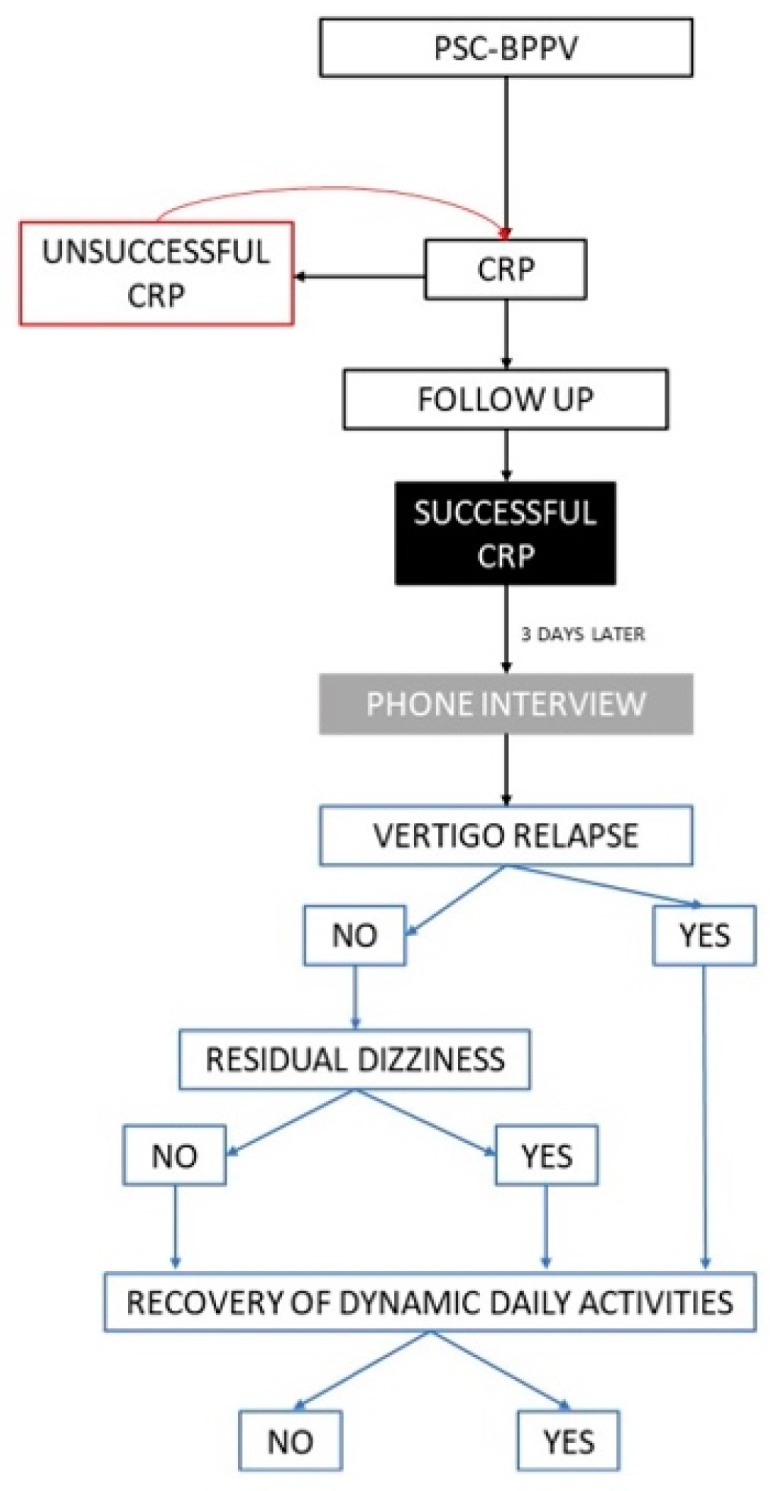
Seventy-one patients admitted with benign paroxysmal positional vertigo involving the posterior semicircular canal were managed with Epley's procedure. Three days after successful treatment, the patients underwent a telephone interview to investigate vertigo relapse. If the patients no longer complained of vertigo, they were asked about symptoms consistent with residual dizziness. Subsequently, they were asked about the recovery of physical activities they regularly performed prior to the onset of vertigo.
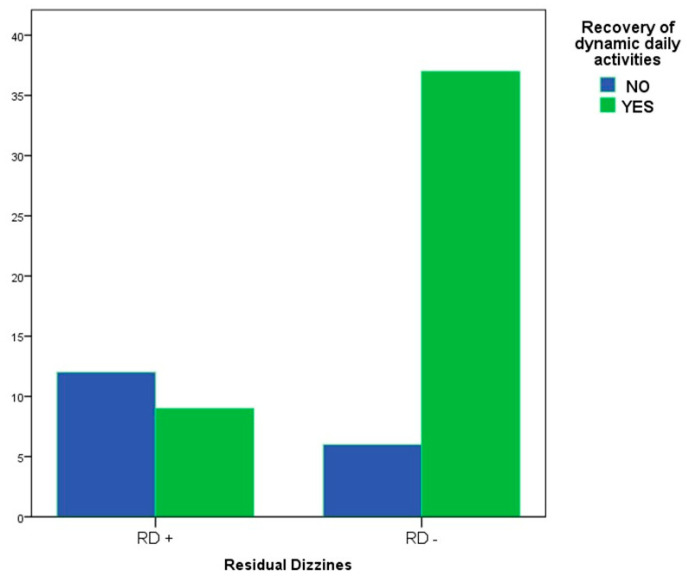
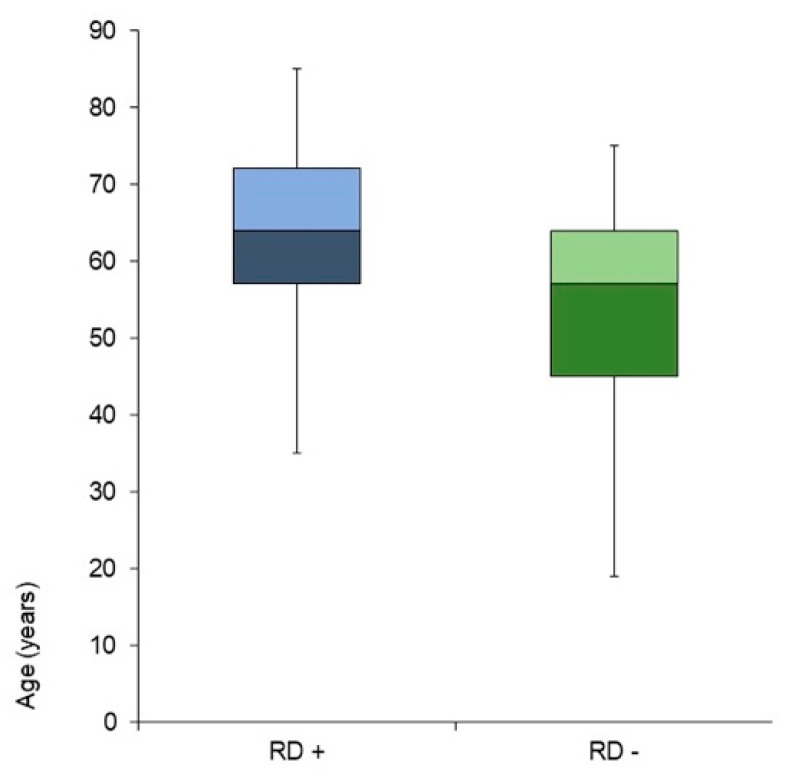
Sixty-nine patients (age: 57.79 ± 15.05) were enrolled: five (7.24%) reported vertigo relapse whereas twenty-one of sixty-four non-relapsed patients (32.81%) reported residual dizziness. A significant difference in the incidence of residual dizziness was observed considering the patients' age ( = 0.0003). Of the non-relapsed patients, 46 (71.88%) recovered their regular dynamic daily activities after treatment and 9 (19.57%) reported residual dizziness, while 12 of the 18 patients (66.67%) who did not resume daily activity reported residual symptoms ( = 0.0003). A logistic regression analysis showed a significant association between daily activity resumption and lack of residual dizziness (OR: 14.01, 95% CI limits 3.14-62.47; = 0.001).
Regardless of age, the resumption of regular daily physical activities is associated with a lack of residual dizziness.
残余性头晕是一种发病机制不明的疾病,可能发生在良性阵发性位置性眩晕的变位治疗后。本研究评估了日常规律身体活动与良性阵发性位置性眩晕治疗后残余性头晕发展之间的关系。
前瞻性观察队列研究。
学术大学医院。
71 例累及后半规管的良性阵发性位置性眩晕患者接受 Epley 手法复位治疗。成功治疗 3 天后,通过电话访谈调查眩晕复发情况。如果患者不再诉眩晕,则询问其与残余性头晕一致的症状。随后,询问他们在眩晕发作前经常进行的身体活动的恢复情况。
69 例患者(年龄:57.79±15.05 岁)入组:5 例(7.24%)报告眩晕复发,而 64 例非复发患者中有 21 例(32.81%)报告残余性头晕。考虑到患者年龄,残余性头晕的发生率存在显著差异( = 0.0003)。在非复发患者中,46 例(71.88%)在治疗后恢复了日常动态活动,9 例(19.57%)报告残余性头晕,而 18 例未恢复日常活动的患者中有 12 例(66.67%)报告有残余症状( = 0.0003)。Logistic 回归分析显示,日常活动恢复与无残余性头晕之间存在显著关联(OR:14.01,95%CI 下限 3.14-62.47; = 0.001)。
无论年龄大小,恢复日常规律身体活动与无残余性头晕相关。