Costinar Luminita, Herman Viorel, Pitoiu Elena, Iancu Ionica, Degi Janos, Hulea Anca, Pascu Corina
Infectious Diseases Department, Faculty of Veterinary Medicine, Banat's University of Agricultural Sciences and Veterinary Medicine "King Michael I of Romania" from Timisoara, 119 Aradului Street Timisoara, Timis County, 300645 Timisoara, Romania.
Synevovet Laboratory, Industriilor Street, No. 25, Chiajna, Ilfov County, 077040 Chiajna, Romania.
Animals (Basel). 2021 Dec 27;12(1):43. doi: 10.3390/ani12010043.
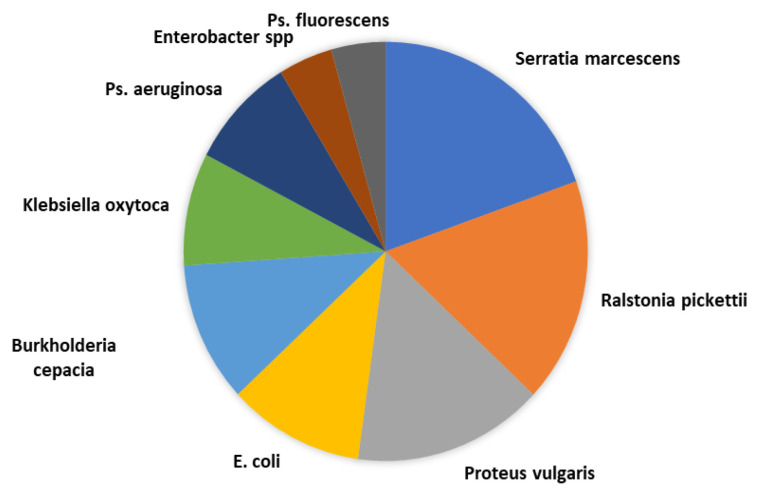
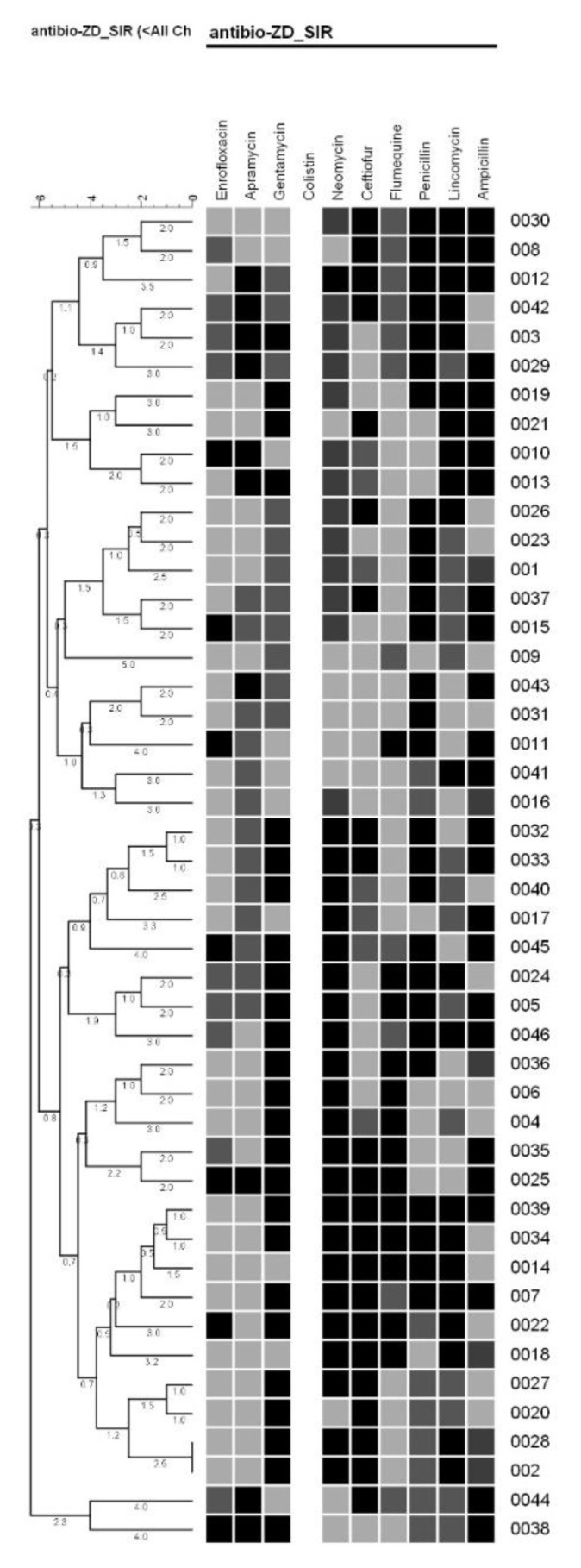
Bacterial contamination of boar semen occurs with some frequency in artificial insemination centers and may have a negative effect on the quality of the semen as well as on the sows' reproductive capacity. Normally, the source of bacterial contamination in pig seminal doses is the own boar. However, distilled water or laboratory equipment used to elaborate the seminal doses can be an important source of bacterial contamination. This study focused on the identification of gram-negative bacteria in boar semen, and impact on the quality of ejaculates obtained from boar, as well as on the establishment of antimicrobial resistance patterns of isolated gram-negative bacteria. Semen samples were collected from 96 boars, ranging in age from 12-36 month, from three artificial insemination centers from the North-West of Romania. Bacterial species were identified by two methods: matrix-assisted laser desorption/ionization time-of-flight (MALDI-TOF) mass spectrometry and API 20 E (BioMerieux, France). The main bacteria isolated from the doses diluted semen were gram-negative bacteria (47.91%), with a majority of the contaminant bacteria belonging to the family : 19.56%, 15.21% and 10.86% and to the family : 17.39%, 10.86%, 8.69%, and 4.34%, respectively. More than half of these isolates (56.52%) were resistant to gentamycin and 58.69% were resistant to penicillin. These antibiotics are very frequently added in sperm diluent in the centers for the processing of sperm from boars in Romania. Regular monitoring for bacterial contamination is an important aspect of a control program.
在人工授精中心,公猪精液的细菌污染时有发生,这可能会对精液质量以及母猪的繁殖能力产生负面影响。通常,猪精液剂量中细菌污染的来源是公猪自身。然而,用于制备精液剂量的蒸馏水或实验室设备也可能是细菌污染的重要来源。本研究聚焦于公猪精液中革兰氏阴性菌的鉴定、对从公猪采集的射精量质量的影响以及所分离革兰氏阴性菌抗菌耐药模式的建立。从罗马尼亚西北部三个人工授精中心的96头年龄在12至36个月之间的公猪采集精液样本。通过两种方法鉴定细菌种类:基质辅助激光解吸/电离飞行时间(MALDI-TOF)质谱法和API 20 E(法国生物梅里埃公司)。从稀释精液剂量中分离出的主要细菌为革兰氏阴性菌(47.91%),其中大多数污染细菌分别属于:19.56%、15.21%和10.86%,以及属于:17.39%、10.86%、8.69%和4.34%。这些分离株中超过一半(56.52%)对庆大霉素耐药,58.69%对青霉素耐药。在罗马尼亚,这些抗生素在公猪精子处理中心的精子稀释剂中经常添加。定期监测细菌污染是控制计划的一个重要方面。