Department of Plant Physiology and Biochemistry, Plant Breeding and Acclimatization Institute-National Research Institute, 05-870 Błonie, Poland.
Department of Plant Physiology, Genetics and Biotechnology, Faculty of Biology and Biotechnology, University of Warmia and Mazury in Olsztyn, 10-719 Olsztyn, Poland.
Cells. 2021 Dec 28;11(1):84. doi: 10.3390/cells11010084.
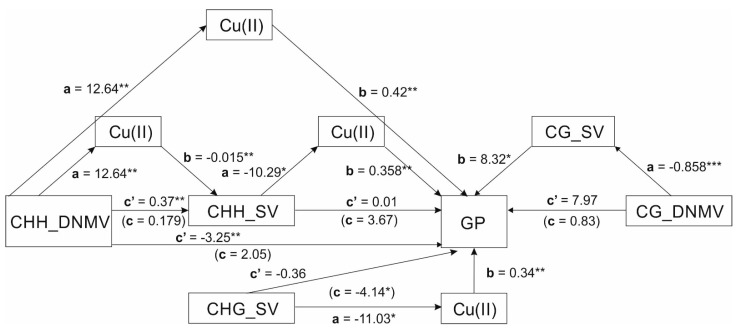
Metal ions in the induction medium are essential ingredients allowing green plant regeneration. For instance, Cu(II) and Ag(I) ions may affect the mitochondrial electron transport chain, influencing the Yang cycle and synthesis of S-adenosyl-L-methionine, the prominent donor of the methylation group for all cellular compounds, including cytosines. If the ion concentrations are not balanced, they can interfere with the proper flow of electrons in the respiratory chain and ATP production. Under oxidative stress, methylated cytosines might be subjected to mutations impacting green plant regeneration efficiency. Varying Cu(II) and Ag(I) concentrations in the induction medium and time of anther culture, nine trials of anther culture-derived regenerants of triticale were derived. The methylation-sensitive AFLP approach quantitative characteristics of tissue culture-induced variation, including sequence variation, DNA demethylation, and DNA de novo methylation for all symmetric-CG, CHG, and asymmetric-CHH sequence contexts, were evaluated for all trials. In addition, the implementation of mediation analysis allowed evaluating relationships between factors influencing green plant regeneration efficiency. It was demonstrated that Cu(II) ions mediated relationships between: (1) de novo methylation in the CHH context and sequence variation in the CHH, (2) sequence variation in CHH and green plant regeneration efficiency, (3) de novo methylation in CHH sequences and green plant regeneration, (4) between sequence variation in the CHG context, and green plant regeneration efficiency. Cu(II) ions were not a mediator between de novo methylation in the CG context and green plant regeneration. The latter relationship was mediated by sequence variation in the CG context. On the other hand, we failed to identify any mediating action of Ag(I) ions or the moderating role of time. Furthermore, demethylation in any sequence context seems not to participate in any relationships leading to green plant regeneration, sequence variation, and the involvement of Cu(II) or Ag(I) as mediators.
诱导培养基中的金属离子是允许绿色植物再生的重要成分。例如,Cu(II) 和 Ag(I) 离子可能会影响线粒体电子传递链,影响 Yang 循环和 S-腺苷甲硫氨酸的合成,S-腺苷甲硫氨酸是所有细胞化合物包括胞嘧啶的甲基供体。如果离子浓度不平衡,它们可能会干扰呼吸链中电子的正常流动和 ATP 的产生。在氧化应激下,甲基化的胞嘧啶可能会发生突变,从而影响绿色植物再生的效率。通过改变诱导培养基中的 Cu(II) 和 Ag(I) 浓度和花药培养时间,从 9 次花药培养衍生的黑小麦再生体中获得了再生体。采用甲基化敏感的 AFLP 方法,评估了所有试验中组织培养诱导变异的定量特征,包括序列变异、DNA 去甲基化和所有对称-CG、CHG 和不对称-CHH 序列背景下的 DNA 从头甲基化。此外,实施中介分析允许评估影响绿色植物再生效率的因素之间的关系。结果表明,Cu(II) 离子介导了以下关系:(1)CHH 背景下的从头甲基化与 CHH 中的序列变异,(2)CHH 中的序列变异与绿色植物再生效率,(3)CHH 序列中的从头甲基化与绿色植物再生,(4)CHG 背景中的序列变异与绿色植物再生效率。Cu(II) 离子不是 CG 背景下的从头甲基化与绿色植物再生之间的中介。这种关系由 CG 背景中的序列变异介导。另一方面,我们未能确定 Ag(I) 离子的任何中介作用或时间的调节作用。此外,任何序列背景下的去甲基化似乎都不参与导致绿色植物再生、序列变异以及 Cu(II) 或 Ag(I) 作为中介的任何关系。