Fan Jingzhang, Li Shiming, Wang Dawei
Department of Orthopedics, The First Affiliated Hospital of Harbin Medical University, Harbin, P.R. China.
Cell Death Discov. 2022 Jan 10;8(1):2. doi: 10.1038/s41420-021-00618-6.
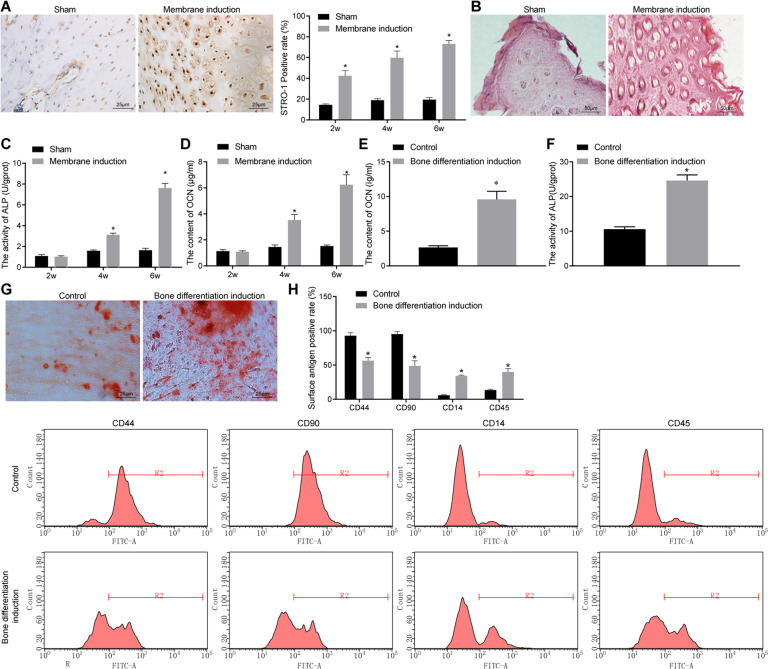
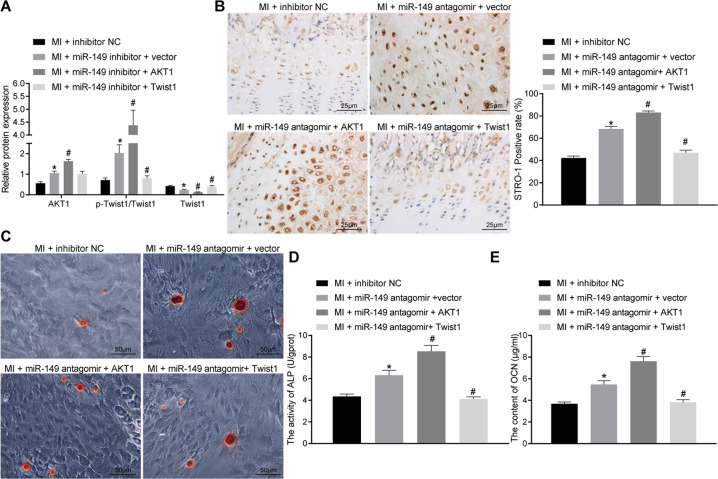
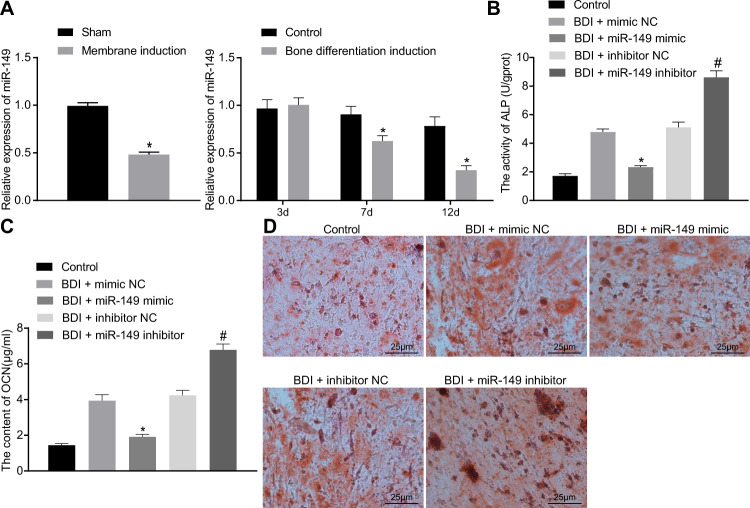
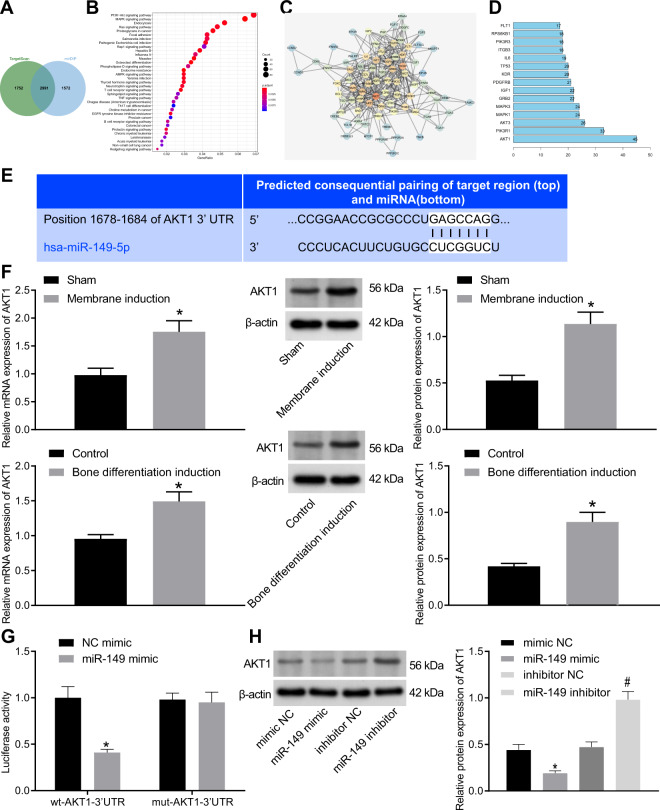
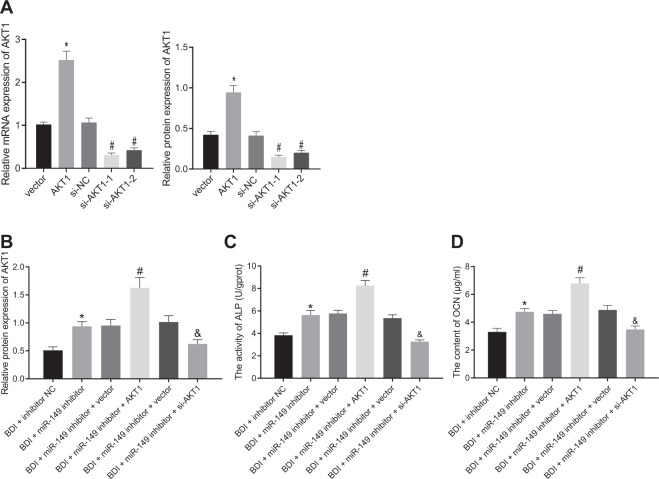
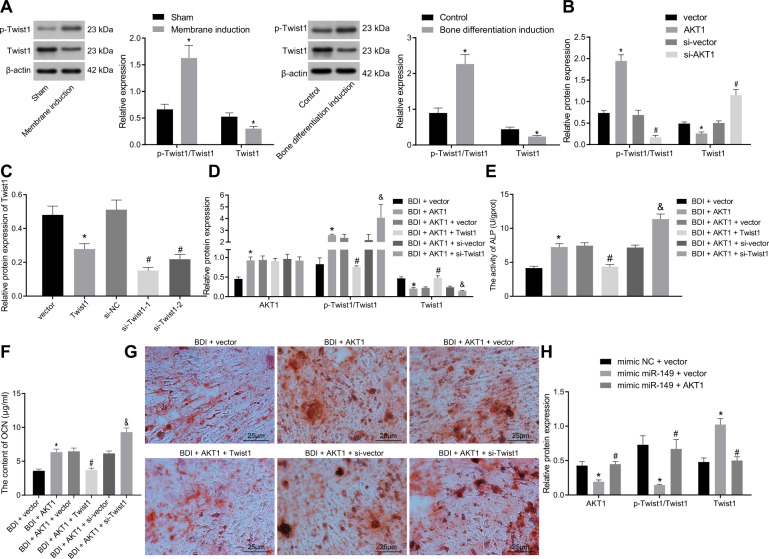
Osteogenic differentiation is a vital process for growth, repair, and remodeling of bones. Accumulating evidence have suggested that microRNAs (miRNAs or miRs) play a crucial role in osteogenic differentiation of mesenchymal stem cells (MSCs). Hence, the current study set out to elucidate the role of miR-149 in osteogenic differentiation of MSCs and the underlying mechanism. First, rat models of bone differentiation were established using the Masquelet-induced membrane technique, and MSCs were isolated. The expression of miR-149 and AKT1 in the rats and cells was detected with RT-qPCR and western blot analysis. The relationships among miR-149, AKT1, and Twist1 were further predicted by online bioinformatics prediction and verified using dual luciferase reporter gene assay. Alteration of miR-149, AKT1, or Twist1 was performed to further explore their effect on osteogenic differentiation of MSCs. miR-149 was poorly expressed in the process of osteogenic differentiation of MSCs, while AKT1 was highly expressed. miR-149 negatively regulated the expression of AKT1, which in turn diminished the protein levels of Twist1 and promoted the phosphorylation levels of Twist1. Lastly, miR-149 acted as an inhibitor of osteogenic differentiation of MSCs, which could be reversed by AKT1. To sum up, miR-149 silencing promoted osteogenic differentiation of MSCs by enhancing Twist1 degradation through AKT1 upregulation, representing a new method for bone repair treatment.
成骨分化是骨骼生长、修复和重塑的重要过程。越来越多的证据表明,微小RNA(miRNA或miR)在间充质干细胞(MSC)的成骨分化中起关键作用。因此,本研究旨在阐明miR-149在MSC成骨分化中的作用及其潜在机制。首先,采用Masquelet诱导膜技术建立大鼠骨分化模型,并分离MSC。通过RT-qPCR和蛋白质印迹分析检测大鼠和细胞中miR-149和AKT1的表达。通过在线生物信息学预测进一步预测miR-149、AKT1和Twist1之间的关系,并使用双荧光素酶报告基因检测进行验证。对miR-149、AKT1或Twist1进行改变,以进一步探讨它们对MSC成骨分化的影响。miR-149在MSC成骨分化过程中表达较低,而AKT1表达较高。miR-149负调控AKT1的表达,进而降低Twist1的蛋白水平并促进Twist1的磷酸化水平。最后,miR-149作为MSC成骨分化的抑制剂,其作用可被AKT1逆转。综上所述,miR-149沉默通过上调AKT1增强Twist1降解促进了MSC的成骨分化,为骨修复治疗提供了一种新方法。