Group of Chemical Biology of Microbe-Host Interactions, Leibniz Institute for Natural Product Research and Infection Biology-Hans-Knöll Institute (HKI), Jena, Germany.
Section for Ecology and Evolution, Department of Biology, University of Copenhagengrid.5254.6, Copenhagen, Denmark.
mSystems. 2022 Feb 22;7(1):e0121421. doi: 10.1128/msystems.01214-21. Epub 2022 Jan 11.
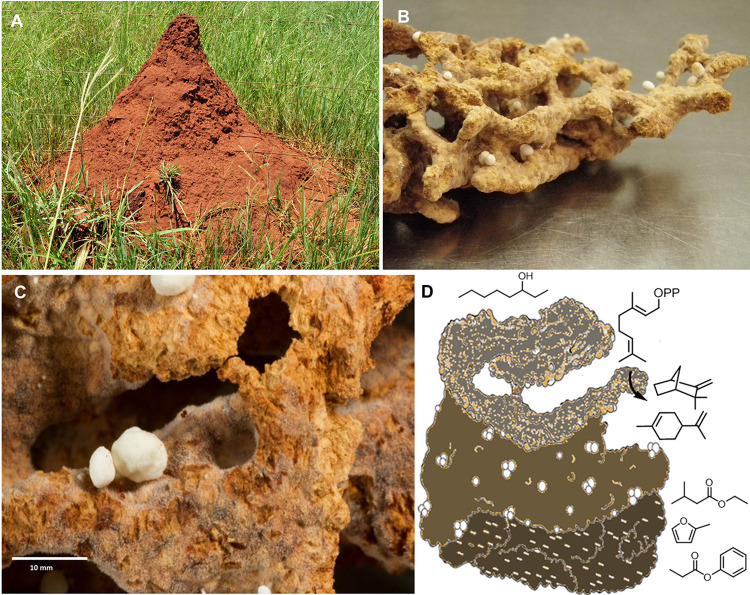
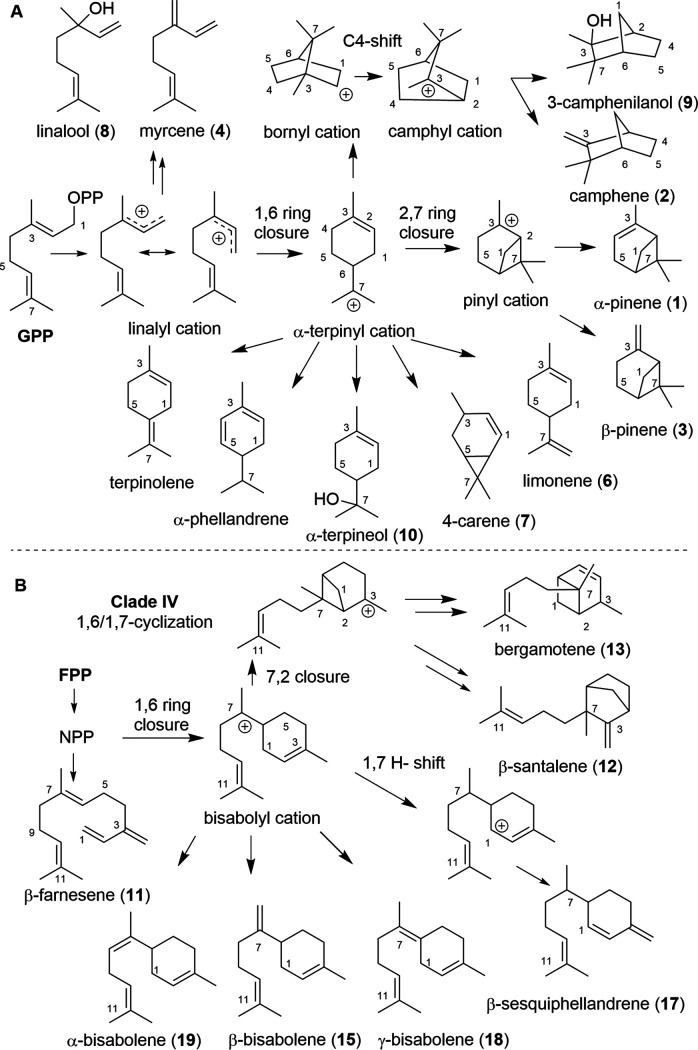
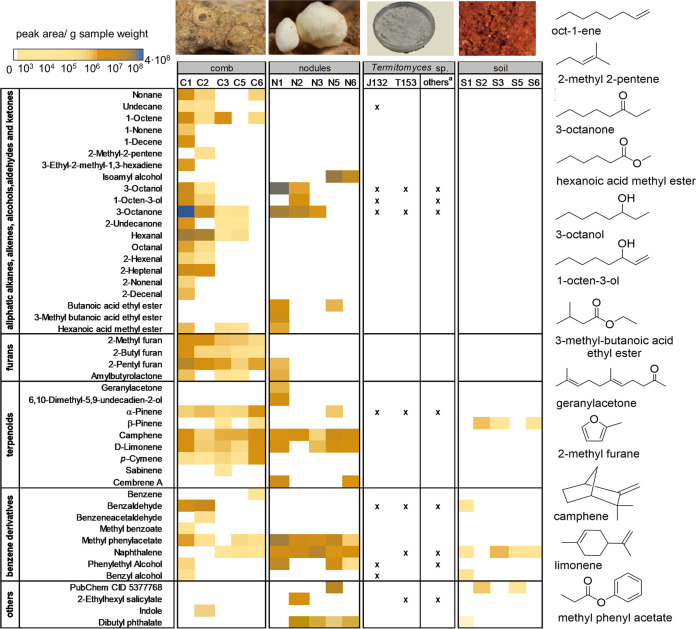
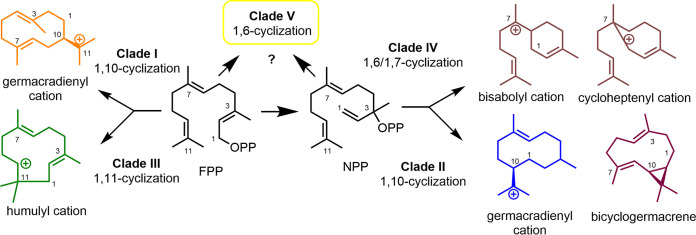
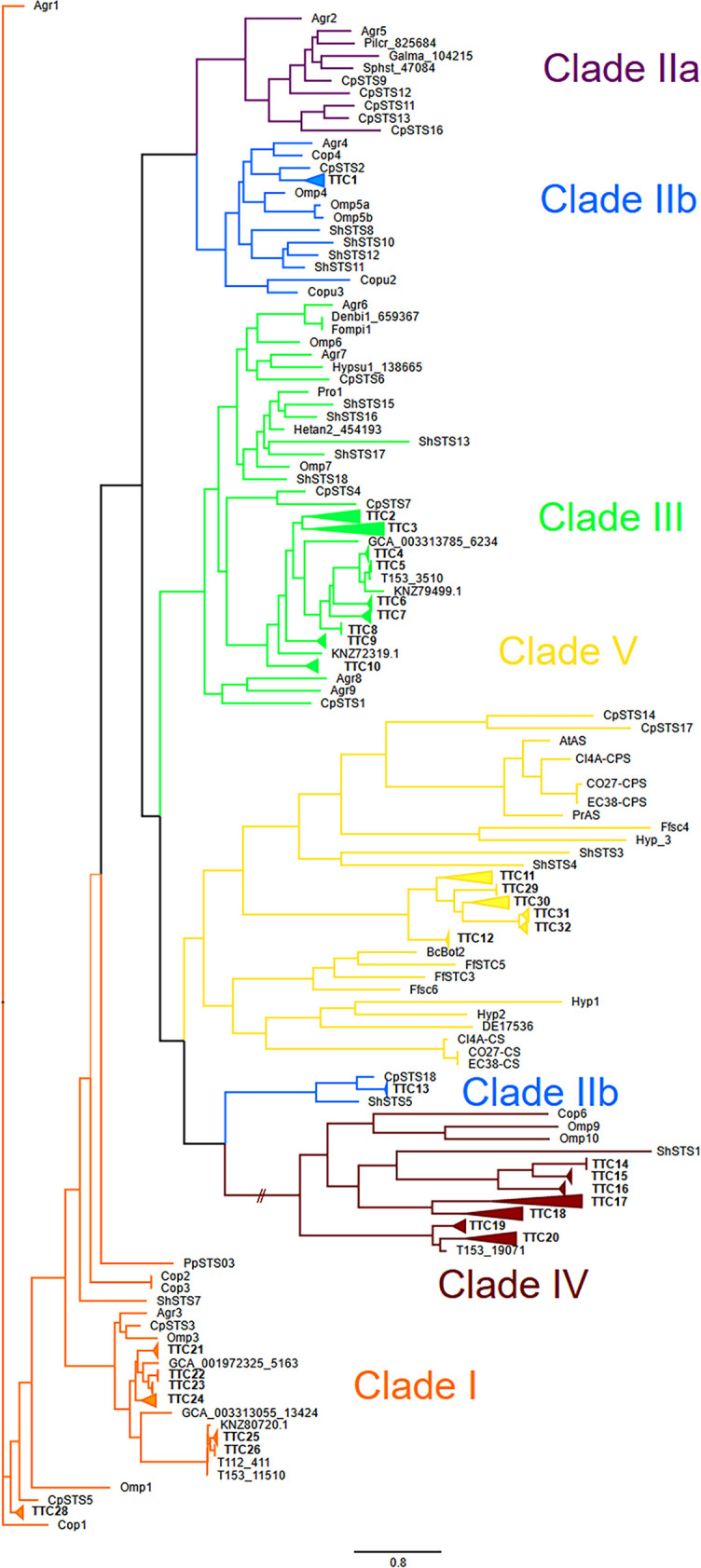
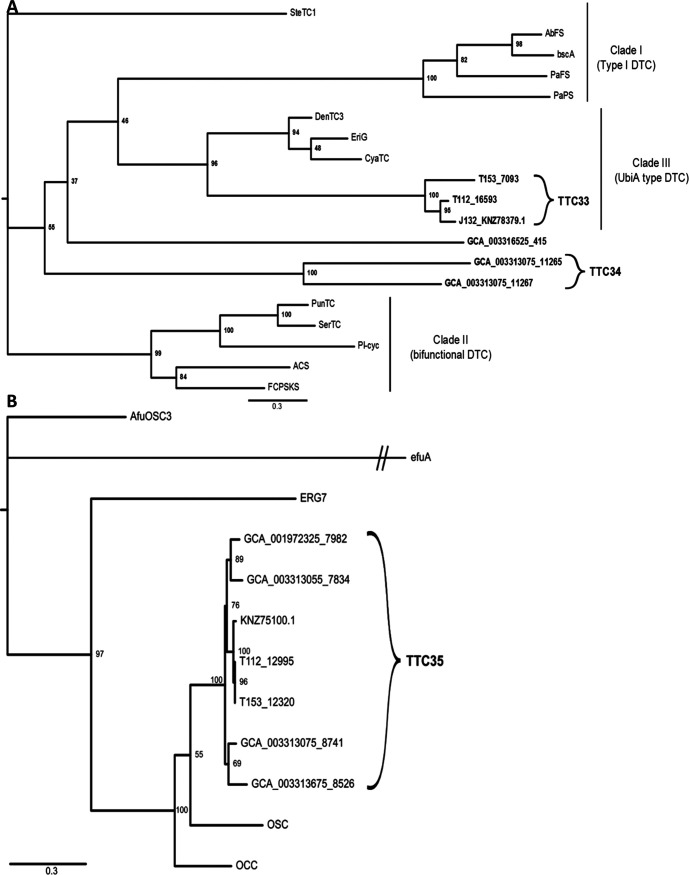
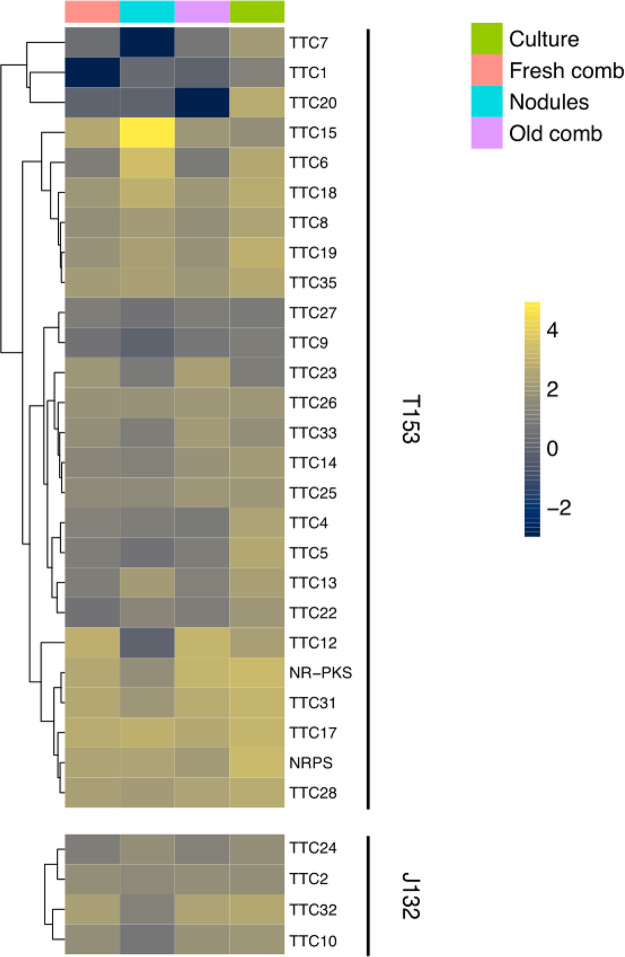
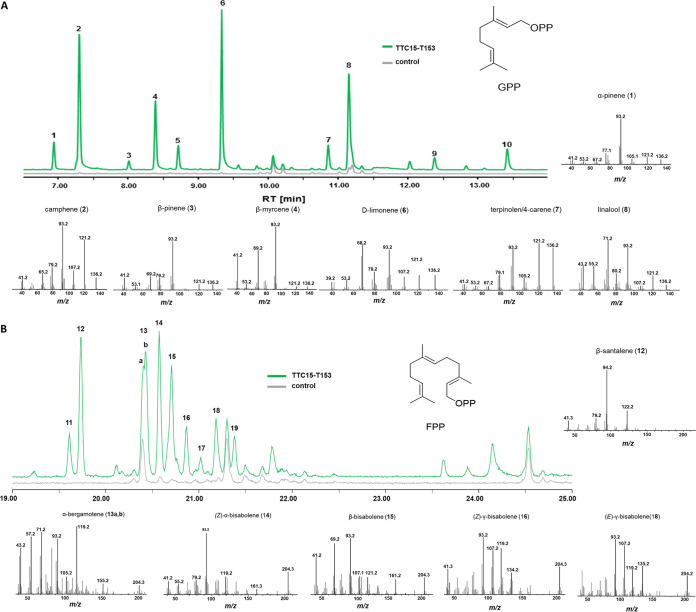
Macrotermitinae termites have domesticated fungi of the genus as food for their colony, analogously to human farmers growing crops. Termites propagate the fungus by continuously blending foraged and predigested plant material with fungal mycelium and spores (fungus comb) within designated subterranean chambers. To test the hypothesis that the obligate fungal symbiont emits specific volatiles (odor) to orchestrate its life cycle and symbiotic relations, we determined the typical volatile emission of fungus comb biomass and nodules, revealing α-pinene, camphene, and d-limonene as the most abundant terpenes. Genome mining of followed by gene expression studies and phylogenetic analysis of putative enzymes related to secondary metabolite production encoded by the genomes uncovered a conserved and specific biosynthetic repertoire across strains. Finally, we proved by heterologous expression and enzymatic assays that a highly expressed gene sequence encodes a rare bifunctional mono-/sesquiterpene cyclase able to produce the abundant comb volatiles camphene and d-limonene. The symbiosis between macrotermitinae termites and is obligate for both partners and is one of the most important contributors to biomass conversion in the Old World tropic's ecosystems. To date, research efforts have dominantly focused on acquiring a better understanding of the degradative capabilities of to sustain the obligate nutritional symbiosis, but our knowledge of the small-molecule repertoire of the fungal cultivar mediating interspecies and interkingdom interactions has remained fragmented. Our omics-driven chemical, genomic, and phylogenetic study provides new insights into the volatilome and biosynthetic capabilities of the evolutionarily conserved fungal genus , which allows matching metabolites to genes and enzymes and, thus, opens a new source of unique and rare enzymatic transformations.
巨白蚁属的白蚁已将属的真菌驯化为蚁群的食物,类似于人类农民种植庄稼。白蚁通过不断地将觅食和预消化的植物材料与地下指定室中的真菌菌丝体和孢子(真菌梳)混合来繁殖真菌。为了测试专性真菌共生体是否会发出特定挥发物(气味)来协调其生命周期和共生关系的假说,我们确定了真菌梳生物质和菌核的典型挥发物排放,揭示了α-蒎烯、莰烯和柠檬烯是最丰富的萜烯。对进行基因组挖掘,然后对相关基因进行表达研究和系统发育分析,发现与次生代谢产物产生相关的假定酶编码的基因组揭示了跨菌株的保守和特定生物合成库。最后,我们通过异源表达和酶分析证明,一个高度表达的基因序列编码一种罕见的双功能单-/倍半萜环化酶,能够产生丰富的梳状挥发物莰烯和柠檬烯。巨白蚁属白蚁与之间的共生关系对双方都是必需的,是旧世界热带生态系统中生物量转化的最重要贡献者之一。迄今为止,研究工作主要集中在更好地了解对维持专性营养共生至关重要的能力,但我们对介导种间和种间相互作用的真菌品种的小分子库的知识仍然是零散的。我们的组学驱动的化学、基因组和系统发育研究为进化上保守的真菌属的挥发组学和生物合成能力提供了新的见解,这允许将代谢物与基因和酶匹配,从而开辟了独特和罕见的酶转化的新来源。