Department of Molecular Metabolism, Division of Biological Sciences, Harvard T.H. Chan School of Public Health, Boston, Massachusetts, USA.
Graduate School of Biomedical Sciences, Department of Cellular, Molecular, and Developmental Biology, Tufts University School of Medicine, Boston, Massachusetts, USA.
JCI Insight. 2022 Feb 22;7(4):e150041. doi: 10.1172/jci.insight.150041.
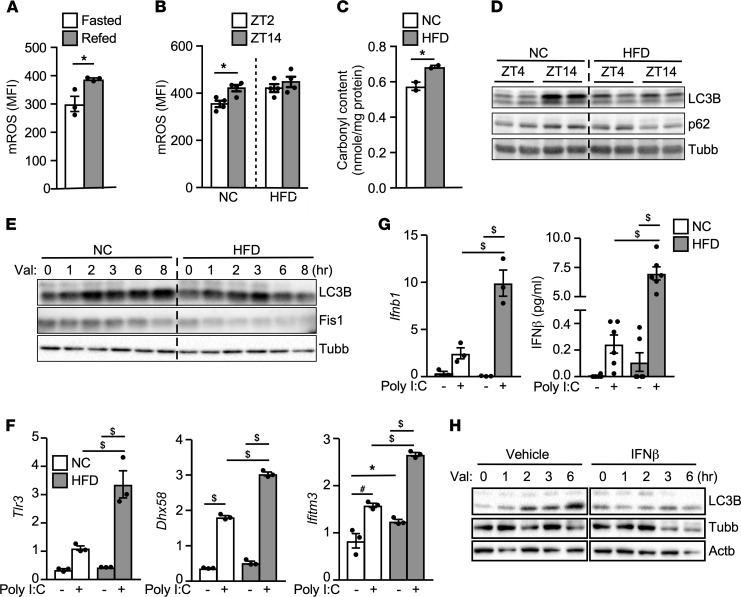
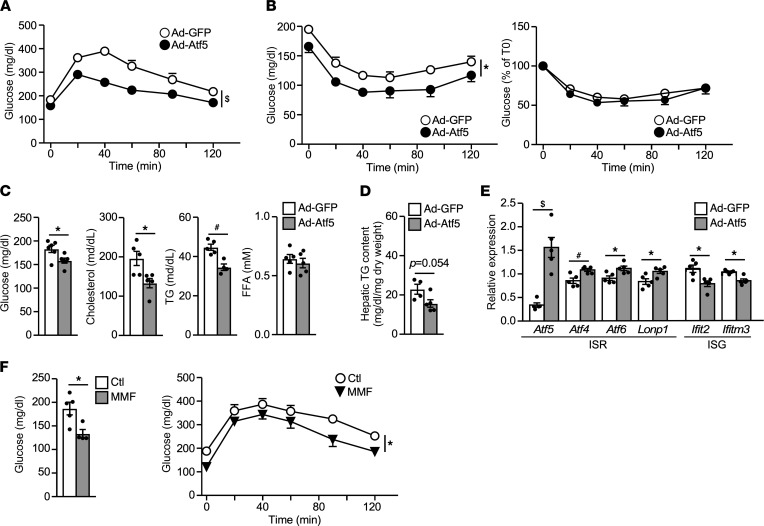
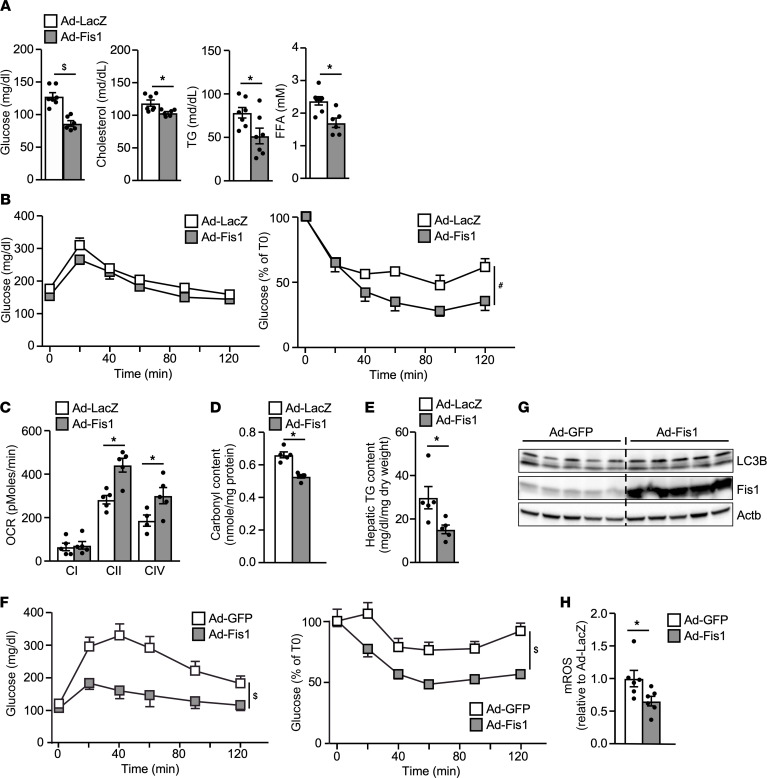
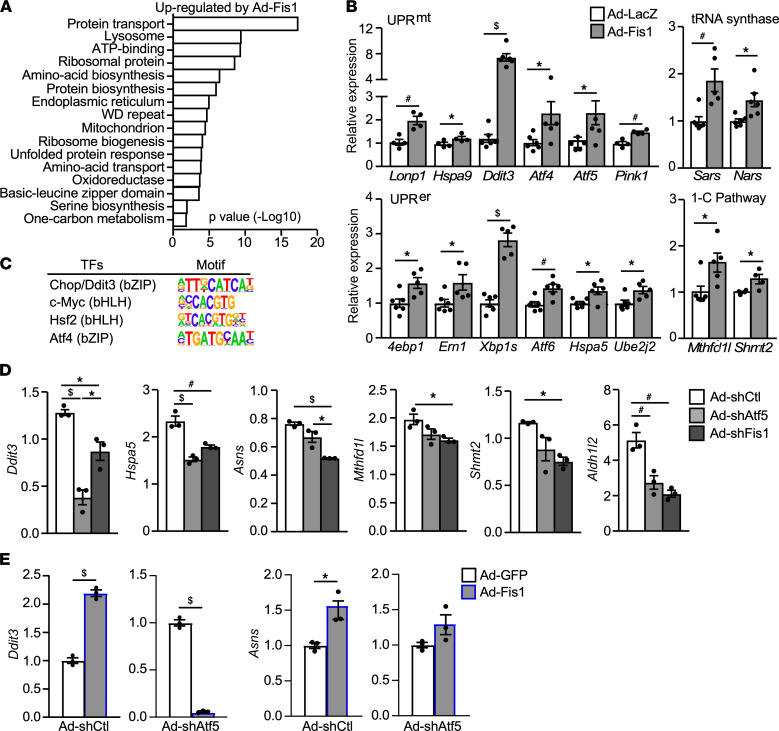
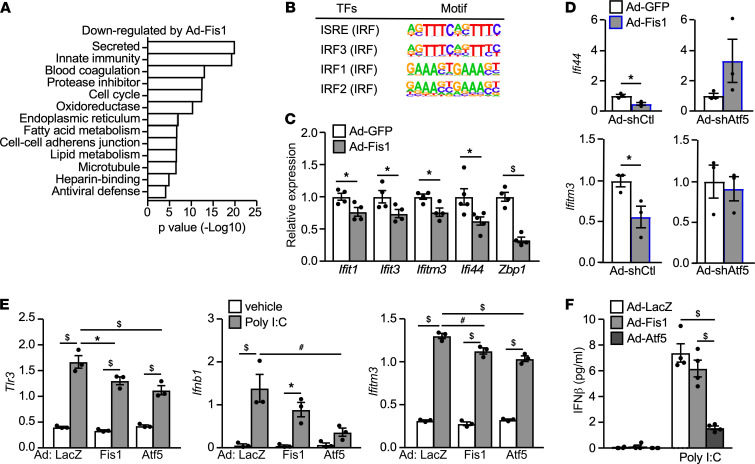
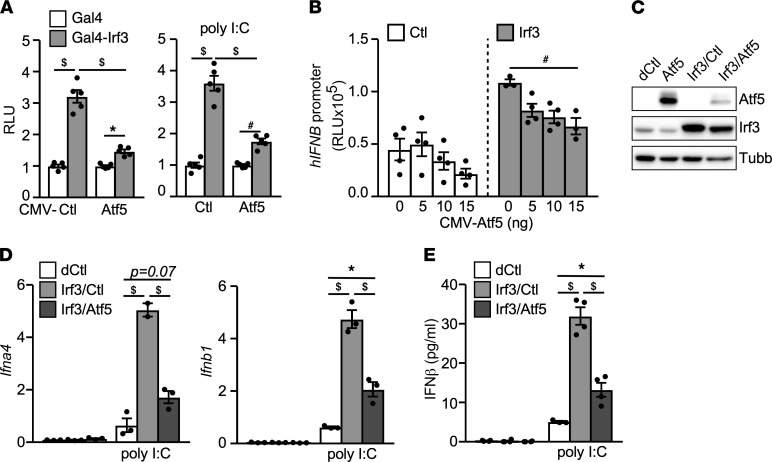
Mitophagy and mitochondrial integrated stress response (ISR) are 2 primary protective mechanisms to maintain functional mitochondria. Whether these 2 processes are coordinately regulated remains unclear. Here we show that mitochondrial fission 1 protein (Fis1), which is required for completion of mitophagy, serves as a signaling hub linking mitophagy and ISR. In mouse hepatocytes, high fat diet (HFD) feeding induces unresolved oxidative stress, defective mitophagy and enhanced type I interferon (IFN-I) response implicated in promoting metabolic inflammation. Adenoviral-mediated acute hepatic Fis1 overexpression is sufficient to reduce oxidative damage and improve glucose homeostasis in HFD-fed mice. RNA-Seq analysis reveals that Fis1 triggers a retrograde mitochondria-to-nucleus communication upregulating ISR genes encoding anti-oxidant defense, redox homeostasis, and proteostasis pathways. Fis1-mediated ISR also suppresses expression of IFN-I-stimulated genes through activating transcription factor 5 (Atf5), which inhibits the transactivation activity of interferon regulatory factor 3 (Irf3) known to control IFN-I production. Metabolite analysis demonstrates that Fis1 activation leads to accumulation of fumarate, a TCA cycle intermediate capable of increasing Atf5 activity. Consequently, hepatic Atf5 overexpression or monomethyl fumarate (MMF) treatment improves glucose homeostasis in HFD-fed mice. Collectively, these results support the potential use of small molecules targeting the Fis1-Atf5 axis, such as MMF, to treat metabolic diseases.
自噬和线粒体整合应激反应(ISR)是维持功能线粒体的两种主要保护机制。这两个过程是否协同调节尚不清楚。在这里,我们表明,完成自噬所必需的线粒体分裂蛋白 1(Fis1)是连接自噬和 ISR 的信号枢纽。在小鼠肝细胞中,高脂肪饮食(HFD)喂养会引起未解决的氧化应激、有缺陷的自噬和增强的 I 型干扰素(IFN-I)反应,这与促进代谢炎症有关。腺病毒介导的急性肝 Fis1 过表达足以减少 HFD 喂养小鼠的氧化损伤并改善葡萄糖稳态。RNA-Seq 分析表明,Fis1 通过触发逆行线粒体到细胞核的通讯来触发 ISR 基因的表达,这些基因编码抗氧化防御、氧化还原稳态和蛋白质稳态途径。Fis1 介导的 ISR 还通过激活转录因子 5(Atf5)抑制干扰素调节因子 3(Irf3)的转录激活活性来抑制 IFN-I 刺激基因的表达,Irf3 已知控制 IFN-I 的产生。代谢物分析表明,Fis1 的激活导致 TCA 循环中间产物富马酸的积累,富马酸能够增加 Atf5 的活性。因此,肝 Atf5 过表达或单甲基富马酸(MMF)治疗可改善 HFD 喂养小鼠的葡萄糖稳态。总之,这些结果支持使用靶向 Fis1-Atf5 轴的小分子,如 MMF,治疗代谢疾病的潜力。