Leaver Amber M, Gonzalez Sara, Vasavada Megha, Kubicki Antoni, Jog Mayank, Wang Danny J J, Woods Roger P, Espinoza Randall, Gollan Jacqueline, Parrish Todd, Narr Katherine L
Department of Radiology, Northwestern University, Chicago, IL, 60611, United States; Department of Neurology, University of California Los Angeles, Los Angeles, CA, 90095, United States.
Department of Neurology, University of California Los Angeles, Los Angeles, CA, 90095, United States.
Neuroimage. 2022 Apr 15;250:118874. doi: 10.1016/j.neuroimage.2022.118874. Epub 2022 Jan 10.
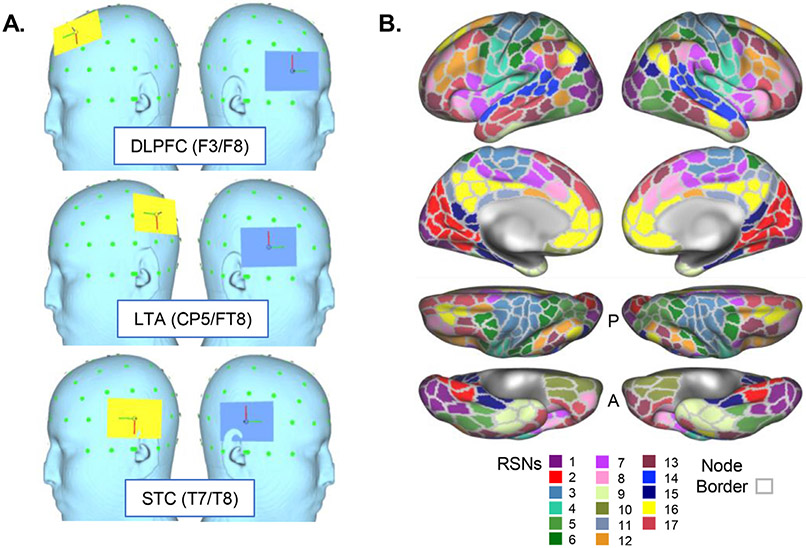
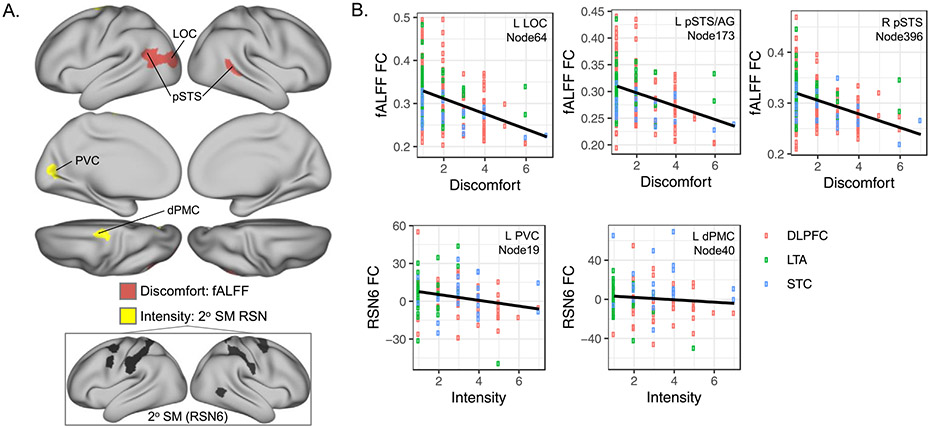
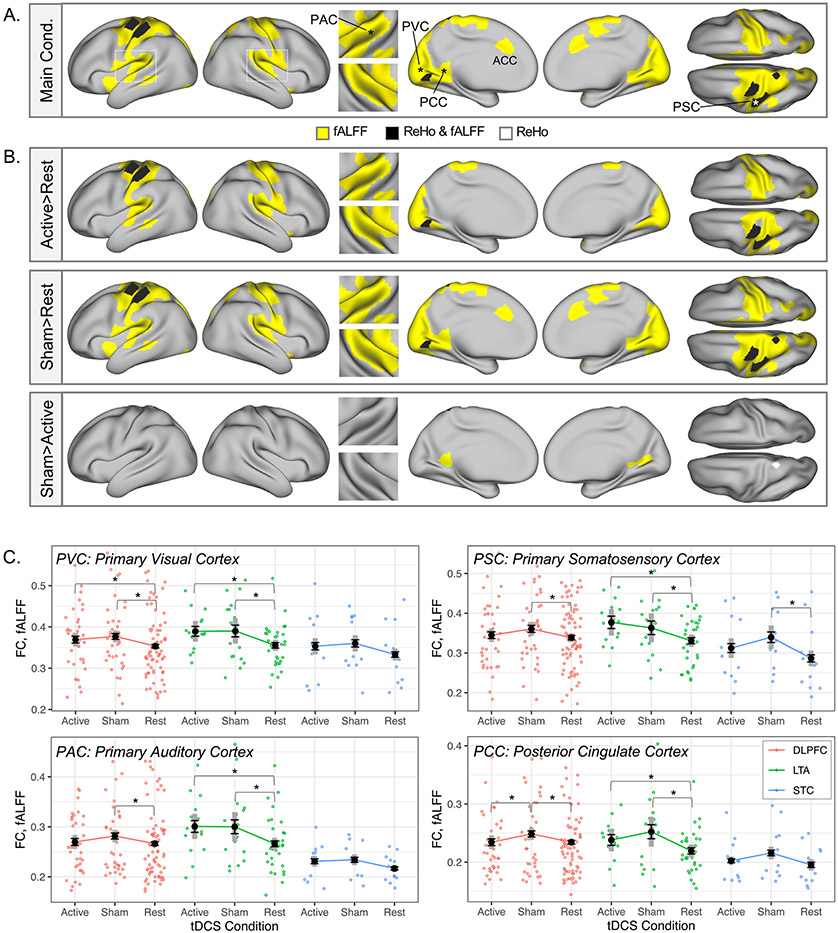
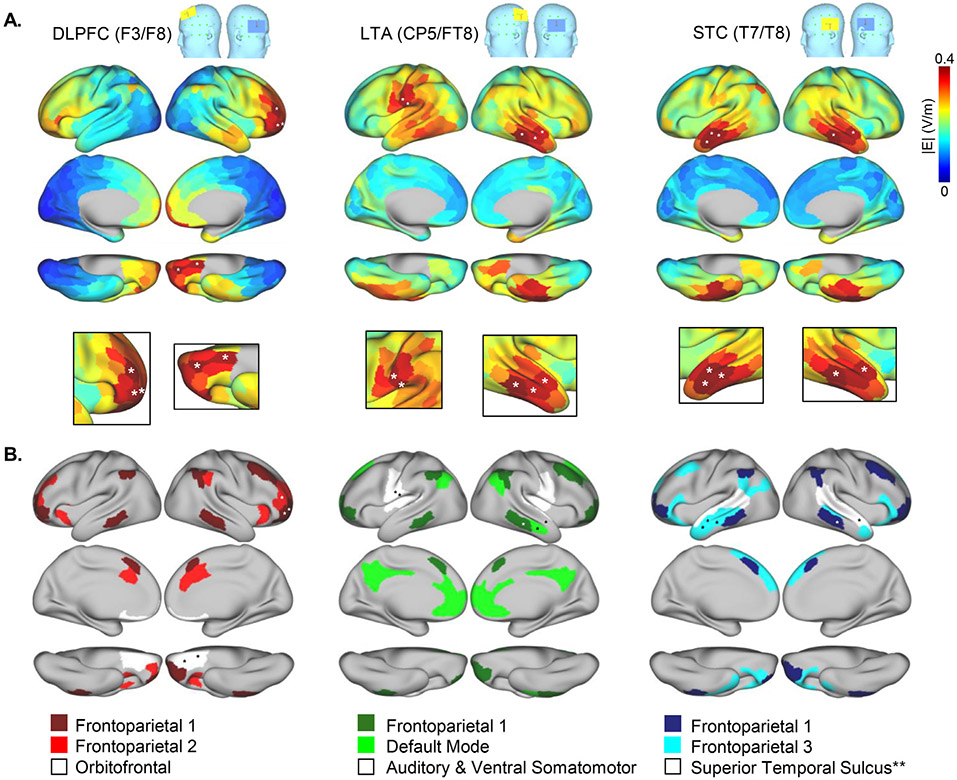
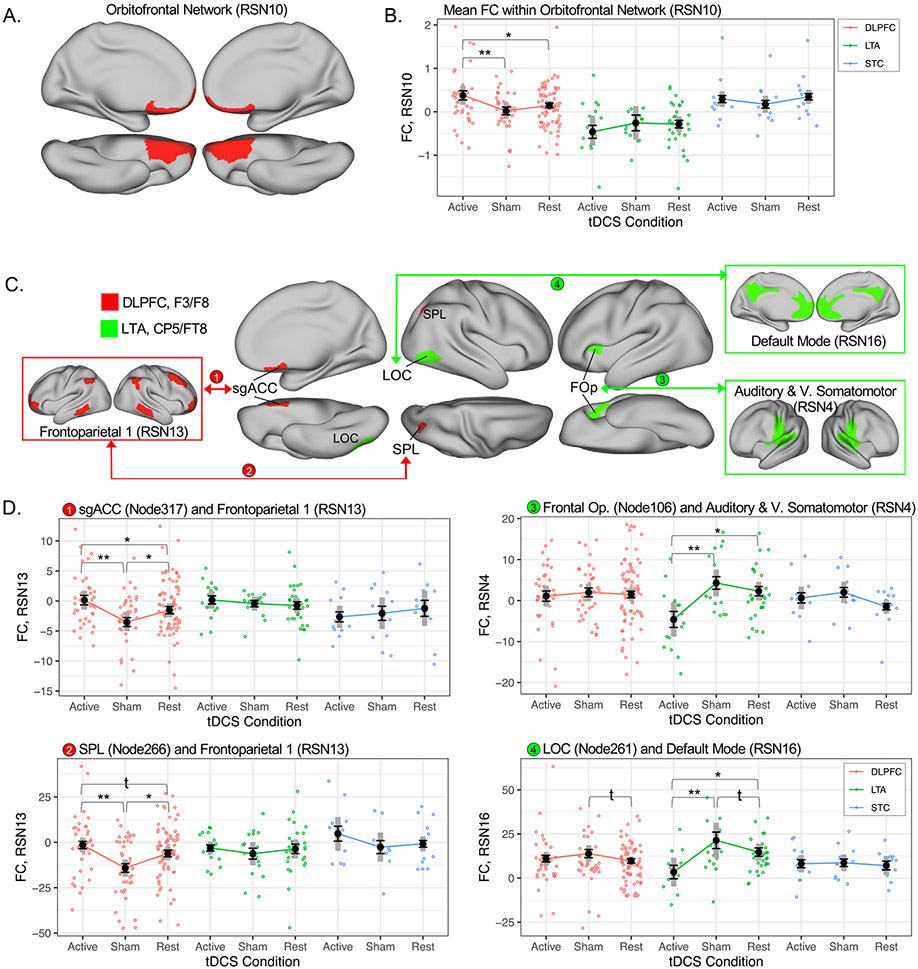
Transcranial direct current stimulation (tDCS) can influence performance on behavioral tasks and improve symptoms of brain conditions. Yet, it remains unclear precisely how tDCS affects brain function and connectivity. Here, we measured changes in functional connectivity (FC) metrics in blood-oxygenation-level-dependent (BOLD) fMRI data acquired during MR-compatible tDCS in a whole-brain analysis with corrections for false discovery rate. Volunteers (n = 64) received active tDCS, sham tDCS, and rest (no stimulation), using one of three previously established electrode tDCS montages targeting left dorsolateral prefrontal cortex (DLPFC, n = 37), lateral temporoparietal area (LTA, n = 16), or superior temporal cortex (STC, n = 11). In brain networks where simulated E field was highest in each montage, connectivity with remote nodes decreased during active tDCS. During active DLPFC-tDCS, connectivity decreased between a fronto-parietal network and subgenual ACC, while during LTA-tDCS connectivity decreased between an auditory-somatomotor network and frontal operculum. Active DLPFC-tDCS was also associated with increased connectivity within an orbitofrontal network overlapping subgenual ACC. Irrespective of montage, FC metrics increased in sensorimotor and attention regions during both active and sham tDCS, which may reflect the cognitive-perceptual demands of tDCS. Taken together, these results indicate that tDCS may have both intended and unintended effects on ongoing brain activity, stressing the importance of including sham, stimulation-absent, and active comparators in basic science and clinical trials of tDCS.
经颅直流电刺激(tDCS)能够影响行为任务的表现,并改善脑部疾病的症状。然而,tDCS究竟如何影响脑功能和脑连接性仍不清楚。在此,我们在一项全脑分析中测量了在磁共振兼容的tDCS过程中采集的血氧水平依赖(BOLD)功能磁共振成像(fMRI)数据中功能连接(FC)指标的变化,并对错误发现率进行了校正。志愿者(n = 64)接受了主动tDCS、伪tDCS和静息(无刺激),使用先前建立的三种电极tDCS蒙太奇之一,分别靶向左侧背外侧前额叶皮质(DLPFC,n = 37)、颞顶叶外侧区域(LTA,n = 16)或颞上皮质(STC,n = 11)。在每个蒙太奇中模拟电场最高的脑网络中,主动tDCS期间与远程节点的连接性降低。在主动DLPFC - tDCS期间,额顶网络与膝下前扣带回之间的连接性降低,而在LTA - tDCS期间,听觉 - 躯体运动网络与额下回之间的连接性降低。主动DLPFC - tDCS还与重叠膝下前扣带回的眶额网络内连接性增加有关。无论蒙太奇如何,在主动和伪tDCS期间,感觉运动和注意力区域的FC指标均增加,这可能反映了tDCS的认知 - 感知需求。综上所述,这些结果表明tDCS可能对正在进行的脑活动产生有意和无意的影响,强调了在tDCS的基础科学和临床试验中纳入伪刺激、无刺激和主动对照的重要性。