Obstetrics, Gynecology & Women's Health, Albert Einstein College of Medicine / Montefiore Medical Center, Bronx, NY, USA
Obstetrics & Gynecology, New York Medical College / Westchester Medical Center, Valhalla, NY, USA.
BMJ Sex Reprod Health. 2022 Apr;48(2):137-145. doi: 10.1136/bmjsrh-2021-201389. Epub 2022 Jan 11.
Globally, access to safe abortion is limited. We aimed to assess the safety, effectiveness and acceptability of harm reduction counselling for abortion, which we define as the provision of information about safe abortion methods to pregnant persons seeking abortion.
We searched PubMed, EMBASE, ClinicalTrials.gov, Cochrane, Global Index Medicus and the grey literature up to October 2021. We included studies in which healthcare providers gave pregnant persons information on safe use of abortifacient medications without providing the actual medications. We conducted a descriptive summary of results and a risk of bias assessment using the ROBINS-I tool. Our primary outcome was the proportion of pregnant persons who used misoprostol to induce abortion rather than other methods among those who received harm reduction counselling.
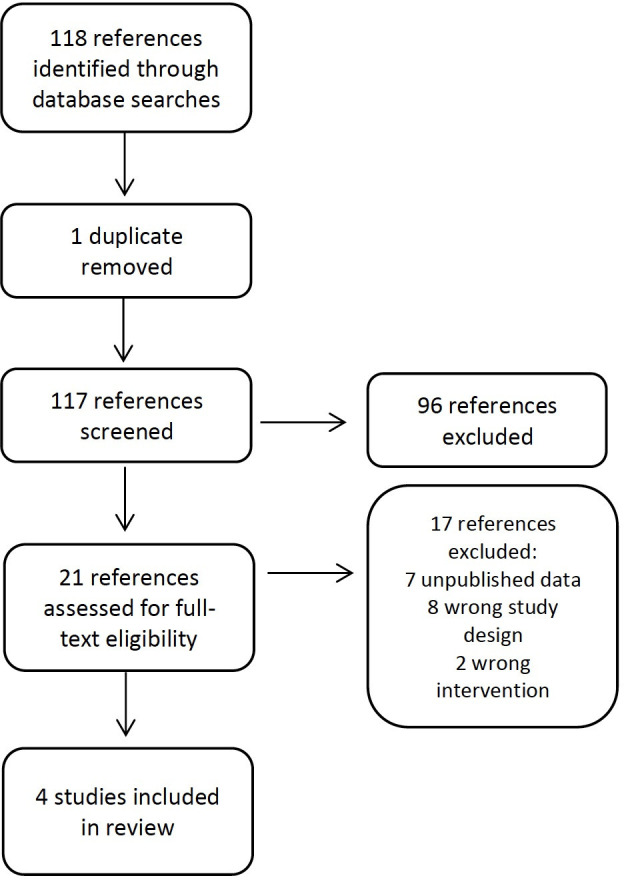
We included four observational studies with a total of 4002 participants. Most pregnant persons who received harm reduction counselling induced abortion using misoprostol (79%-100%). Serious complication rates were low (0%-1%). Uterine aspiration rates were not always reported but were in the range of 6%-22%. Patient satisfaction with the harm reduction intervention was high (85%-98%) where reported. We rated the risk of bias for all studies as high due to a lack of comparison groups and high lost to follow-up rates.
Based on a synthesis of four studies with serious methodological limitations, most recipients of harm reduction counselling use misoprostol for abortion, have low complication rates, and are satisfied with the intervention. More research is needed to determine abortion success outcomes from the harm reduction approach.
This work did not receive any funding.
We registered the review in the PROSPERO database of systematic reviews (ID number: CRD42020200849).
在全球范围内,安全堕胎的途径十分有限。本研究旨在评估减少堕胎伤害咨询对堕胎的安全性、有效性和可接受性,我们将减少堕胎伤害咨询定义为向寻求堕胎的孕妇提供关于安全堕胎方法的信息。
我们检索了 PubMed、EMBASE、ClinicalTrials.gov、Cochrane、全球医学索引和灰色文献,检索截至 2021 年 10 月。我们纳入了医疗保健提供者向孕妇提供关于安全使用堕胎药物的信息而不提供实际药物的研究。我们对结果进行了描述性总结,并使用 ROBINS-I 工具进行了偏倚风险评估。我们的主要结局是接受减少堕胎伤害咨询的孕妇中,使用米索前列醇而非其他方法进行堕胎的比例。
我们纳入了四项观察性研究,共 4002 名参与者。大多数接受减少堕胎伤害咨询的孕妇使用米索前列醇进行堕胎(79%-100%)。严重并发症发生率较低(0%-1%)。子宫抽吸率并非总是报告,但在 6%-22%之间。如果有报告,患者对减少堕胎伤害干预的满意度很高(85%-98%)。由于缺乏对照组和高失访率,我们对所有研究的偏倚风险进行了评估,结果均为高。
基于四项存在严重方法学局限性的研究综合分析,大多数接受减少堕胎伤害咨询的人使用米索前列醇进行堕胎,并发症发生率较低,并且对干预措施满意。需要更多的研究来确定减少堕胎伤害方法的堕胎成功率。
本工作未获得任何资金支持。
我们在 PROSPERO 系统评价数据库(注册号:CRD42020200849)中注册了这项综述。