Division of GastroenterologyUnion HospitalTongji Medical CollegeHuazhong University of Science and TechnologyWuhanChina.
Wuhan Medical Treatment CentreWuhanChina.
Hepatol Commun. 2022 Jun;6(6):1301-1321. doi: 10.1002/hep4.1892. Epub 2022 Jan 11.
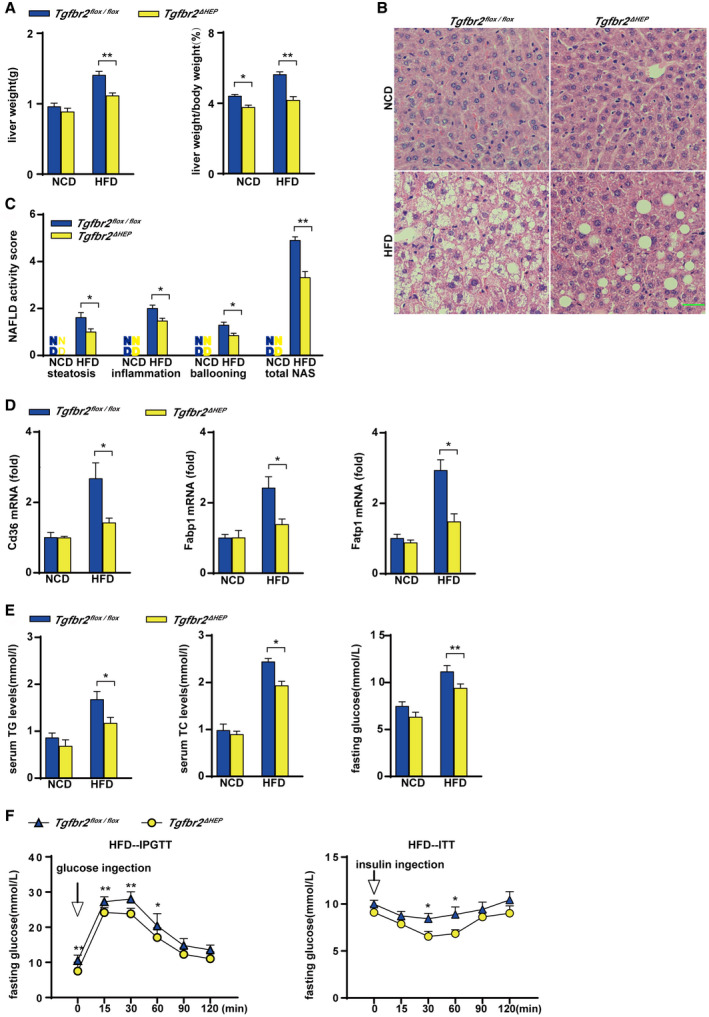
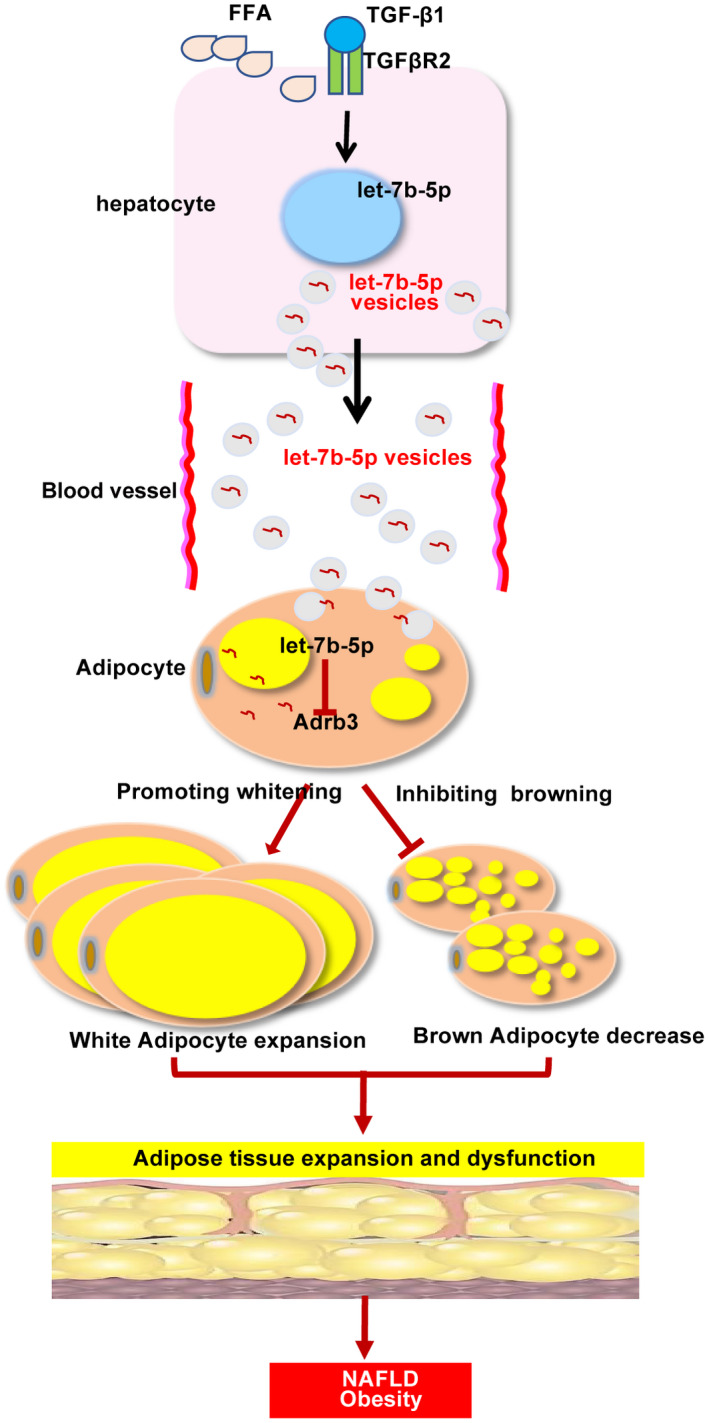
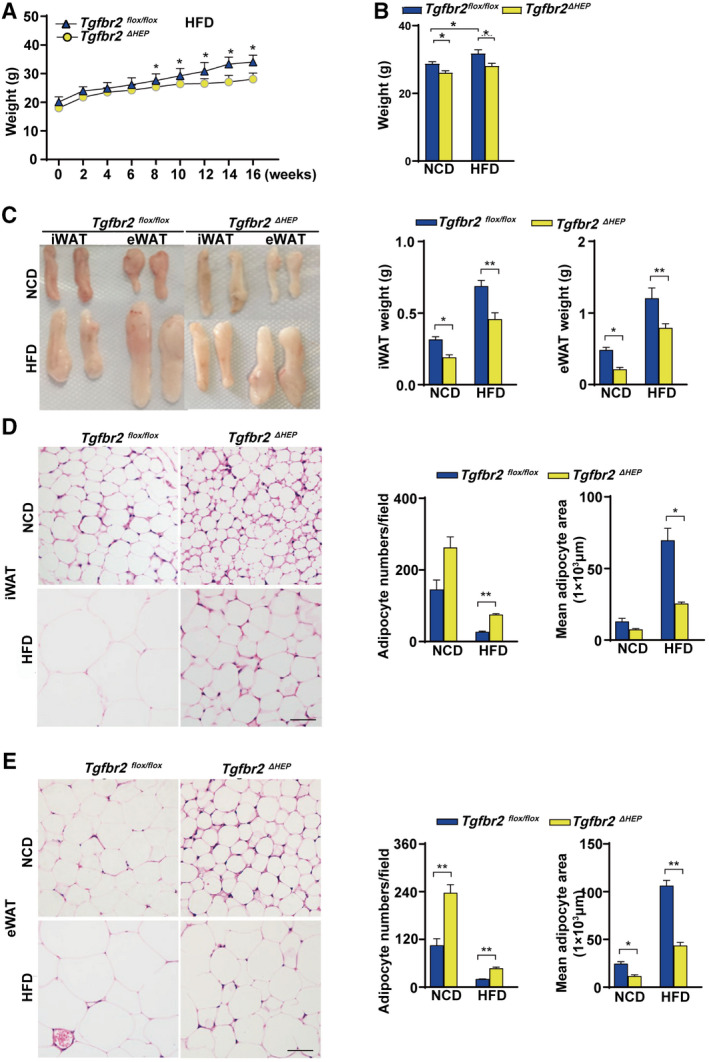
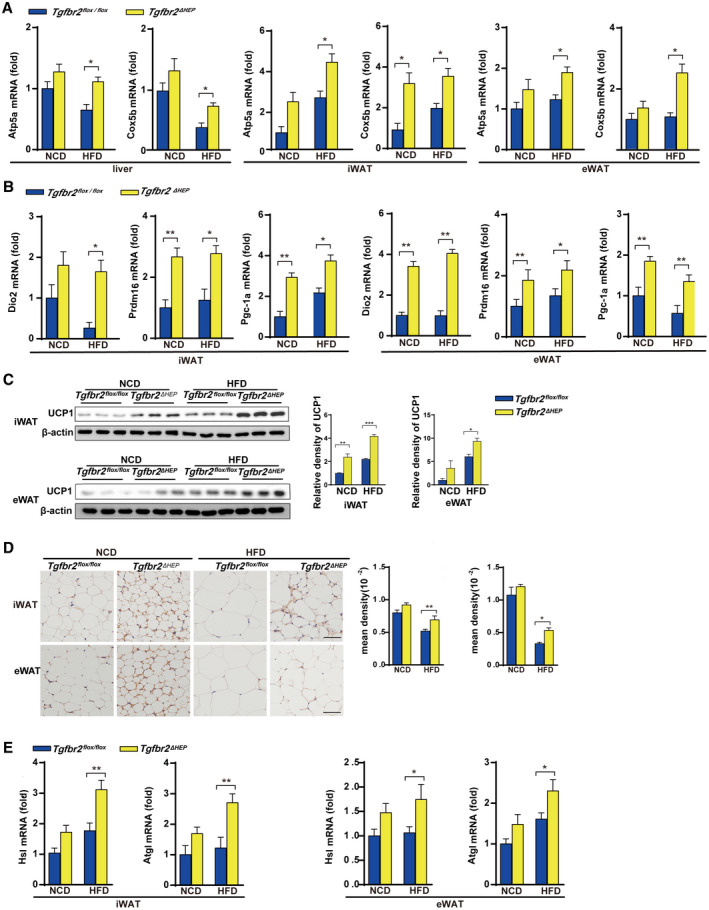
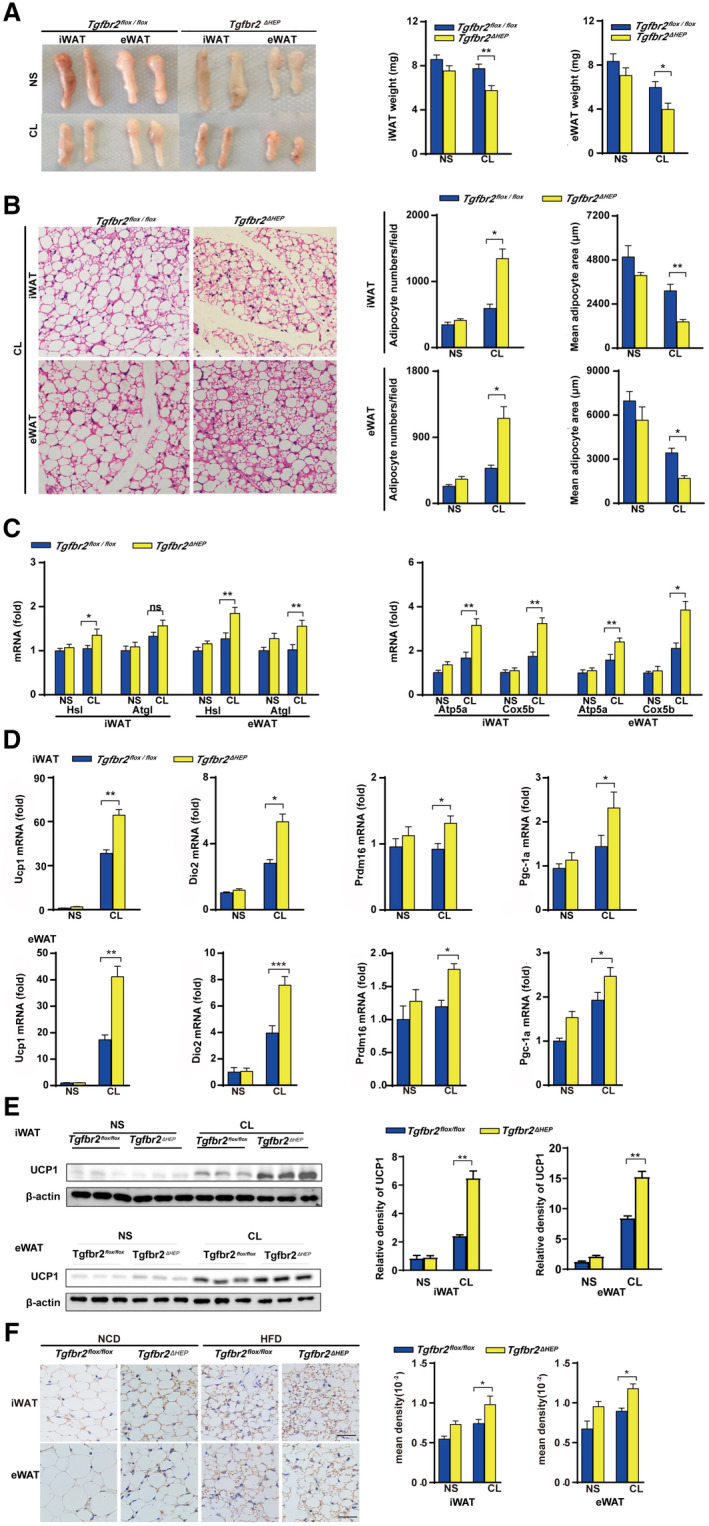
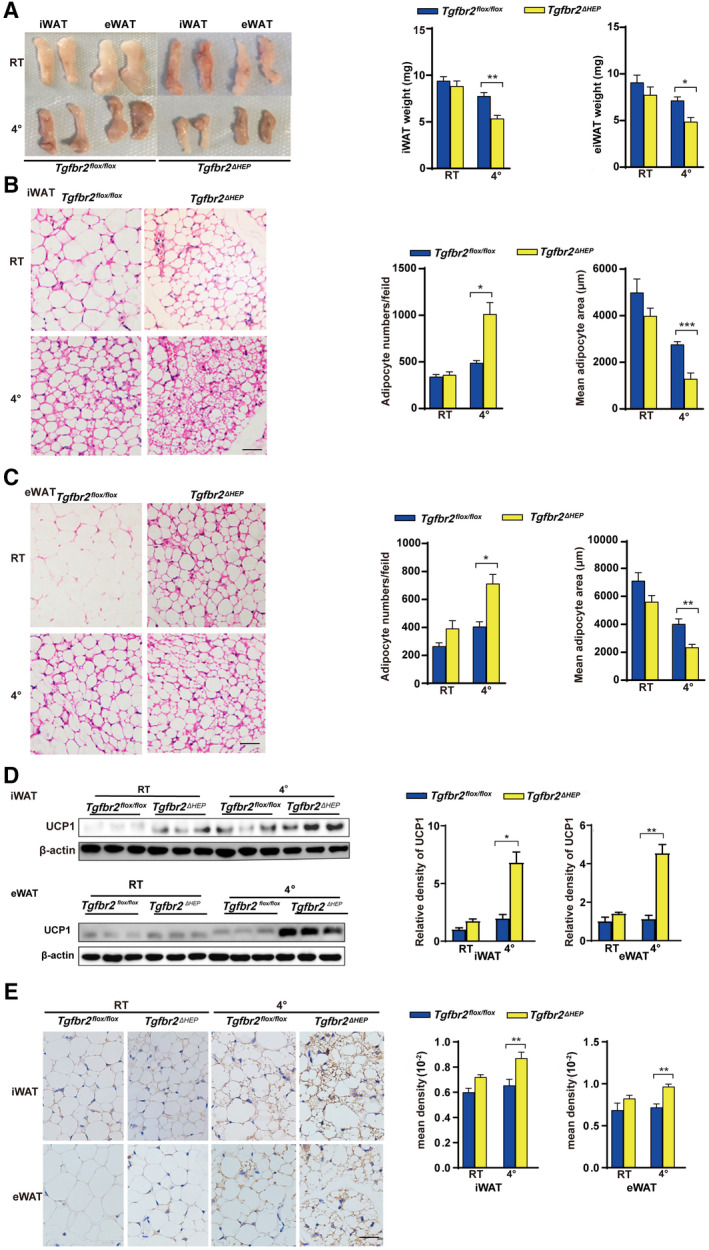
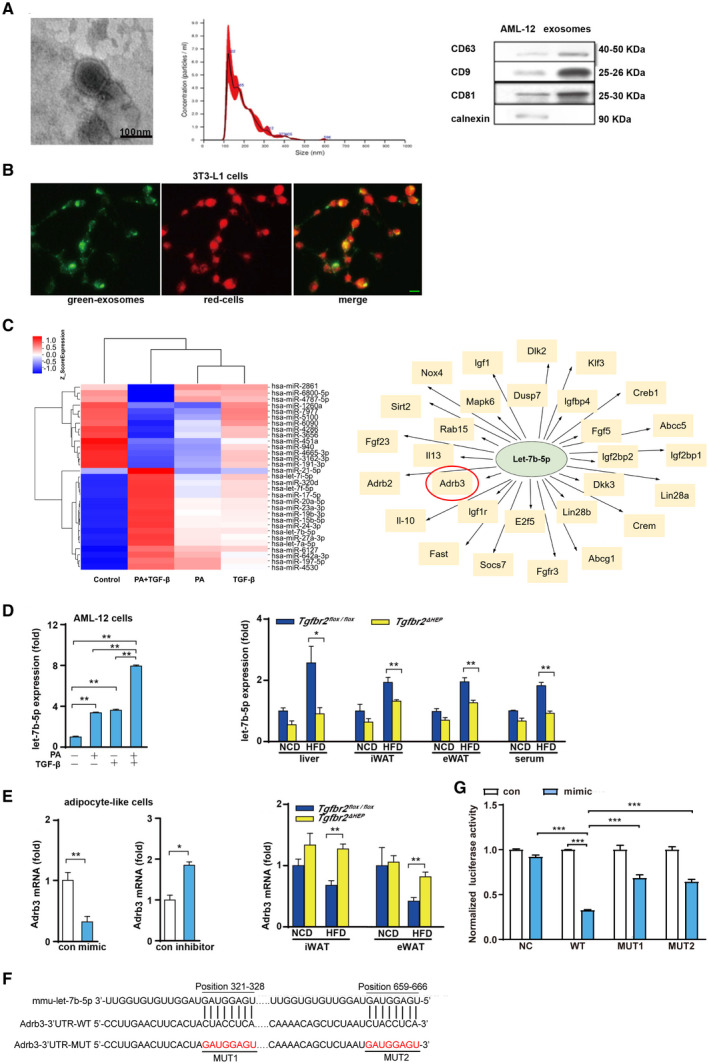
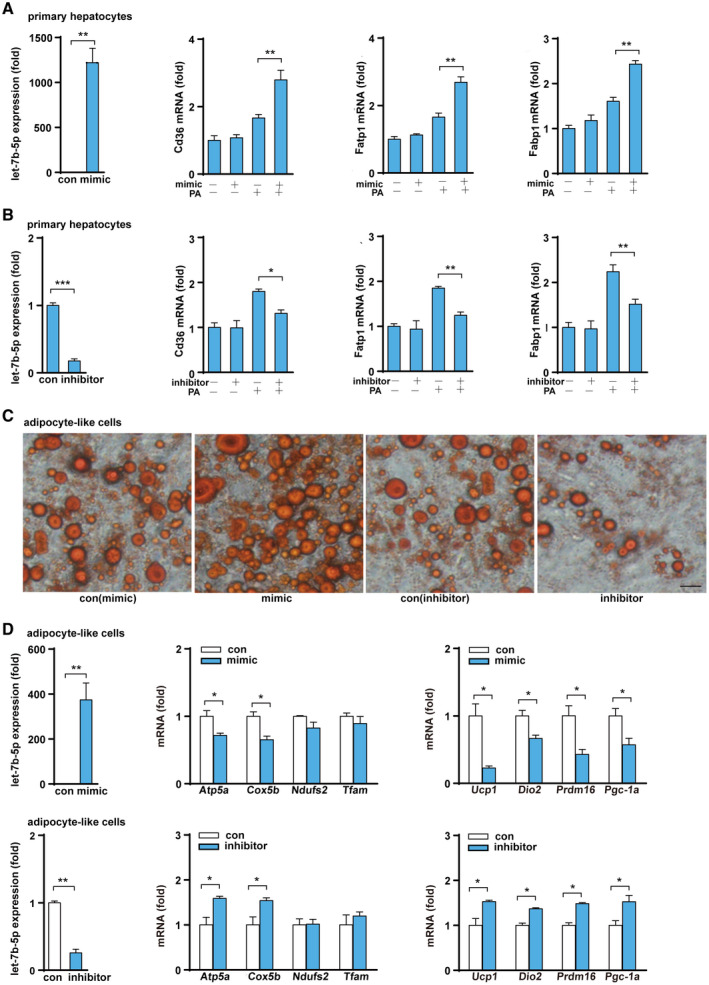
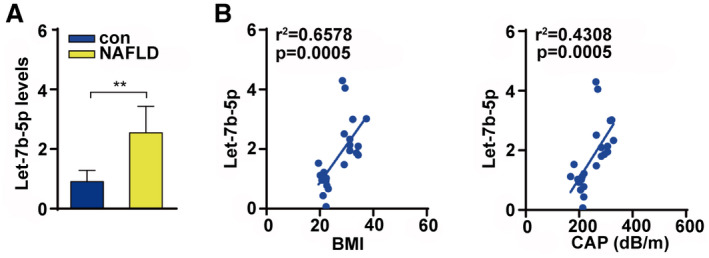
Transforming growth factor beta (TGF-β) signaling in hepatocytes promotes steatosis and body weight gain. However, processes that TGF-β signaling in hepatocytes promote pathological body weight gain in nonalcoholic fatty liver disease (NAFLD) are incompletely understood. Obesity and NAFLD were induced by 16 weeks of feeding a high-fat diet (HFD) in hepatocyte-specific TGF-β receptor II-deficient (Tgfbr2 ) and Tgfbr2 mice. In addition, browning of white adipose tissue (WAT) was induced by administration of CL-316,243 (a β3-adrenergic agonist) or cold exposure for 7 days. Compared with Tgfbr2 mice, Tgfbr2 mice were resistant to steatosis and obesity. The metabolic changes in Tgfbr2 mice were due to the increase of mitochondrial oxidative phosphorylation in the liver and white-to-beige fat conversion. A further mechanistic study revealed that exosomal let-7b-5p derived from hepatocytes was robustly elevated after stimulation with palmitic acid and TGF-β. Indeed, let-7b-5p levels were low in the liver, serum exosomes, inguinal WAT, and epididymal WAT in HFD-fed Tgfbr2 mice. Moreover, 3T3-L1 cells internalized hepatocyte-derived exosomes. An in vitro experiment demonstrated that let-7b-5p overexpression increased hepatocyte fatty acid transport and inhibited adipocyte-like cell thermogenesis, whereas let-7b-5p inhibitor exerted the opposite effects. Conclusion: Hepatocyte TGF-β-let-7b-5p signaling promotes HFD-induced steatosis and obesity by reducing mitochondrial oxidative phosphorylation and suppressing white-to-beige fat conversion. This effect of hepatocyte TGF-β signaling in metabolism is partially associated with exosomal let-7b-5p.
转化生长因子-β(TGF-β)信号在肝细胞中促进脂肪变性和体重增加。然而,TGF-β信号在肝细胞中促进非酒精性脂肪性肝病(NAFLD)病理性体重增加的过程尚不完全清楚。通过给予高脂肪饮食(HFD)喂养 16 周,在肝细胞特异性 TGF-β受体 II 缺陷(Tgfbr2)和 Tgfbr2 小鼠中诱导肥胖和 NAFLD。此外,通过给予 CL-316,243(β3-肾上腺素能激动剂)或冷暴露 7 天诱导白色脂肪组织(WAT)的褐色化。与 Tgfbr2 小鼠相比,Tgfbr2 小鼠对脂肪变性和肥胖具有抗性。Tgfbr2 小鼠的代谢变化归因于肝脏和白色至米色脂肪转化中线粒体氧化磷酸化的增加。进一步的机制研究表明,在用棕榈酸和 TGF-β刺激后,源自肝细胞的外泌体 let-7b-5p 显著升高。事实上,在 HFD 喂养的 Tgfbr2 小鼠中,肝脏、血清外泌体、腹股沟 WAT 和附睾 WAT 中的 let-7b-5p 水平较低。此外,3T3-L1 细胞内化了肝细胞来源的外泌体。体外实验表明,let-7b-5p 过表达增加了肝细胞脂肪酸转运并抑制了脂肪细胞样细胞产热,而 let-7b-5p 抑制剂则产生相反的效果。结论:肝细胞 TGF-β-let-7b-5p 信号通过降低线粒体氧化磷酸化和抑制白色至米色脂肪转化,促进 HFD 诱导的脂肪变性和肥胖。肝细胞 TGF-β 信号在代谢中的这种作用部分与外泌体 let-7b-5p 相关。