Department of Family and Community Medicine, Hoffman TILT Program, University of Texas Health Science Center, San Antonio, USA.
Prim Health Care Res Dev. 2022 Jan 12;23:e3. doi: 10.1017/S1463423621000864.
To determine whether environmental house calls that improved indoor air quality (IAQ) is effective in reducing symptoms of chemical intolerance (CI).
Prevalence of CI is increasing worldwide. Those affected typically report symptoms such as headaches, fatigue, 'brain fog', and gastrointestinal problems - common primary care complaints. Substantial evidence suggests that improving IAQ may be helpful in reducing symptoms associated with CI.
Primary care clinic patients were invited to participate in a series of structured environmental house calls (EHCs). To qualify, participants were assessed for CI with the Quick Environmental Exposure and Sensitivity Inventory. Those with CI volunteered to allow the EHC team to visit their homes to collect air samples for volatile organic compounds (VOCs). Initial and post-intervention IAQ sampling was analyzed by an independent lab to determine VOC levels (ng/L). The team discussed indoor air exposures, their health effects, and provided guidance for reducing exposures.
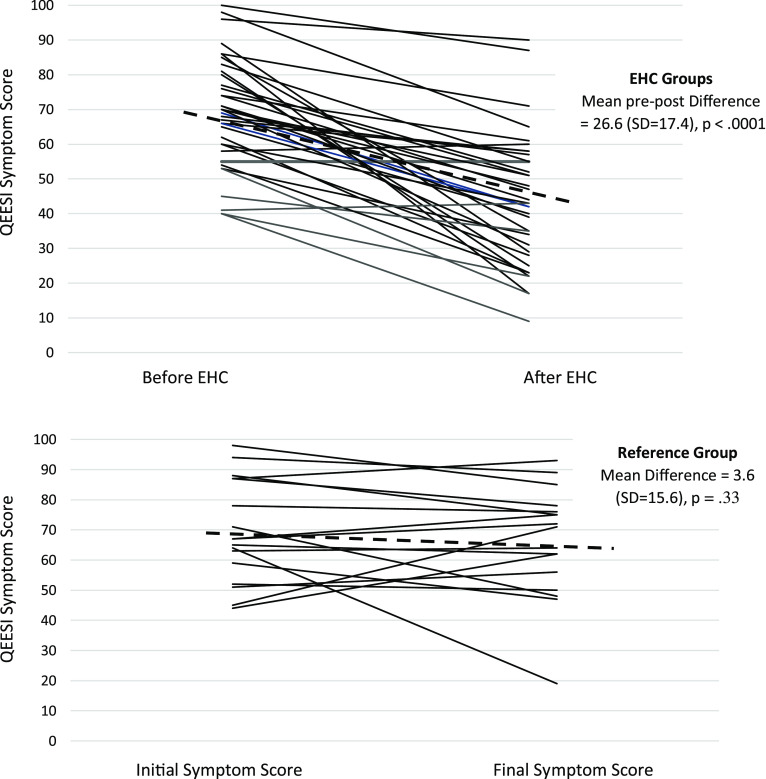
Homes where recommendations were followed showed the greatest improvements in IAQ. The improvements were based upon decreased airborne VOCs associated with reduced use of cleaning chemicals, personal care products, and fragrances, and reduction in the index patients' symptoms. Symptom improvement generally was not reported among those whose homes showed no VOC improvement.
Improvements in both IAQ and patients' symptoms occur when families implement an action plan developed and shared with them by a trained EHC team. Indoor air problems simply are not part of most doctors' differential diagnoses, despite relatively high prevalence rates of CI in primary care clinics. Our three-question screening questionnaire - the BREESI - can help physicians identify which patients should complete the QEESI. After identifying patients with CI, the practitioner can help by counseling them regarding their home exposures to VOCs. The future of clinical medicine could include environmental house calls as standard of practice for susceptible patients.
确定改善室内空气质量(IAQ)的环境家访是否能有效减轻化学敏感性(CI)患者的症状。
CI 的发病率在全球范围内呈上升趋势。受影响的患者通常会报告头痛、疲劳、“大脑雾”和胃肠道问题等症状,这些都是常见的初级保健投诉。大量证据表明,改善室内空气质量可能有助于减轻与 CI 相关的症状。
初级保健诊所的患者被邀请参加一系列结构化的环境家访(EHC)。符合条件的患者需使用快速环境暴露和敏感性清单(Quick Environmental Exposure and Sensitivity Inventory)进行 CI 评估。有 CI 的患者自愿允许 EHC 团队访问他们的家庭,以收集挥发性有机化合物(VOC)的空气样本。独立实验室分析初始和干预后的室内空气质量采样,以确定 VOC 水平(ng/L)。团队讨论室内空气暴露及其对健康的影响,并为减少暴露提供指导。
遵循建议的家庭的室内空气质量改善最大。改善基于减少与减少使用清洁化学品、个人护理产品和香水以及减少患者症状相关的空气中 VOC。在家庭中没有发现 VOC 改善的情况下,一般不会报告症状改善。
当家庭实施由经过培训的 EHC 团队制定并与他们分享的行动计划时,室内空气质量和患者症状都会得到改善。尽管 CI 在初级保健诊所的发病率相对较高,但室内空气问题并不是大多数医生鉴别诊断的一部分。我们的三问题筛查问卷 - BREESI - 可以帮助医生识别哪些患者需要完成 QEESI。在识别出 CI 患者后,医生可以通过咨询他们关于家中 VOC 暴露的情况来提供帮助。临床医学的未来可能包括将环境家访作为易感患者的标准治疗方法。