Lesmana Cosmas Rinaldi Adithya, Kencana Yoppi, Rinaldi Ikhwan, Kurniawan Juferdy, Hasan Irsan, Sanityoso Sulaiman Andri, Gani Rino Alvani
Department of Internal Medicine, Hepatobiliary Division, Dr. Cipto Mangunkusumo National General Hospital, Universitas Indonesia, Jakarta, Indonesia.
Digestive Disease & GI Oncology Center, Medistra Hospital, Jakarta, Indonesia.
Diabetes Metab Syndr Obes. 2022 Jan 5;15:15-22. doi: 10.2147/DMSO.S330526. eCollection 2022.
Non-alcoholic fatty liver disease (NAFLD) is a chronic inflammatory disease with excessive fat accumulation in the liver. Transient elastography (TE) with controlled attenuation parameter (CAP) is a device and method to examine the degree of fibrosis and steatosis. However, this device is not widely available across Indonesia. Neutrophil and lymphocyte ratio (NLR) is a simple marker for inflammation, which has a potency to predict disease outcome. This study aims to know the diagnostic value of NLR as the indicator of steatosis and fibrosis severity.
This was a cross-sectional study with consecutive sample collection. We used secondary data from medical records, starting from 2016 to 2018. A descriptive and data analysis, including correlation test, multivariate linear regression, -test, receiver operating curve (ROC) and area under the curve (AUC) were done to find out the outcome of the study. Statistical analyses were performed using Statistical Package for Social Sciences (SPSS) Version 20.0 (SPSS Inc, Chicago, Illinois). A P value <0.05 was considered as statistically significant.
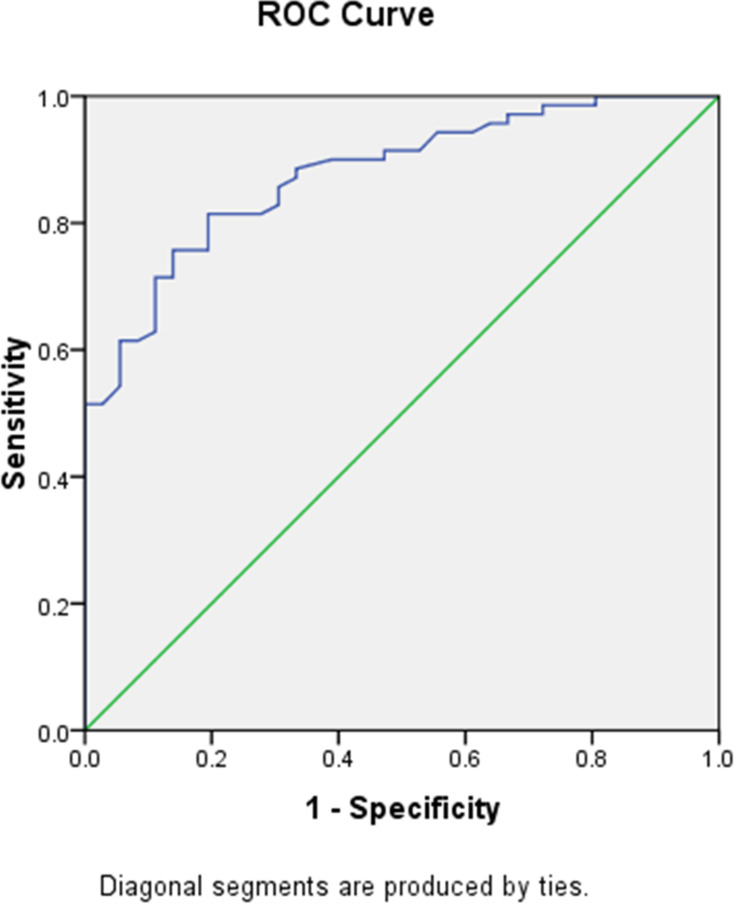
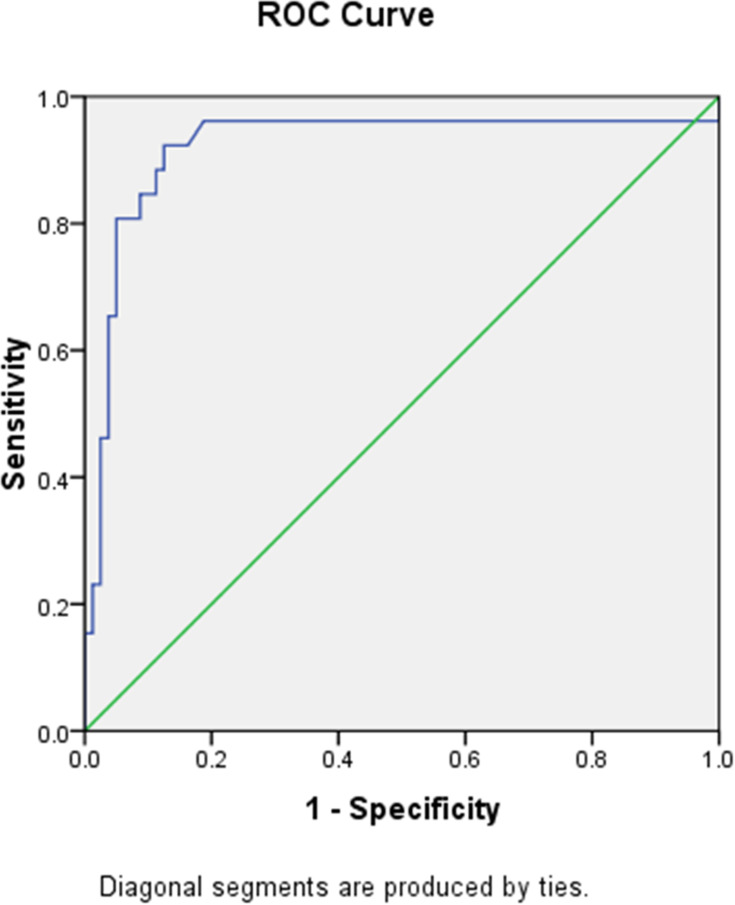
Out of 106 subjects, 62.3% patients were women with the mean of age 57.29 years old and 77.4% had metabolic syndrome. Most patients had moderate to severe steatosis degree (66%) with the mean of TE mean 6.14 (2.8-18.2) kPa. There was a positive correlation between CAP and TE compared with NLR with r = 0.648 (p < 0.001) and r = 0.621 (p < 0.001), respectively. The use of RNL to assess moderate-severe steatosis has a cutoff point of 1.775 with sensitivity, specificity, PPV and NPV, respectively, at 81.5%, 80.6%, 89.1%, and 69.1%; cutoff point 2.150 to assess significant fibrosis with sensitivity, specificity, PPV and NPV of 92.3%, 87.5%, 70.6%, and 97.2%, respectively.
NLR has a positive and significant correlation with the degree of steatosis and fibrosis with high sensitivity and specificity as evaluated by TE/CAP.
非酒精性脂肪性肝病(NAFLD)是一种肝脏中脂肪过度蓄积的慢性炎症性疾病。带有受控衰减参数(CAP)的瞬时弹性成像(TE)是一种用于检查纤维化和脂肪变性程度的设备和方法。然而,该设备在印度尼西亚并未广泛普及。中性粒细胞与淋巴细胞比值(NLR)是一种简单的炎症标志物,具有预测疾病预后的潜力。本研究旨在了解NLR作为脂肪变性和纤维化严重程度指标的诊断价值。
这是一项采用连续样本采集的横断面研究。我们使用了2016年至2018年病历中的二手数据。进行了描述性分析和数据分析,包括相关性检验、多元线性回归、t检验、受试者工作特征曲线(ROC)和曲线下面积(AUC),以得出研究结果。使用社会科学统计软件包(SPSS)20.0版(SPSS公司,伊利诺伊州芝加哥)进行统计分析。P值<0.05被认为具有统计学意义。
在106名受试者中,62.3%为女性,平均年龄57.29岁,77.4%患有代谢综合征。大多数患者有中度至重度脂肪变性(66%),TE平均值为6.14(2.8 - 18.2)kPa。与NLR相比,CAP与TE之间存在正相关,r分别为0.648(p < 0.001)和0.621(p < 0.001)。使用RNL评估中度至重度脂肪变性的截断点为1.775,其敏感性、特异性、阳性预测值和阴性预测值分别为81.5%、80.6%、89.1%和69.1%;截断点2.150用于评估显著纤维化,其敏感性、特异性、阳性预测值和阴性预测值分别为92.3%、87.5%、70.6%和97.2%。
通过TE/CAP评估,NLR与脂肪变性和纤维化程度呈正相关且具有高度敏感性和特异性。