Institute of Experimental Medicine, Eötvös Loránd Research Network, Budapest, Hungary.
Faculty of Information Technology and Bionics, Pázmány Péter Catholic University, Budapest, Hungary.
Elife. 2022 Jan 18;11:e71850. doi: 10.7554/eLife.71850.
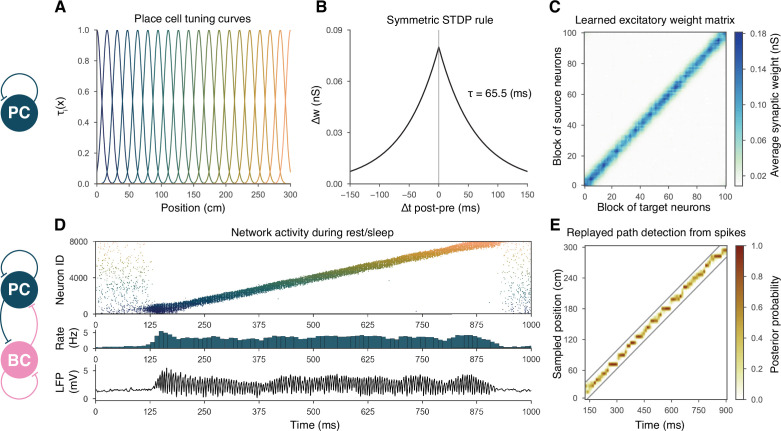
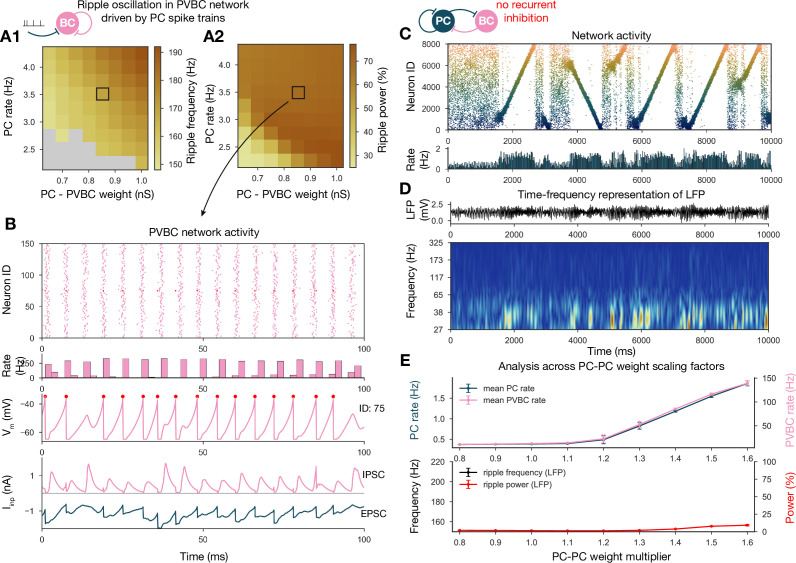
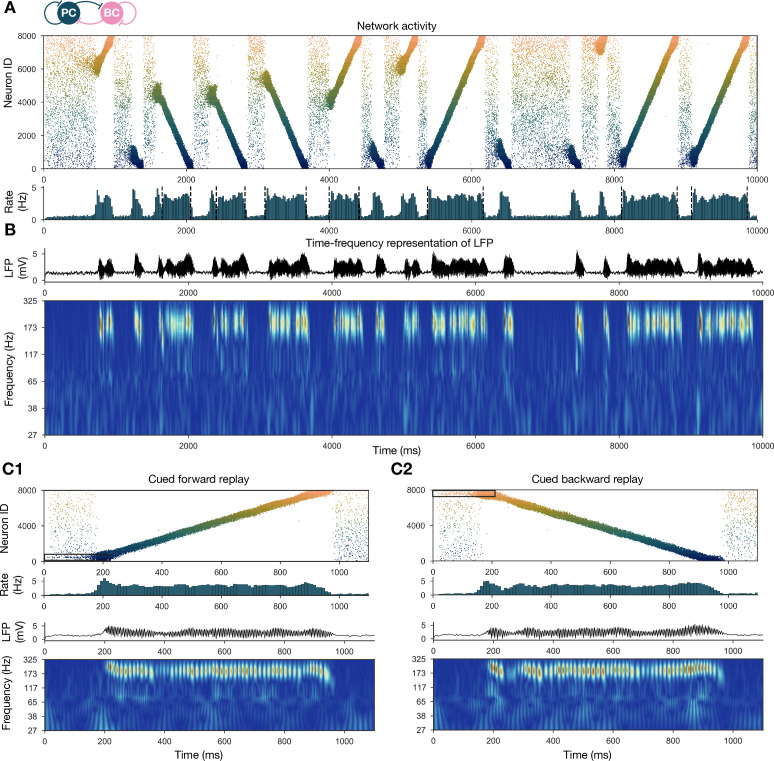
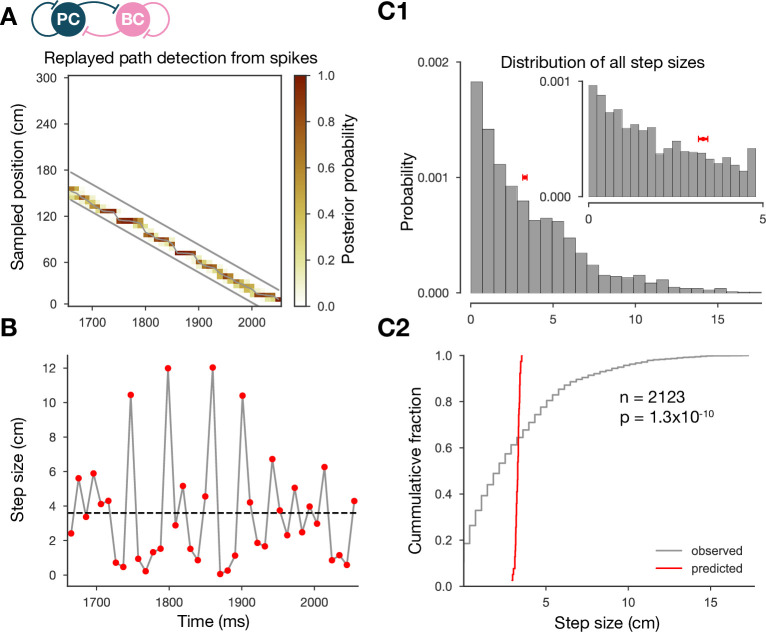
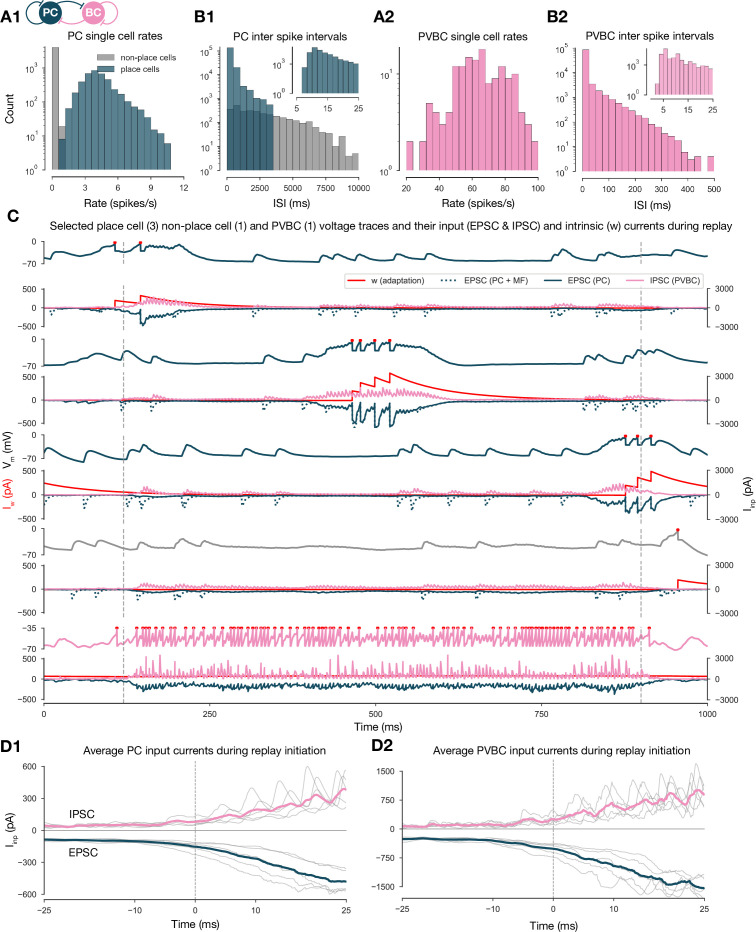
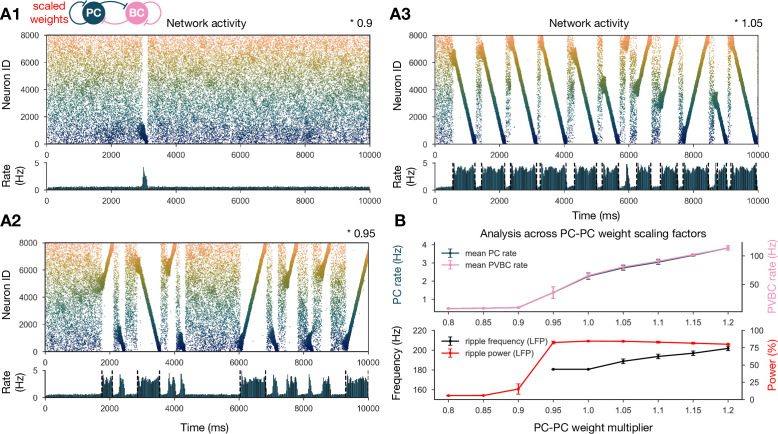
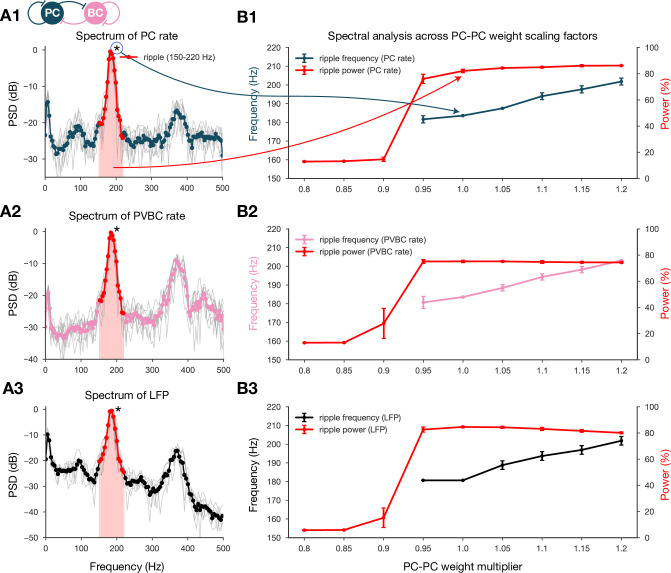
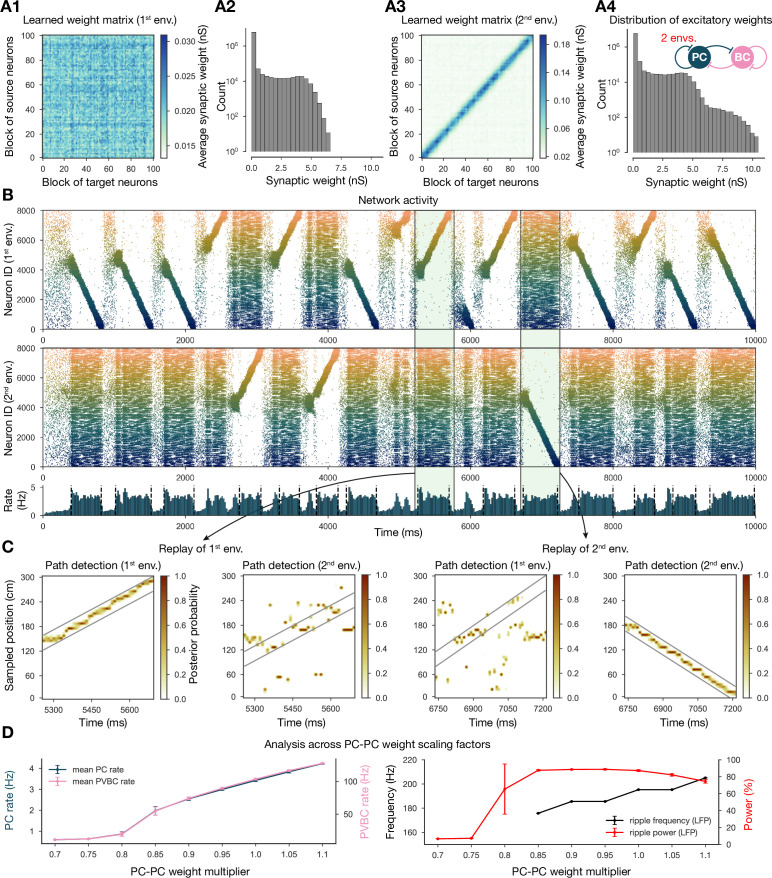
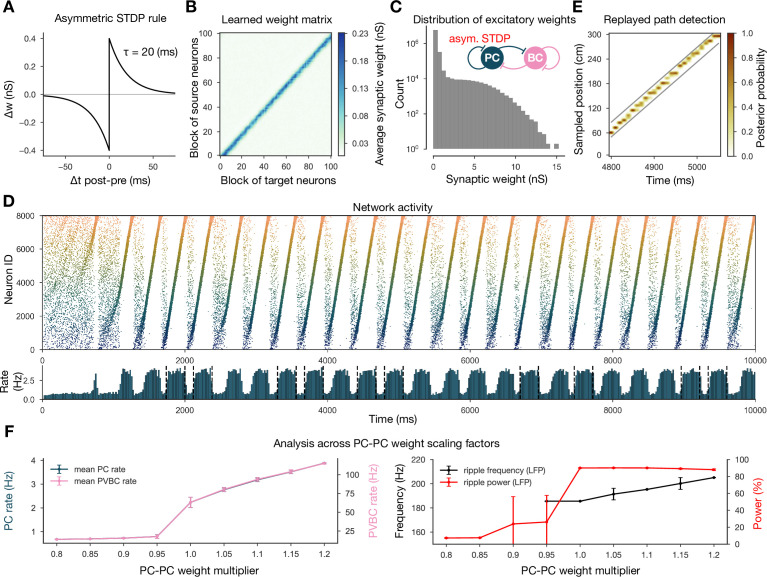
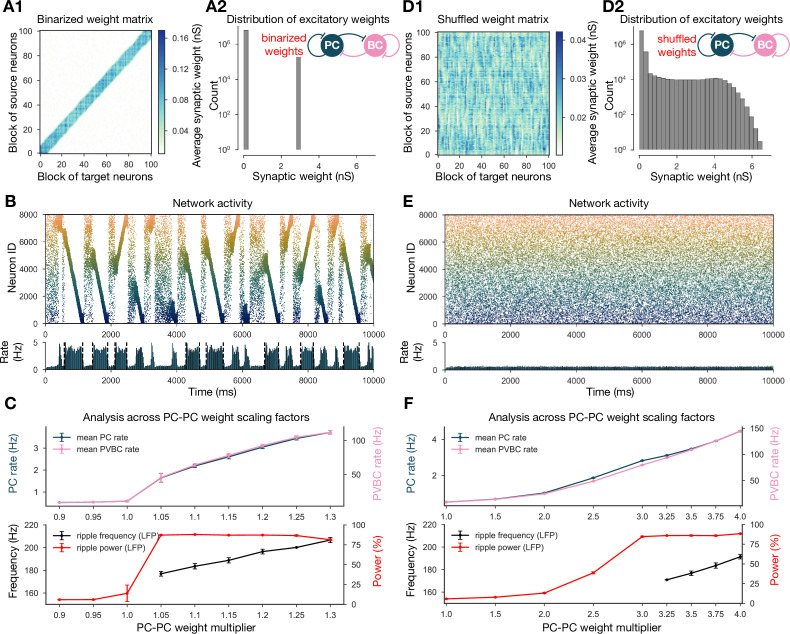
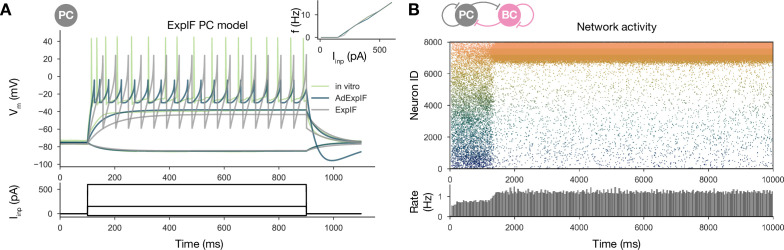
Hippocampal place cells are activated sequentially as an animal explores its environment. These activity sequences are internally recreated ('replayed'), either in the same or reversed order, during bursts of activity (sharp wave-ripples [SWRs]) that occur in sleep and awake rest. SWR-associated replay is thought to be critical for the creation and maintenance of long-term memory. In order to identify the cellular and network mechanisms of SWRs and replay, we constructed and simulated a data-driven model of area CA3 of the hippocampus. Our results show that the chain-like structure of recurrent excitatory interactions established during learning not only determines the content of replay, but is essential for the generation of the SWRs as well. We find that bidirectional replay requires the interplay of the experimentally confirmed, temporally symmetric plasticity rule, and cellular adaptation. Our model provides a unifying framework for diverse phenomena involving hippocampal plasticity, representations, and dynamics, and suggests that the structured neural codes induced by learning may have greater influence over cortical network states than previously appreciated.
海马体位置细胞在动物探索环境时会依次被激活。在睡眠和清醒休息期间发生的活动爆发(即尖波涟漪 [SWR])中,这些活动序列会在内部被重新创建(“回放”),无论是以相同的顺序还是相反的顺序。SWR 相关的回放被认为对长期记忆的形成和维持至关重要。为了确定 SWR 和回放的细胞和网络机制,我们构建并模拟了海马体 CA3 区的一个数据驱动模型。我们的结果表明,学习过程中建立的、类似链状的兴奋性相互作用结构不仅决定了回放的内容,而且对 SWR 的产生也是必不可少的。我们发现,双向回放需要实验证实的、时间对称的可塑性规则和细胞适应之间的相互作用。我们的模型为涉及海马体可塑性、表示和动力学的各种现象提供了一个统一的框架,并表明学习诱导的结构化神经码可能对皮质网络状态的影响比以前认为的更大。