Department of Mechanical Engineering, University of Michigan, Ann Arbor, MI, 48109, USA.
Department of Electrical and Computer Engineering, Northeastern University, Boston, MA, 02115, USA.
Nat Commun. 2022 Jan 19;13(1):388. doi: 10.1038/s41467-021-27713-7.
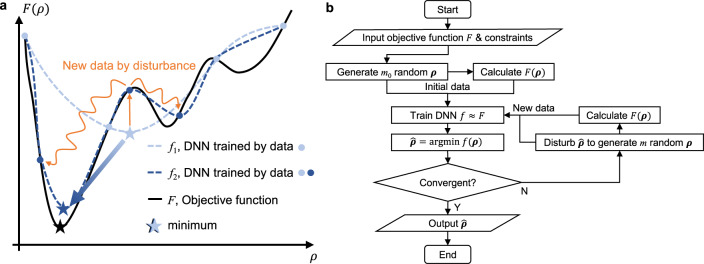
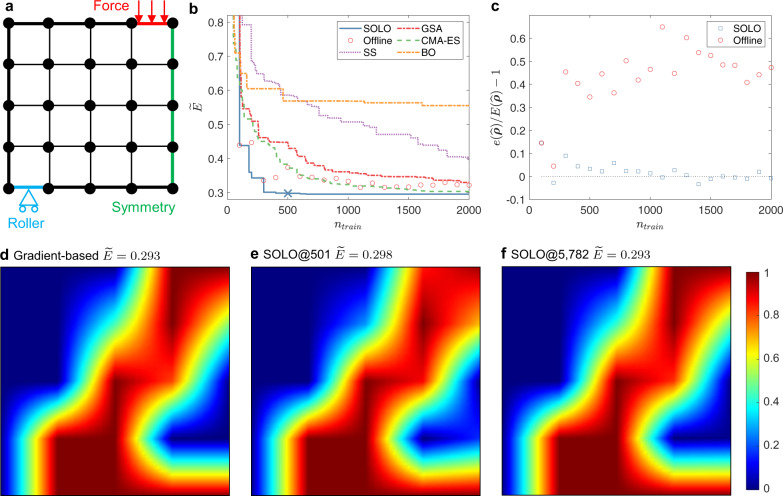
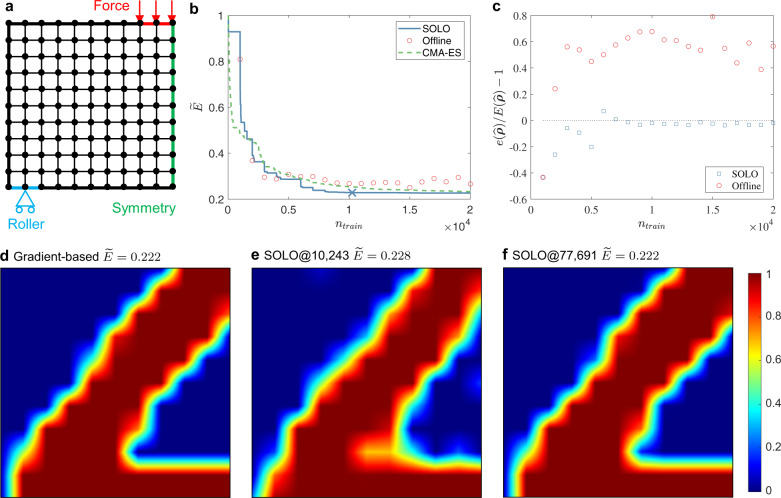
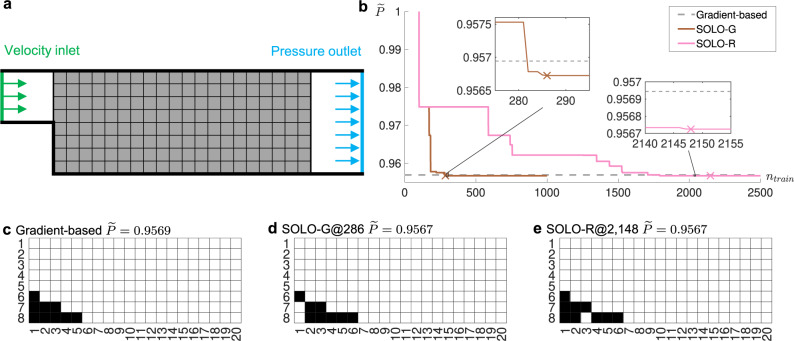
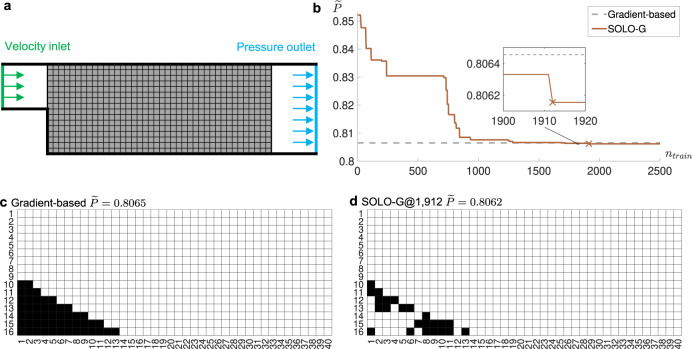
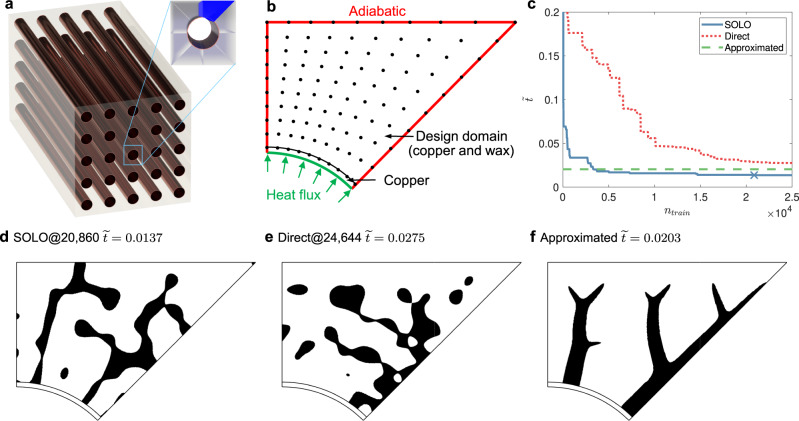
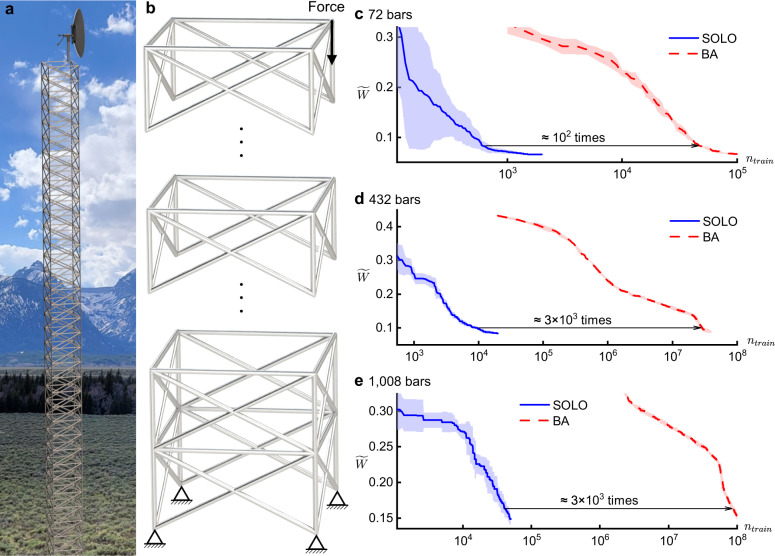
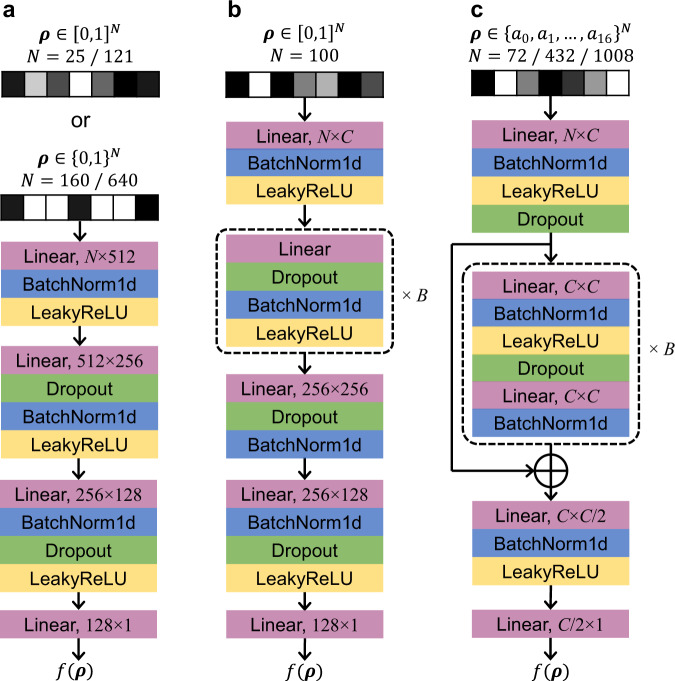
Topology optimization by optimally distributing materials in a given domain requires non-gradient optimizers to solve highly complicated problems. However, with hundreds of design variables or more involved, solving such problems would require millions of Finite Element Method (FEM) calculations whose computational cost is huge and impractical. Here we report Self-directed Online Learning Optimization (SOLO) which integrates Deep Neural Network (DNN) with FEM calculations. A DNN learns and substitutes the objective as a function of design variables. A small number of training data is generated dynamically based on the DNN's prediction of the optimum. The DNN adapts to the new training data and gives better prediction in the region of interest until convergence. The optimum predicted by the DNN is proved to converge to the true global optimum through iterations. Our algorithm was tested by four types of problems including compliance minimization, fluid-structure optimization, heat transfer enhancement and truss optimization. It reduced the computational time by 2 ~ 5 orders of magnitude compared with directly using heuristic methods, and outperformed all state-of-the-art algorithms tested in our experiments. This approach enables solving large multi-dimensional optimization problems.
拓扑优化需要在给定的域中最优地分配材料,这要求使用非梯度优化器来解决高度复杂的问题。然而,涉及数百个设计变量或更多变量的情况下,解决这样的问题需要进行数百万次有限元方法 (FEM) 计算,其计算成本巨大且不切实际。在这里,我们报告了自导向在线学习优化 (SOLO),它将深度神经网络 (DNN) 与 FEM 计算相结合。DNN 学习并替代设计变量的目标函数。根据 DNN 对最优值的预测,动态生成少量训练数据。DNN 适应新的训练数据,并在感兴趣的区域给出更好的预测,直到收敛。通过迭代,DNN 预测的最优值被证明收敛到真正的全局最优值。我们的算法通过包括柔顺性最小化、流固耦合优化、传热强化和桁架优化在内的四种类型的问题进行了测试。与直接使用启发式方法相比,它将计算时间减少了 2 到 5 个数量级,并且在我们的实验中测试的所有最先进的算法中表现都更好。这种方法能够解决大型多维优化问题。