Institute of Nanotechnology and Advanced Materials, The Mina and Everard Goodman Faculty of Life Sciences, Bar-Ilan University, Ramat-Gan, Israel.
Department of Biomedical Engineering, Technion, Haifa, Israel.
CRISPR J. 2022 Feb;5(1):80-94. doi: 10.1089/crispr.2021.0128. Epub 2022 Jan 20.
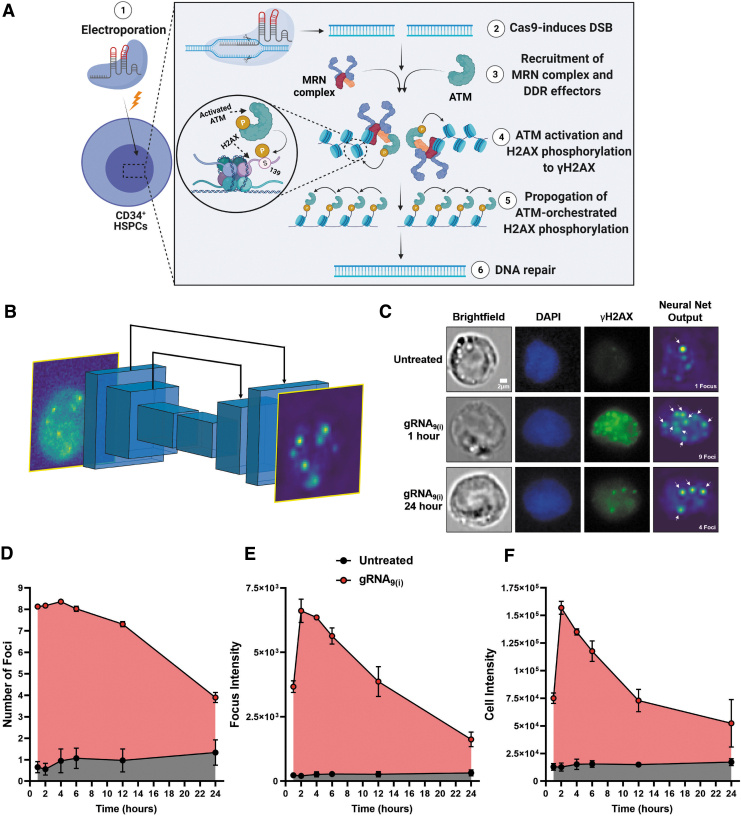
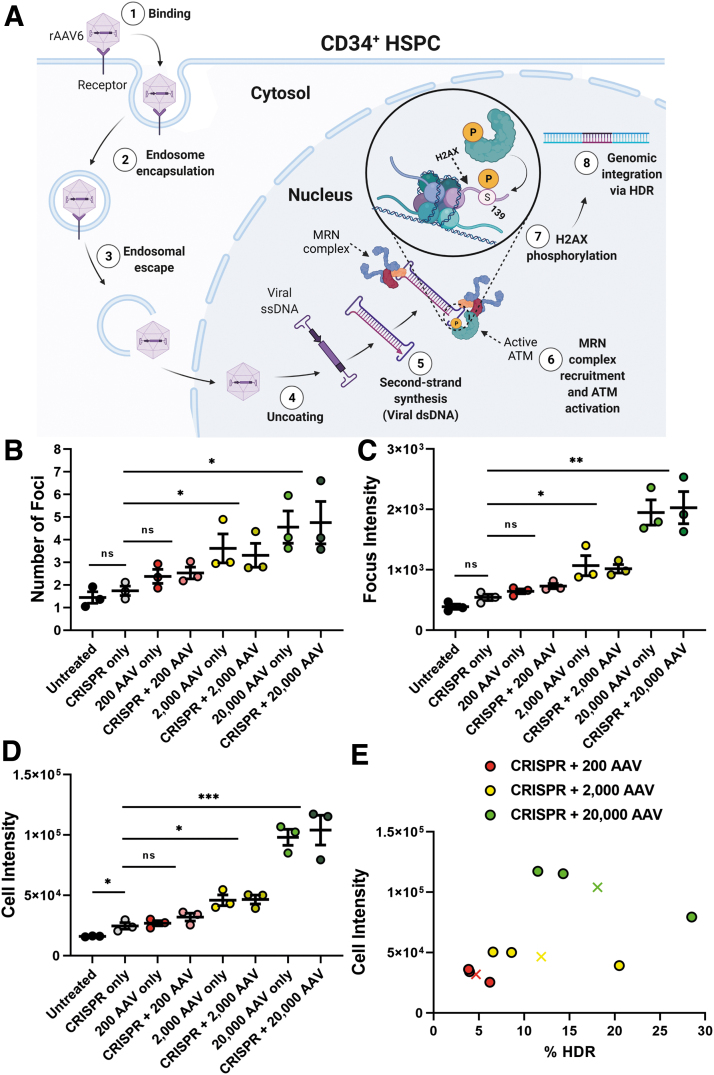
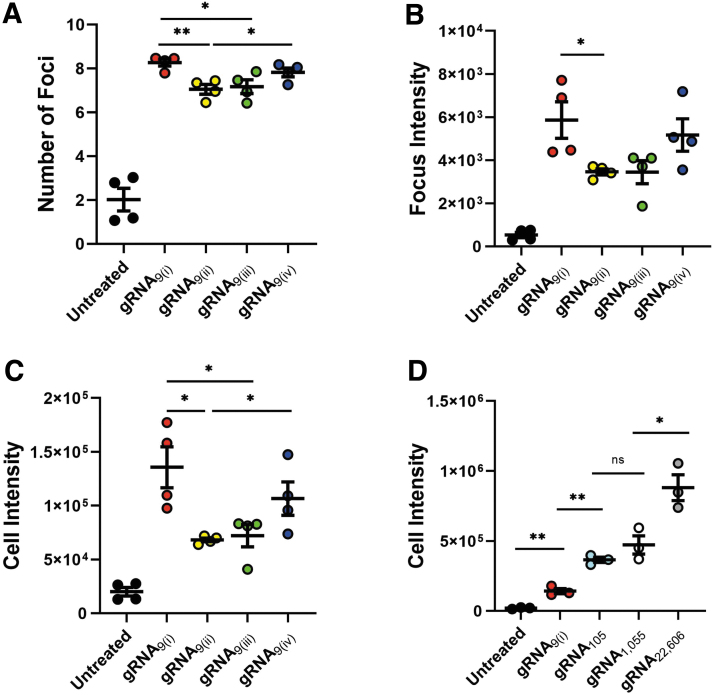
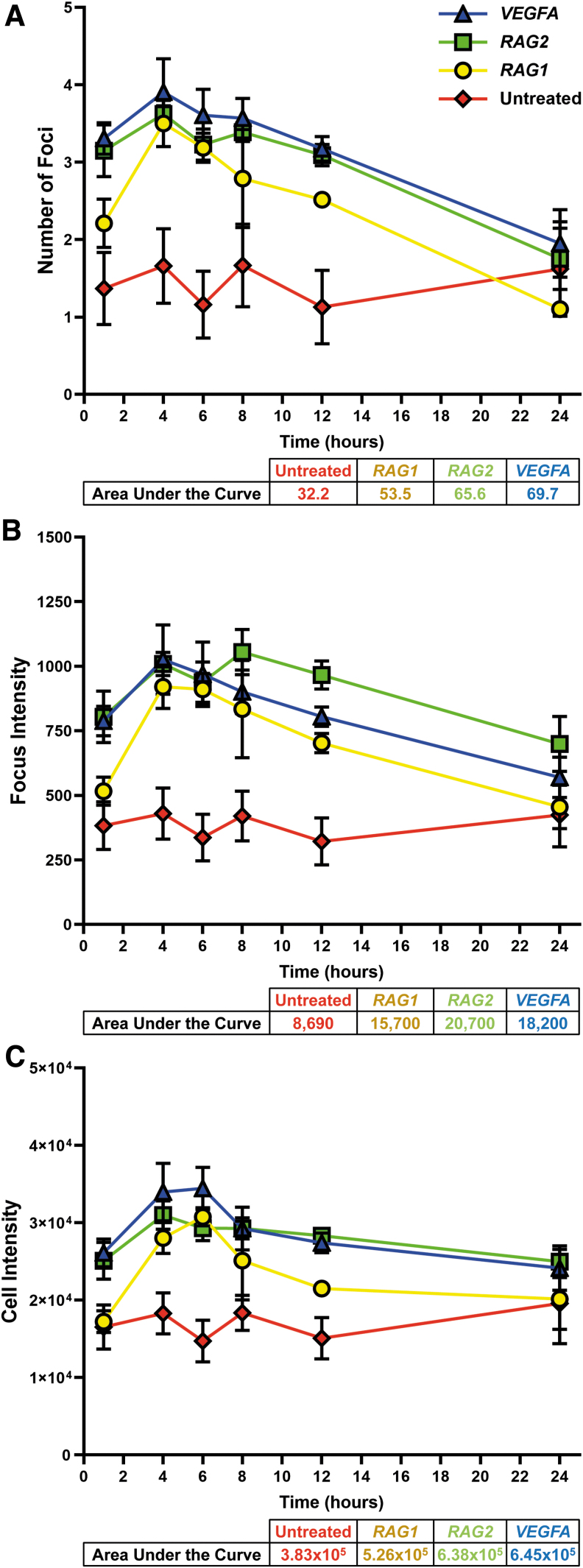
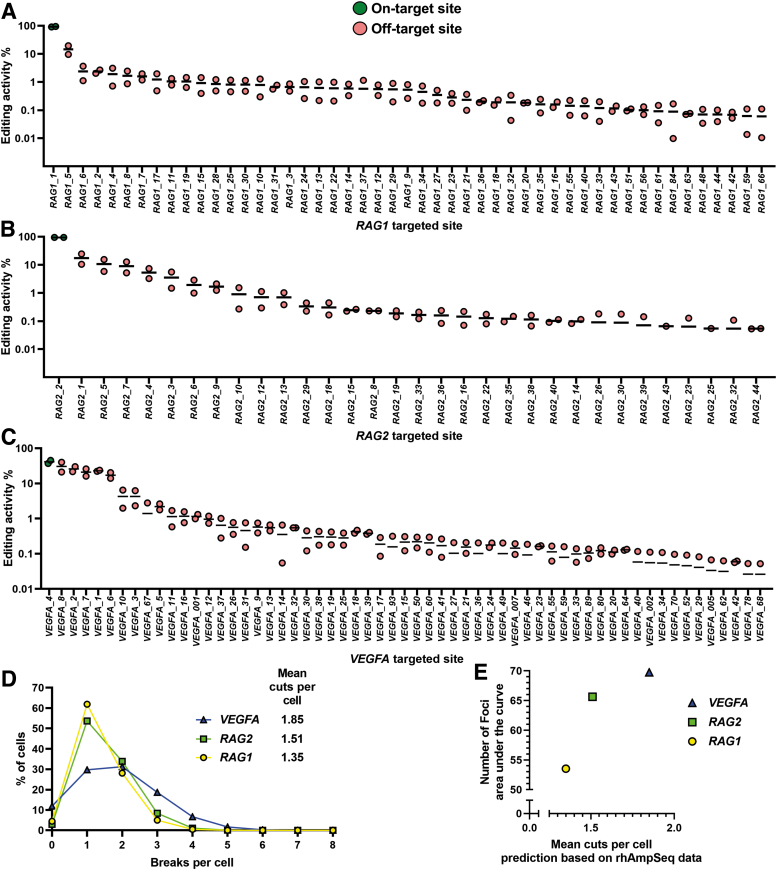
CRISPR-Cas technology has revolutionized gene editing, but concerns remain due to its propensity for off-target interactions. This, combined with genotoxicity related to both CRISPR-Cas9-induced double-strand breaks and transgene delivery, poses a significant liability for clinical genome-editing applications. Current best practice is to optimize genome-editing parameters in preclinical studies. However, quantitative tools that measure off-target interactions and genotoxicity are costly and time-consuming, limiting the practicality of screening large numbers of potential genome-editing reagents and conditions. Here, we show that flow-based imaging facilitates DNA damage characterization of hundreds of human hematopoietic stem and progenitor cells per minute after treatment with CRISPR-Cas9 and recombinant adeno-associated virus serotype 6. With our web-based platform that leverages deep learning for image analysis, we find that greater DNA damage response is observed for guide RNAs with higher genome-editing activity, differentiating even single on-target guide RNAs with different levels of off-target interactions. This work simplifies the characterization and screening process of genome-editing parameters toward enabling safer and more effective gene-therapy applications.
CRISPR-Cas 技术彻底改变了基因编辑,但由于其易于发生脱靶相互作用,人们仍存在担忧。此外,CRISPR-Cas9 诱导的双链断裂和转基因递送相关的遗传毒性也给临床基因组编辑应用带来了重大责任。目前的最佳实践是在临床前研究中优化基因组编辑参数。然而,用于测量脱靶相互作用和遗传毒性的定量工具既昂贵又耗时,限制了筛选大量潜在基因组编辑试剂和条件的实用性。在这里,我们展示了基于流式的成像技术可以在每分钟内对数百个人类造血干细胞和祖细胞进行 CRISPR-Cas9 和重组腺相关病毒血清型 6 处理后的 DNA 损伤特征进行分析。通过我们的基于网络的平台,该平台利用深度学习进行图像分析,我们发现,具有更高基因组编辑活性的向导 RNA 会引起更强的 DNA 损伤反应,即使是具有不同脱靶相互作用水平的单个靶向导 RNA 也能区分开来。这项工作简化了基因组编辑参数的表征和筛选过程,从而实现更安全、更有效的基因治疗应用。