Institute for Stem Cell Biology and Regenerative Medicine, Stanford University School of Medicine, Lorry I. Lokey Stem Cell Research Building, 265 Campus Drive, Stanford, CA, USA.
Department of Genetics, Stanford University School of Medicine, Stanford, CA, USA.
Nat Commun. 2021 Jan 29;12(1):686. doi: 10.1038/s41467-021-20909-x.
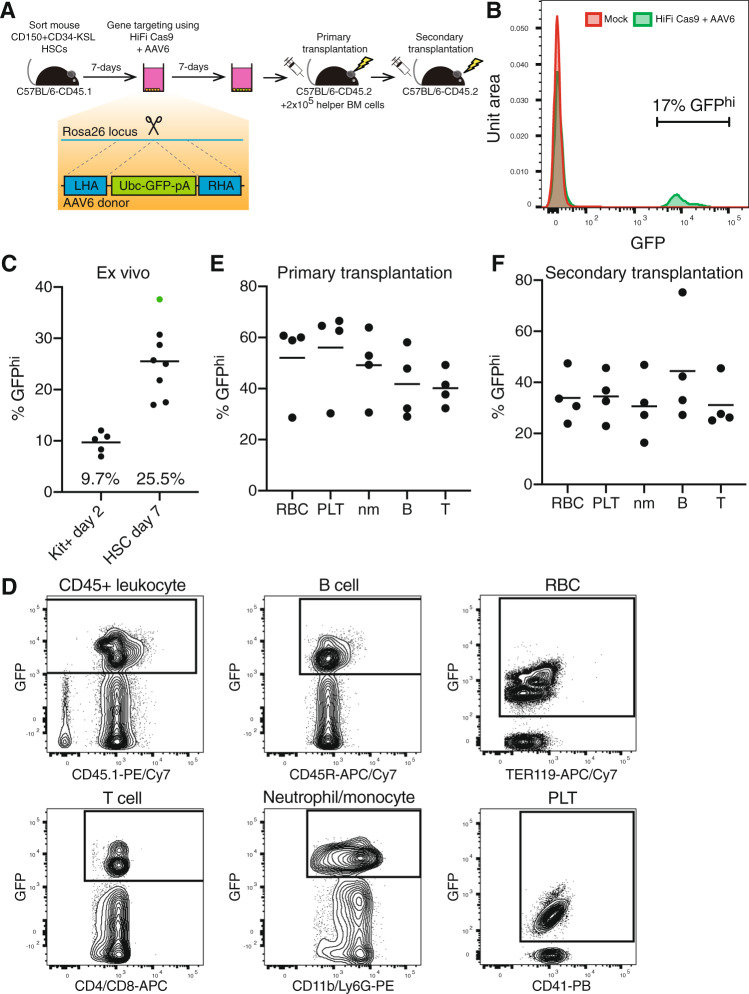
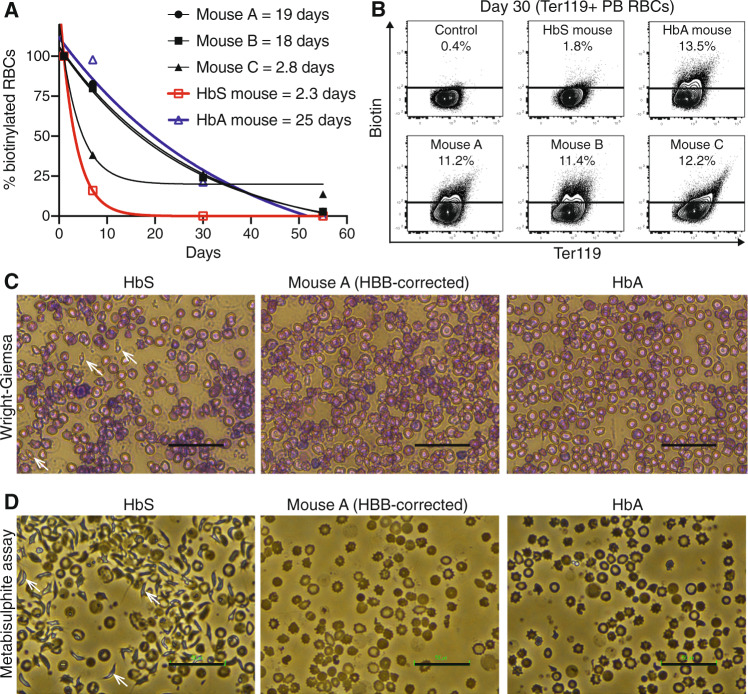
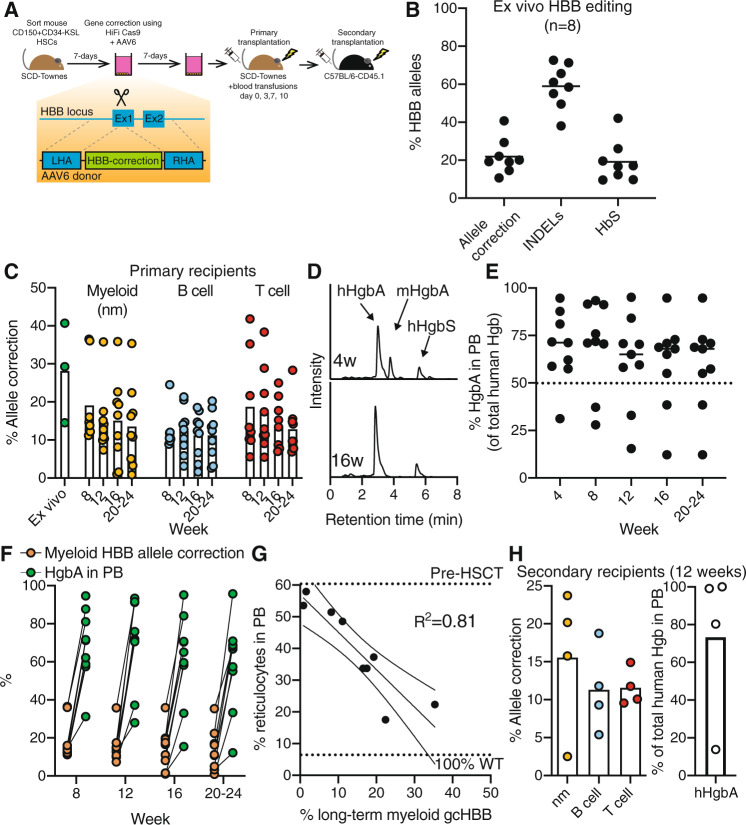
CRISPR/Cas9-mediated beta-globin (HBB) gene correction of sickle cell disease (SCD) patient-derived hematopoietic stem cells (HSCs) in combination with autologous transplantation represents a recent paradigm in gene therapy. Although several Cas9-based HBB-correction approaches have been proposed, functional correction of in vivo erythropoiesis has not been investigated previously. Here, we use a humanized globin-cluster SCD mouse model to study Cas9-AAV6-mediated HBB-correction in functional HSCs within the context of autologous transplantation. We discover that long-term multipotent HSCs can be gene corrected ex vivo and stable hemoglobin-A production can be achieved in vivo from HBB-corrected HSCs following autologous transplantation. We observe a direct correlation between increased HBB-corrected myeloid chimerism and normalized in vivo red blood cell (RBC) features, but even low levels of chimerism resulted in robust hemoglobin-A levels. Moreover, this study offers a platform for gene editing of mouse HSCs for both basic and translational research.
CRISPR/Cas9 介导的β-珠蛋白(HBB)基因校正镰状细胞病(SCD)患者来源的造血干细胞(HSCs)与自体移植相结合,代表了基因治疗的最新范例。尽管已经提出了几种基于 Cas9 的 HBB 校正方法,但以前尚未研究体内红细胞生成的功能校正。在这里,我们使用人源化珠蛋白簇 SCD 小鼠模型来研究自体移植背景下 Cas9-AAV6 介导的功能性 HSCs 中的 HBB 校正。我们发现,长期多能 HSCs 可以在体外进行基因校正,并且在自体移植后,从 HBB 校正的 HSCs 中可以在体内实现稳定的血红蛋白-A 产生。我们观察到增加的 HBB 校正髓样嵌合与体内正常 RBC 特征之间存在直接相关性,但即使嵌合水平较低,也会导致血红蛋白-A 水平显著增加。此外,这项研究为小鼠 HSCs 的基因编辑提供了一个平台,可用于基础和转化研究。