College of Chemical Engineering, Nanjing Forestry University, Nanjing 210037, China.
Department of Pharmacy, Jiangsu Vocational College of Medicine, Yancheng 224005, China.
Molecules. 2022 Jan 10;27(2):439. doi: 10.3390/molecules27020439.
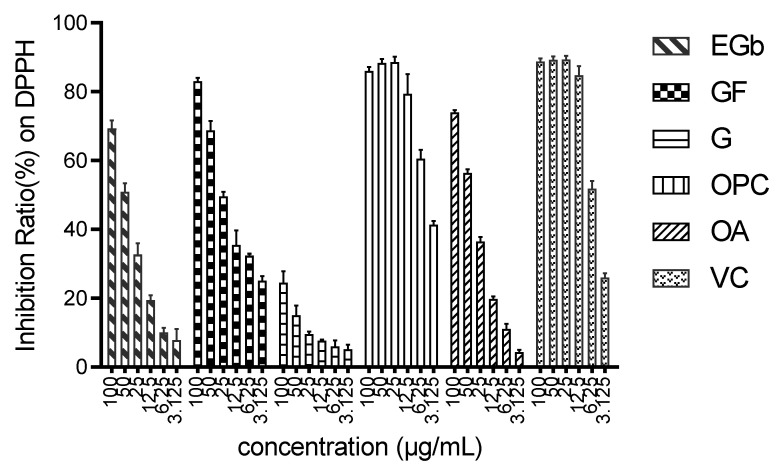
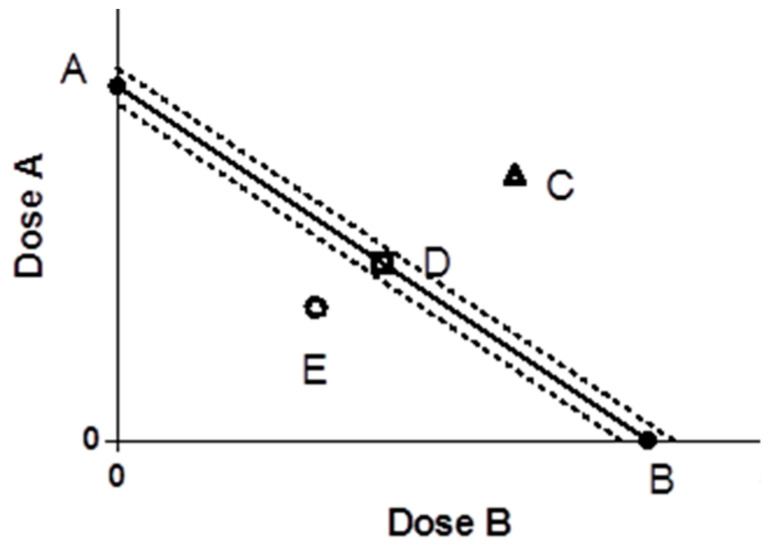
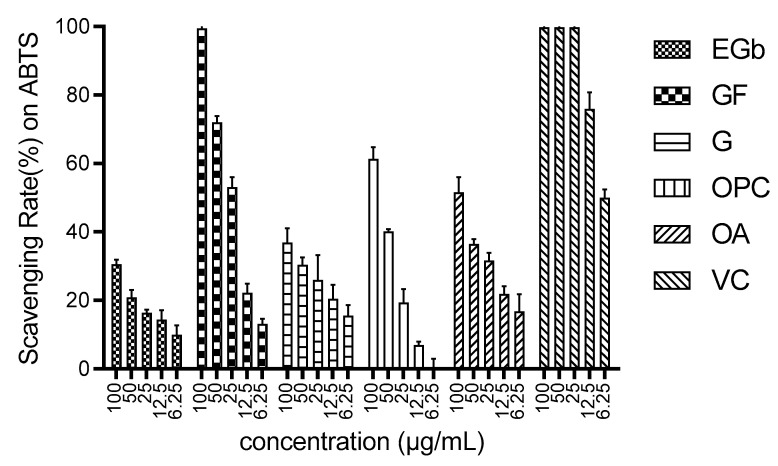
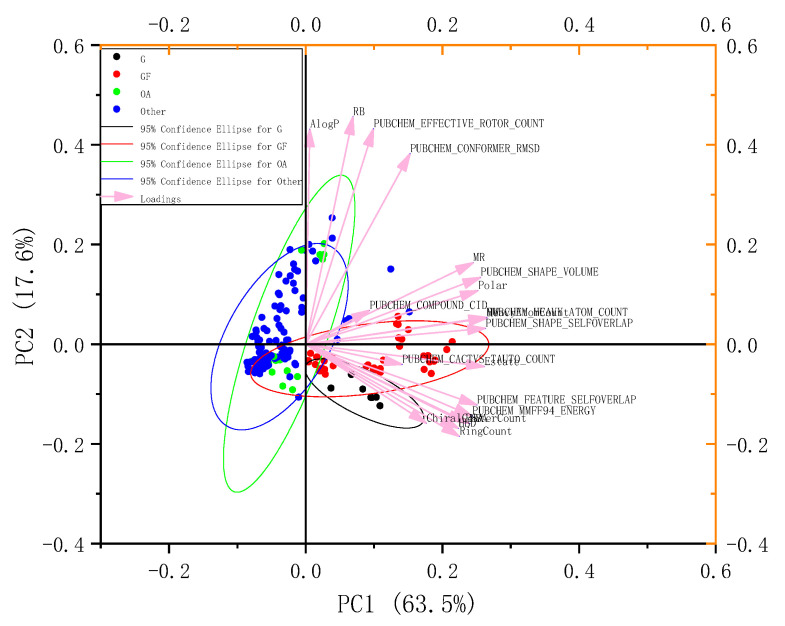
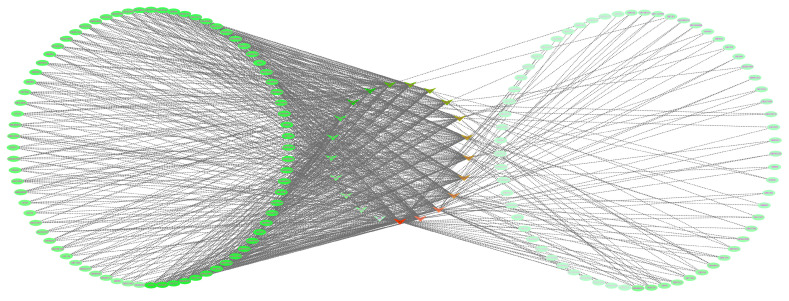
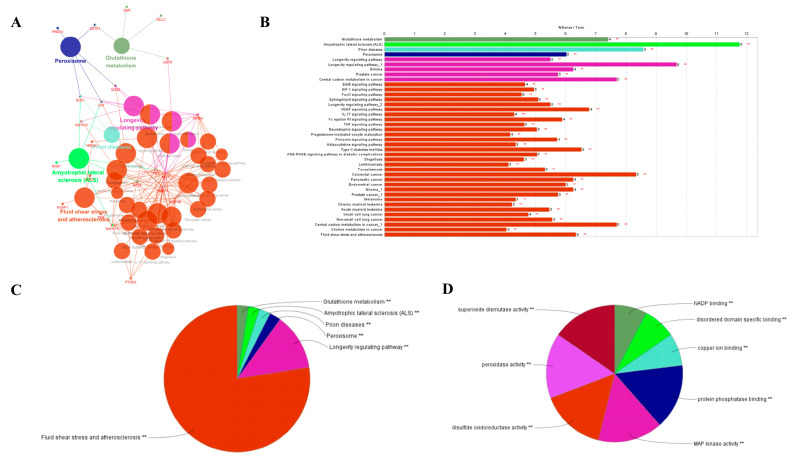
The predicted anti-oxidation is related to apoptosis, proliferation, lipid metabolism, cell differentiation, and immune response. There are some differences in the antioxidant capacity of the four typical components of ginkgo biloba extract (EGb) including ginkgo flavone (GF), ginkgolide (G), procyanidins (OPC), and organic acids (OA), and any two members of them can exhibit apparent synergistic effects. The order of DPPH scavenging ability was: OPC > GF > OA > G. The scavenging ability of procyanidins was close to that of VC; the scavenging capacity of ABTS was GF > OPC > OA > G. The GF:OPC (1:9) showed the best synergism in scavenging DPPH and ABTS radicals. The 193 kinds of small molecules reported in EGb were obtained by analyzing the properties of EGb. In order to construct a corresponding biological activity target set, molecular docking and the network pharmacology method were employed to build the molecular action mechanism network of a compound target, and the main biological functions and signaling pathways involved with their antioxidant activities were predicted. The results displayed that the top ten compounds which belonged to the two broad categories, ginkgo flavonoids and proanthocyanidins, could interact closely with several important target proteins (CASP3, SOD2, MAPK1, HSPA4, and NQO1). This would be expected to lay a theoretical foundation for the deep development of Ginkgo biloba extract.
预测的抗氧化作用与细胞凋亡、增殖、脂质代谢、细胞分化和免疫反应有关。银杏叶提取物(EGb)的四种典型成分(包括银杏黄酮、银杏内酯、原花青素和有机酸)的抗氧化能力存在一些差异,其中任何两种成分都能表现出明显的协同作用。DPPH 清除能力的顺序为:OPC>GF>OA>G。原花青素的清除能力接近 VC;ABTS 的清除能力为 GF>OPC>OA>G。GF:OPC(1:9)在清除 DPPH 和 ABTS 自由基方面表现出最佳协同作用。通过分析 EGb 的性质,得到了 EGb 中报告的 193 种小分子。为了构建相应的生物活性靶标集,采用分子对接和网络药理学方法构建化合物靶标分子作用机制网络,预测其抗氧化活性涉及的主要生物学功能和信号通路。结果表明,银杏黄酮类和原花青素类两大类中的前 10 种化合物可与几种重要的靶蛋白(CASP3、SOD2、MAPK1、HSPA4 和 NQO1)密切相互作用。这有望为银杏叶提取物的深入开发奠定理论基础。