Morgridge Institute for Research, Madison, WI 53715, USA.
Koch Institute for Integrative Cancer Research, Massachusetts Institute of Technology, Cambridge, MA 02139, USA.
Sci Adv. 2022 Jan 21;8(3):eabg6383. doi: 10.1126/sciadv.abg6383.
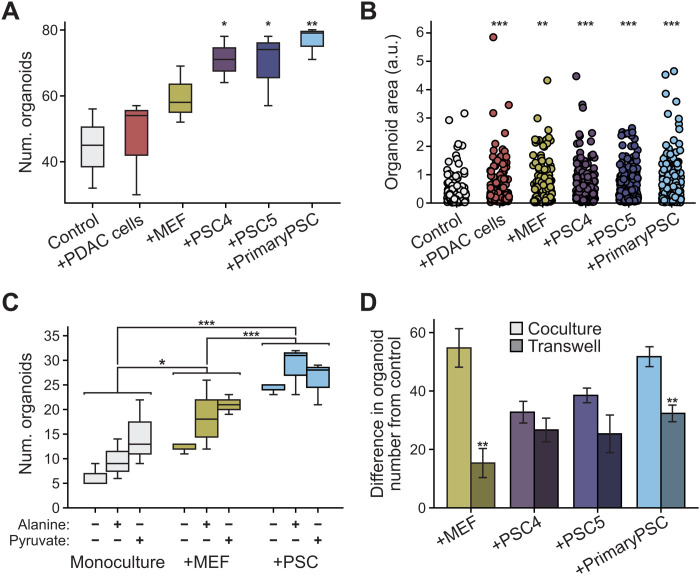
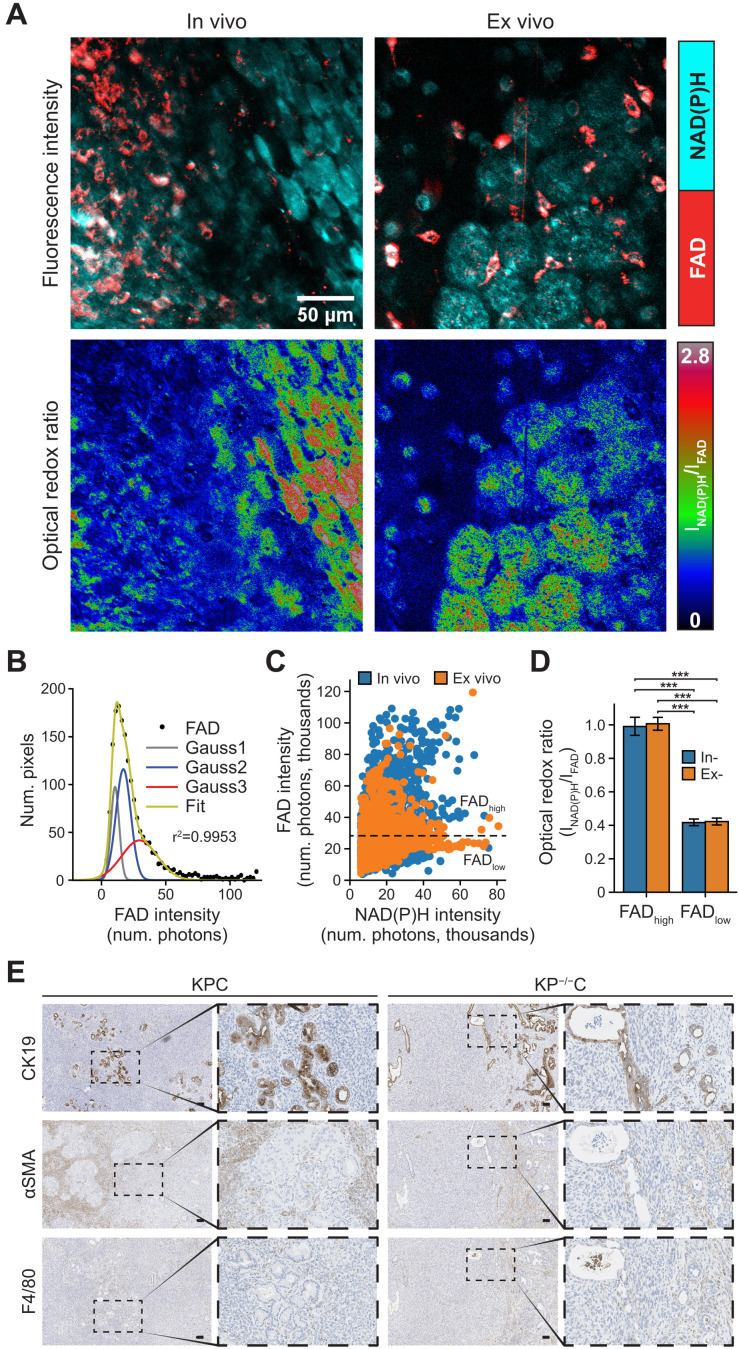
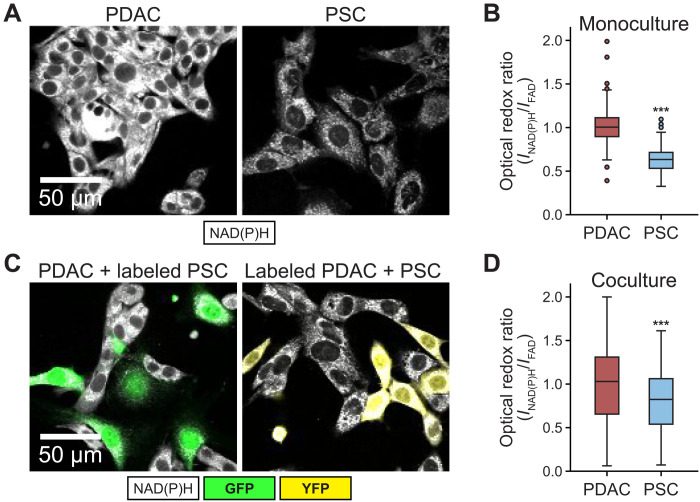
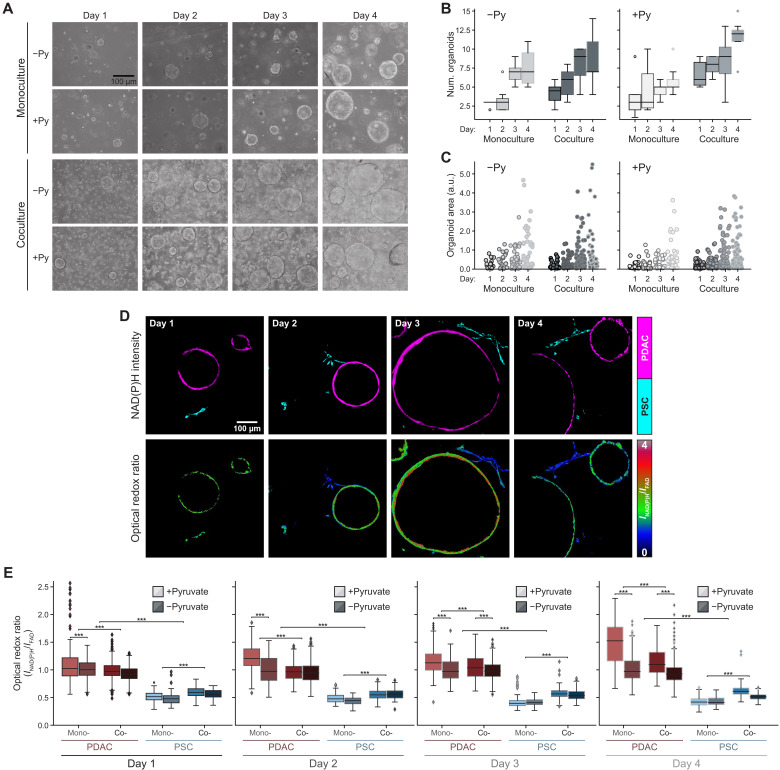
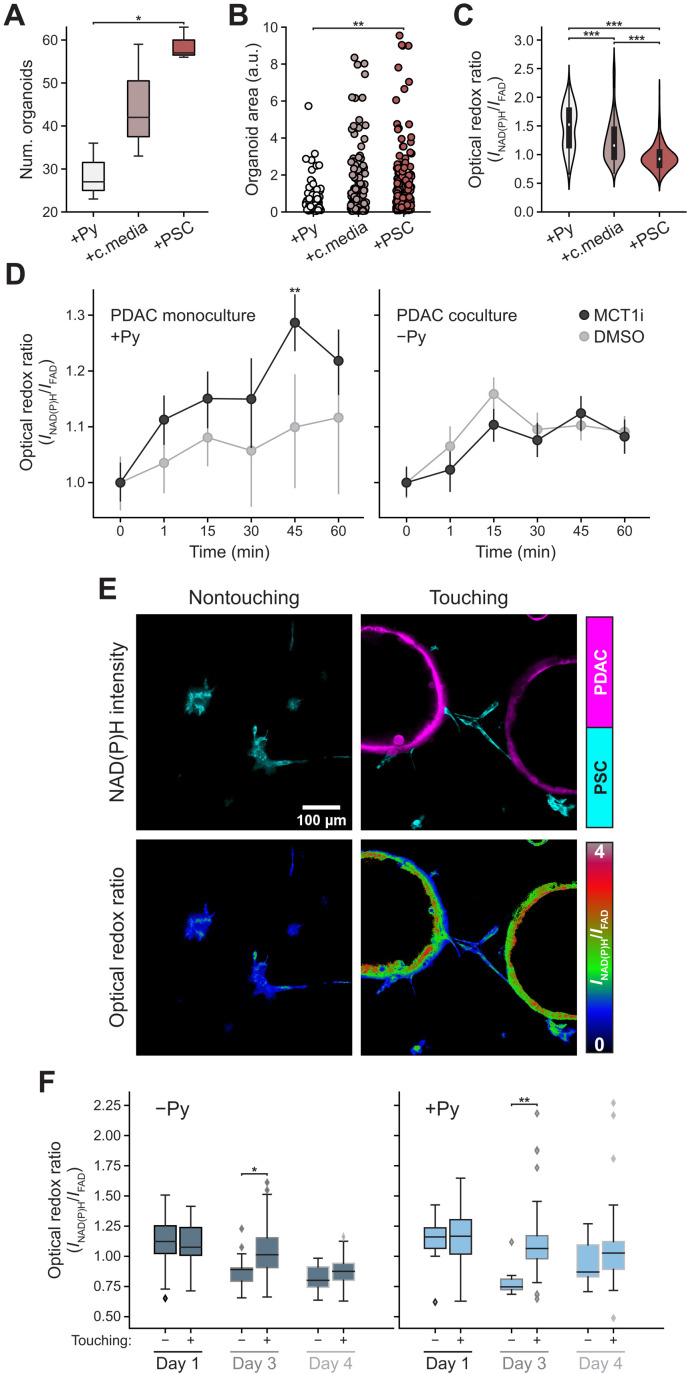
Access to electron acceptors supports oxidized biomass synthesis and can be limiting for cancer cell proliferation, but how cancer cells overcome this limitation in tumors is incompletely understood. Nontransformed cells in tumors can help cancer cells overcome metabolic limitations, particularly in pancreatic cancer, where pancreatic stellate cells (PSCs) promote cancer cell proliferation and tumor growth. However, whether PSCs affect the redox state of cancer cells is not known. By taking advantage of the endogenous fluorescence properties of reduced nicotinamide adenine dinucleotide and oxidized flavin adenine dinucleotide cofactors we use optical imaging to assess the redox state of pancreatic cancer cells and PSCs and find that direct interactions between PSCs and cancer cells promote a more oxidized state in cancer cells. This suggests that metabolic interaction between cancer cells and PSCs is a mechanism to overcome the redox limitations of cell proliferation in pancreatic cancer.
电子受体的可及性支持氧化生物量的合成,并且可能会限制癌细胞的增殖,但癌细胞如何在肿瘤中克服这一限制尚不完全清楚。肿瘤中的非转化细胞可以帮助癌细胞克服代谢限制,特别是在胰腺癌中,胰腺星状细胞(PSCs)促进癌细胞增殖和肿瘤生长。然而,PSCs 是否会影响癌细胞的氧化还原状态尚不清楚。我们利用还原型烟酰胺腺嘌呤二核苷酸和氧化型黄素腺嘌呤二核苷酸辅因子的内源性荧光特性,通过光学成像来评估胰腺癌细胞和 PSCs 的氧化还原状态,发现 PSCs 和癌细胞之间的直接相互作用促进了癌细胞中更氧化的状态。这表明癌细胞和 PSCs 之间的代谢相互作用是克服胰腺癌中细胞增殖氧化还原限制的一种机制。