Programa de Doctorado en Ciencias Biológicas, Universidad Nacional Autónoma de México, Mexico City 04510, Mexico.
Facultad de Matemáticas, Universidad Autónoma de Yucatán, Anillo Periférico Norte, Tablaje Catastral 13615, Mérida 97119, Mexico.
Viruses. 2022 Jan 16;14(1):158. doi: 10.3390/v14010158.
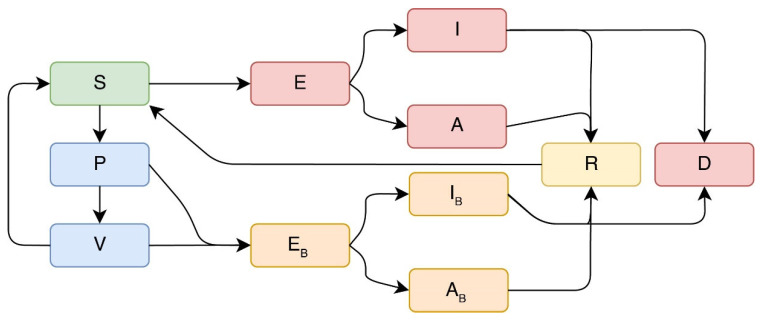
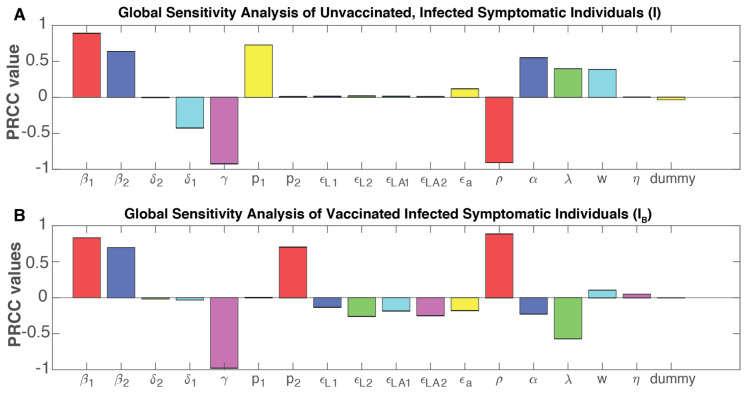
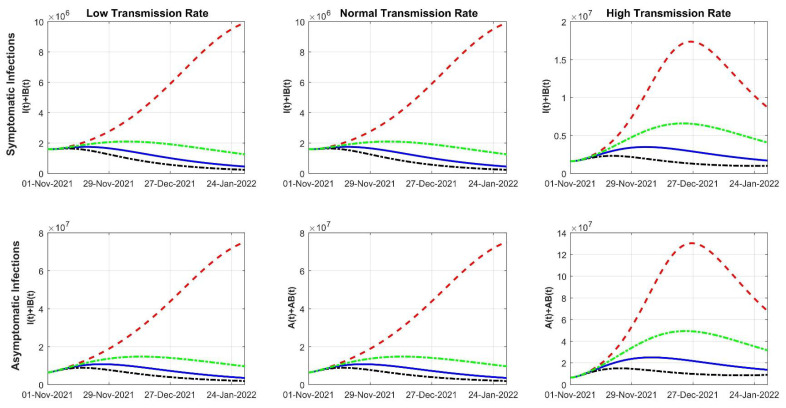
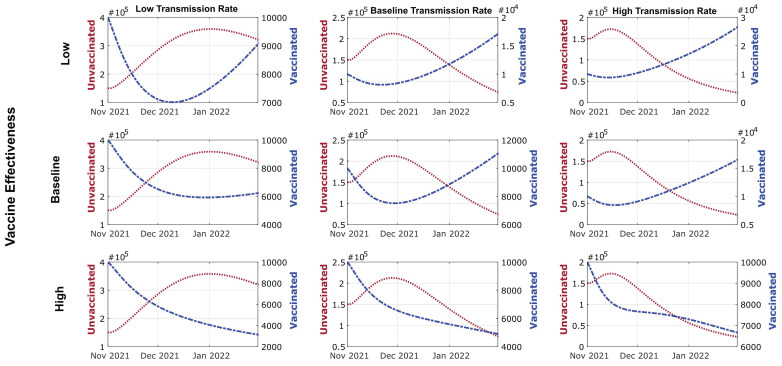
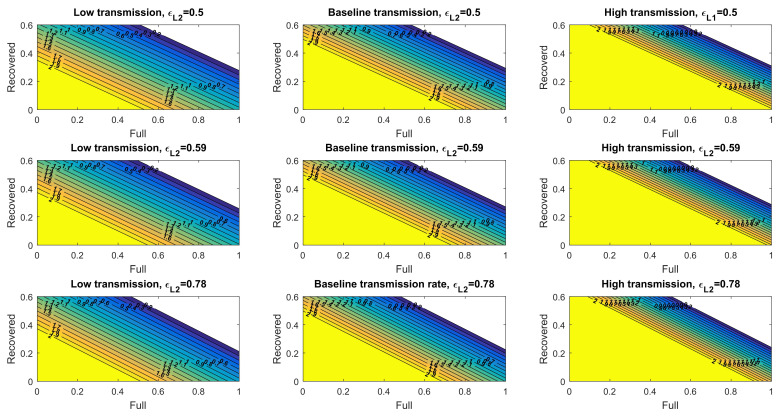
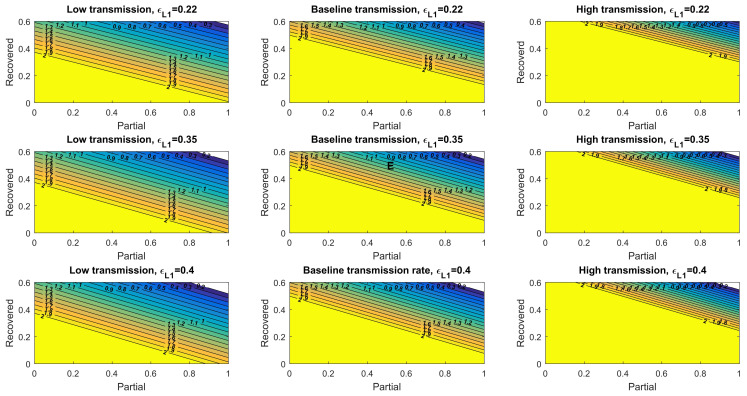
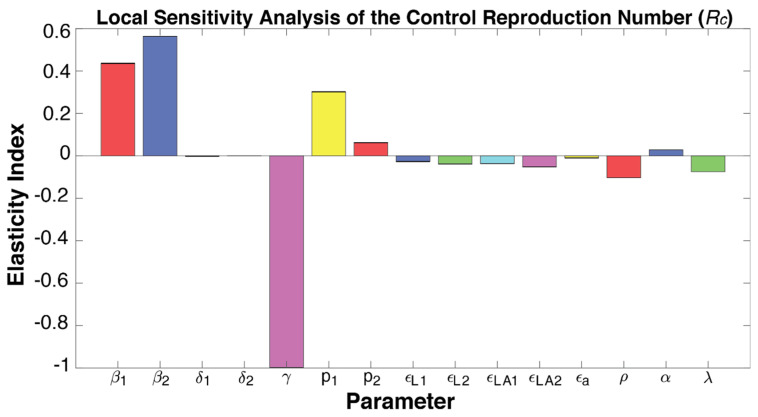
In a population with ongoing vaccination, the trajectory of a pandemic is determined by how the virus spreads in unvaccinated and vaccinated individuals that exhibit distinct transmission dynamics based on different levels of natural and vaccine-induced immunity. We developed a mathematical model that considers both subpopulations and immunity parameters, including vaccination rates, vaccine effectiveness, and a gradual loss of protection. The model forecasted the spread of the SARS-CoV-2 delta variant in the US under varied transmission and vaccination rates. We further obtained the control reproduction number and conducted sensitivity analyses to determine how each parameter may affect virus transmission. Although our model has several limitations, the number of infected individuals was shown to be a magnitude greater (~10×) in the unvaccinated subpopulation compared to the vaccinated subpopulation. Our results show that a combination of strengthening vaccine-induced immunity and preventative behavioral measures like face mask-wearing and contact tracing will likely be required to deaccelerate the spread of infectious SARS-CoV-2 variants.
在持续进行疫苗接种的人群中,大流行的轨迹取决于病毒在未接种疫苗和接种疫苗的个体中的传播方式,这些个体表现出不同的传播动态,这取决于不同水平的自然和疫苗诱导的免疫力。我们开发了一个数学模型,该模型同时考虑了亚人群和免疫参数,包括疫苗接种率、疫苗有效性以及保护作用的逐渐丧失。该模型预测了 SARS-CoV-2 德尔塔变体在美国不同传播和疫苗接种率下的传播情况。我们进一步获得了控制繁殖数,并进行了敏感性分析,以确定每个参数如何影响病毒传播。尽管我们的模型存在一些局限性,但与接种疫苗的亚人群相比,未接种疫苗的亚人群中感染人数要高出一个数量级 (~10×)。我们的结果表明,可能需要加强疫苗诱导的免疫力以及戴口罩和接触者追踪等预防性行为措施的结合,以减缓传染性 SARS-CoV-2 变体的传播。