Uwaremwe Constantine, Yue Liang, Wang Yun, Tian Yuan, Zhao Xia, Liu Yang, Zhou Qin, Zhang Yubao, Wang Ruoyu
Gaolan Station of Agricultural and Ecological Experiment, Northwest Institute of Eco-Environment and Resources, Chinese Academy of Sciences (CAS), Lanzhou, China.
CAS Key Laboratory of Tropical Forest Ecology, Xishuangbanna Tropical Botanical Garden, Chinese Academy of Sciences (CAS), Mengla, China.
Front Microbiol. 2022 Jan 5;12:782523. doi: 10.3389/fmicb.2021.782523. eCollection 2021.
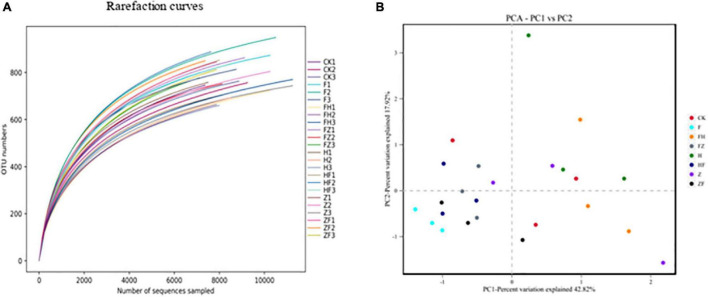
Root rot disease is a serious infection leading to production loss of Chinese wolfberry (). This study tested the potential for two bacterial biological control agents, HSB1 and FZB42, against five fungal pathogens that frequently cause root rot in Chinese wolfberry. Both HSB1 and FZB42 were found to inhibit fungal mycelial growth, and , as well as to promote the growth of wolfberry seedlings. In fact, a biocontrol experiment showed efficiency of 100% with at least one treatment involving each biocontrol strain against . Metagenomic sequencing was used to assess bacterial community shifts in the wolfberry rhizosphere upon introduction of each biocontrol strain. Results showed that HSB1 and FZB42 differentially altered the abundances of different taxa present and positively influenced various functions of inherent wolfberry rhizosphere bacteria. This study highlights the application of biocontrol method in the suppression of fungal pathogens that cause root rot disease in wolfberry, which is useful for agricultural extension agents and commercial growers.
根腐病是一种严重的感染病害,会导致枸杞减产。本研究测试了两种细菌生物防治剂HSB1和FZB42对五种经常导致枸杞根腐病的真菌病原体的防治潜力。研究发现,HSB1和FZB42均能抑制真菌菌丝生长,以及促进枸杞幼苗生长。事实上,一项生物防治实验表明,在至少一种涉及每种生物防治菌株的处理中,对[此处原文缺失具体内容]的防治效率达100%。宏基因组测序用于评估引入每种生物防治菌株后枸杞根际细菌群落的变化。结果表明,HSB1和FZB42对不同分类群的丰度有不同影响,并对枸杞根际固有细菌的各种功能产生积极影响。本研究强调了生物防治方法在抑制导致枸杞根腐病的真菌病原体方面的应用,这对农业推广人员和商业种植者有用。