Fenner Beau J, Tan Tien-En, Barathi Amutha Veluchamy, Tun Sai Bo Bo, Yeo Sia Wey, Tsai Andrew S H, Lee Shu Yen, Cheung Chui Ming Gemmy, Chan Choi Mun, Mehta Jodhbir S, Teo Kelvin Y C
Singapore National Eye Centre, Singapore, Singapore.
Singapore Eye Research Institute, Singapore, Singapore.
Front Genet. 2022 Jan 7;12:794805. doi: 10.3389/fgene.2021.794805. eCollection 2021.
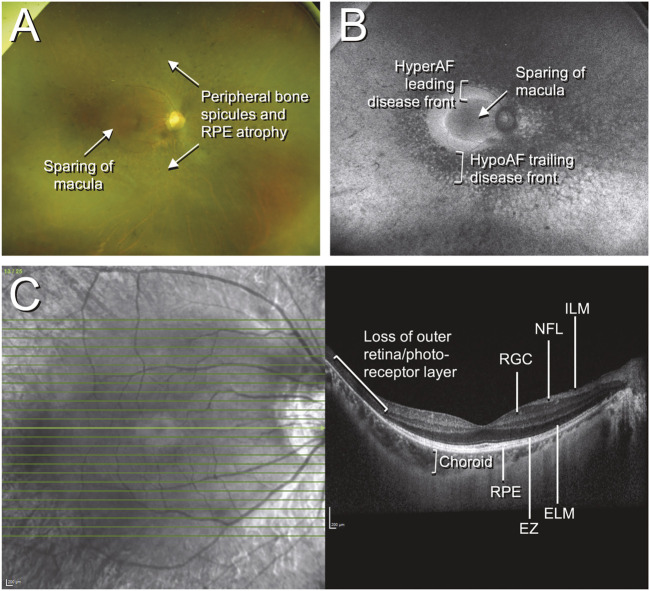
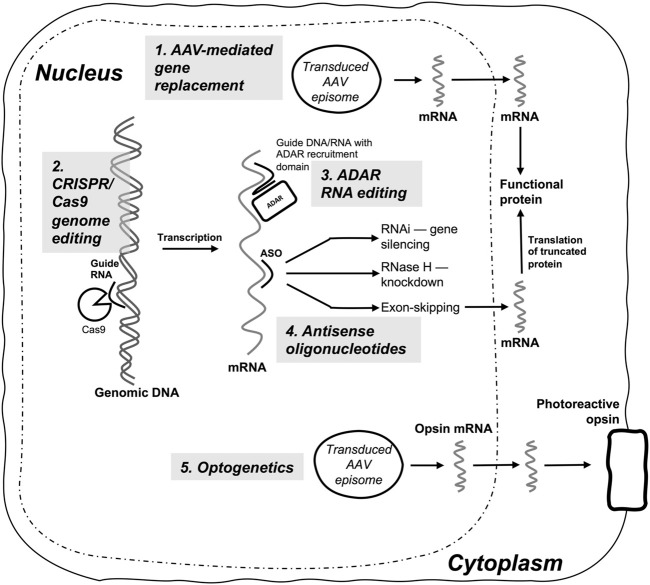
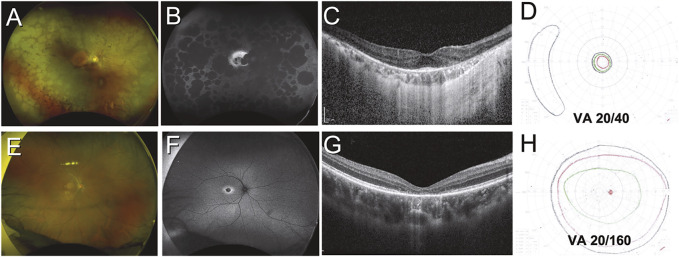
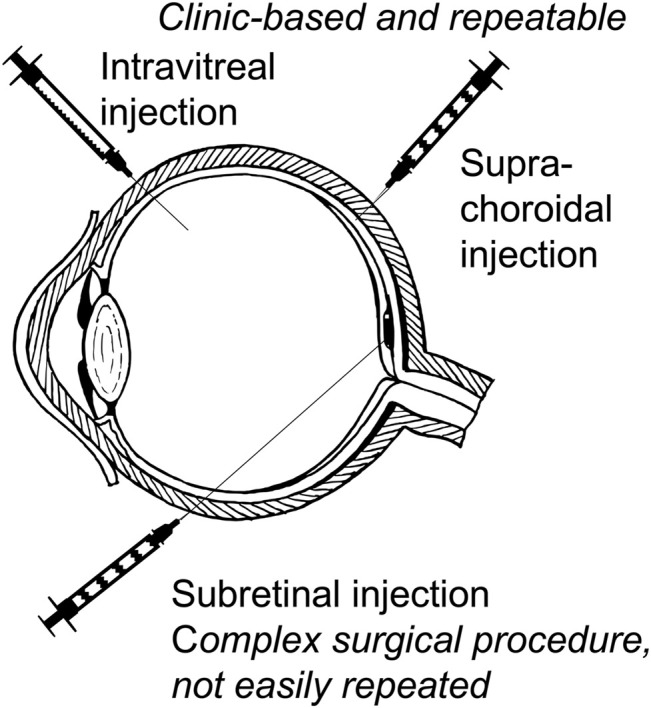
Inherited retinal diseases (IRDs) are a heterogenous group of orphan eye diseases that typically result from monogenic mutations and are considered attractive targets for gene-based therapeutics. Following the approval of an IRD gene replacement therapy for Leber's congenital amaurosis due to mutations, there has been an intensive international research effort to identify the optimal gene therapy approaches for a range of IRDs and many are now undergoing clinical trials. In this review we explore therapeutic challenges posed by IRDs and review current and future approaches that may be applicable to different subsets of IRD mutations. Emphasis is placed on five distinct approaches to gene-based therapy that have potential to treat the full spectrum of IRDs: 1) gene replacement using adeno-associated virus (AAV) and nonviral delivery vectors, 2) genome editing via the CRISPR/Cas9 system, 3) RNA editing by endogenous and exogenous ADAR, 4) mRNA targeting with antisense oligonucleotides for gene knockdown and splicing modification, and 5) optogenetic approaches that aim to replace the function of native retinal photoreceptors by engineering other retinal cell types to become capable of phototransduction.
遗传性视网膜疾病(IRDs)是一类异质性的罕见眼病,通常由单基因突变引起,被认为是基于基因治疗的有吸引力的靶点。在一种用于治疗因特定突变导致的莱伯先天性黑蒙的IRD基因替代疗法获批后,国际上展开了密集的研究工作,以确定针对一系列IRD的最佳基因治疗方法,目前许多方法正在进行临床试验。在本综述中,我们探讨了IRD带来的治疗挑战,并回顾了当前和未来可能适用于不同IRD突变亚组的方法。重点介绍了五种基于基因治疗的不同方法,它们有可能治疗所有类型的IRD:1)使用腺相关病毒(AAV)和非病毒递送载体进行基因替代;2)通过CRISPR/Cas9系统进行基因组编辑;3)通过内源性和外源性ADAR进行RNA编辑;4)用反义寡核苷酸靶向mRNA进行基因敲低和剪接修饰;5)光遗传学方法,旨在通过改造其他视网膜细胞类型使其能够进行光转导,从而替代天然视网膜光感受器的功能。