Siriarchavatana Parkpoom, Kruger Marlena C, Miller Matthew R, Tian Hong Sabrina, Wolber Frances M
School of Food and Advanced Technology Massey University Palmerston North New Zealand.
Department of Pharmacology, Faculty of Veterinary Science Chulalongkorn University Bangkok Thailand.
JBMR Plus. 2021 Nov 14;6(1):e10571. doi: 10.1002/jbm4.10571. eCollection 2022 Jan.
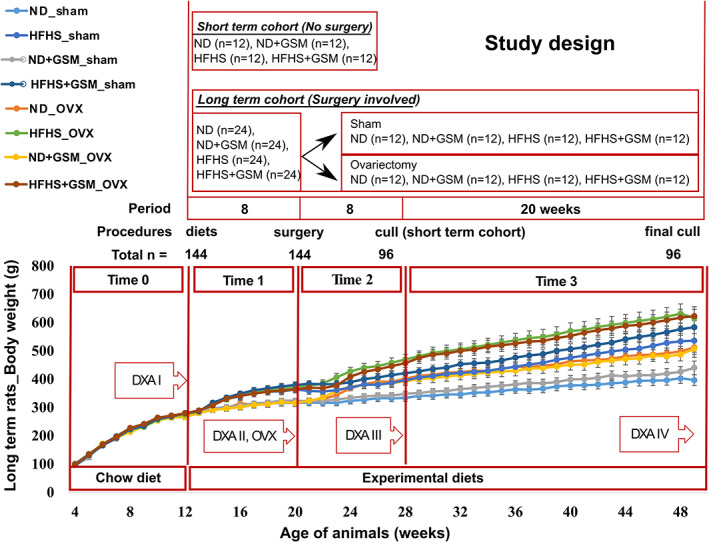
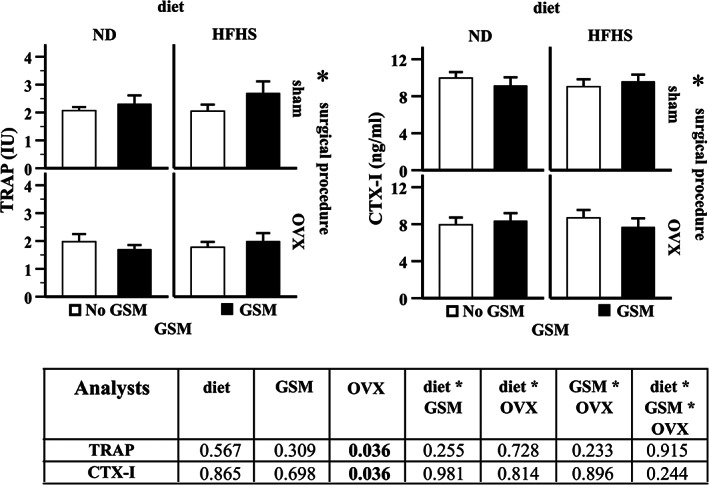
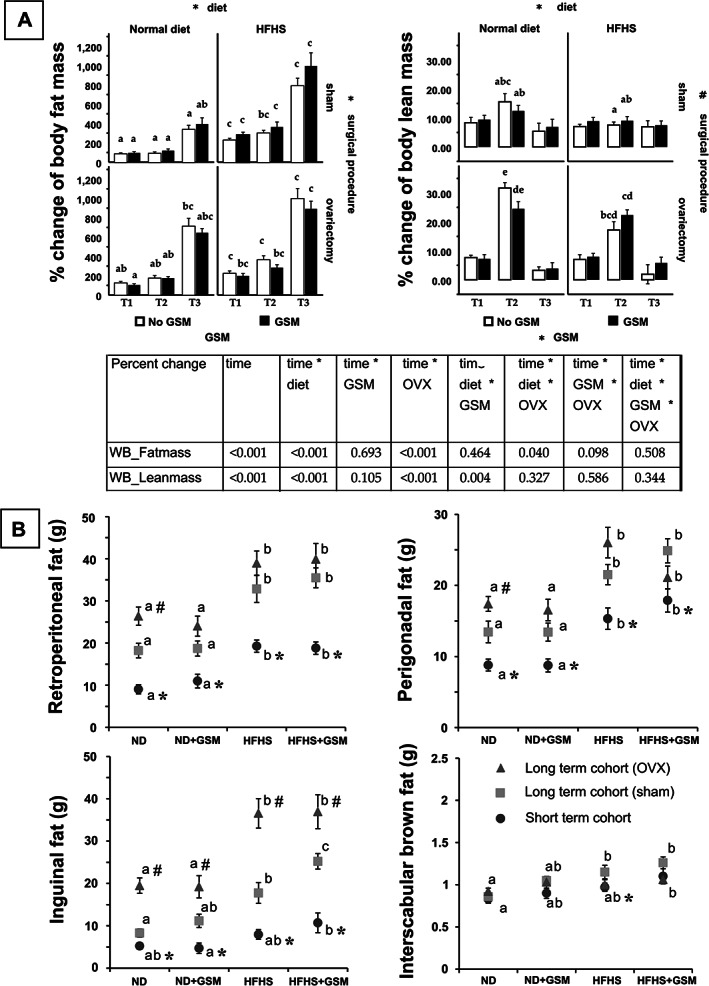
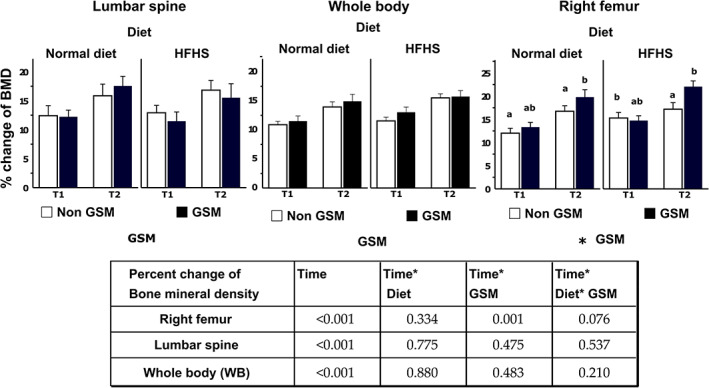
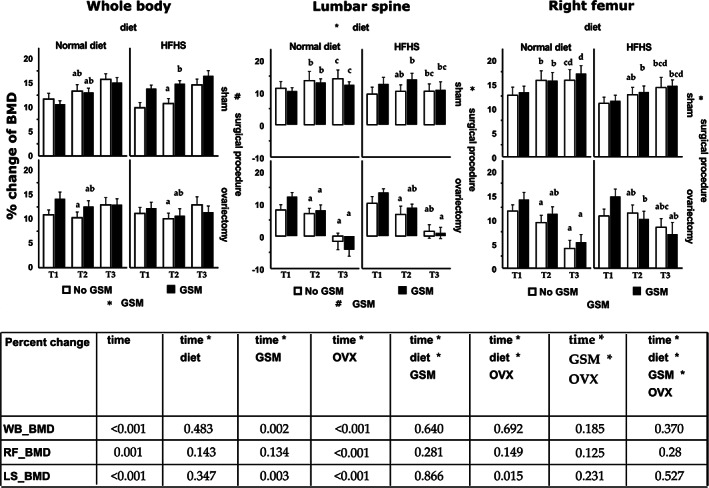
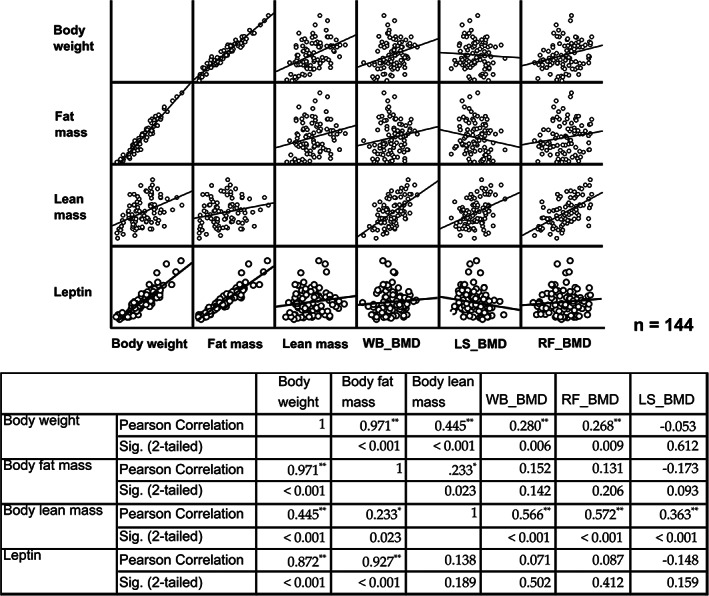
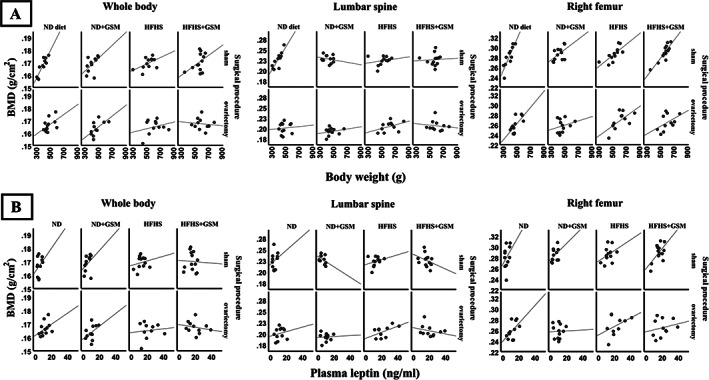
Obesity is considered to impair long-term health by disturbing multiple physiological functions. However, it remains a controversial issue as to whether obesity has beneficial or detrimental effects on bone health in postmenopausal women. The aims of this study were to investigate the relationships between obesity and bone mineral density (BMD) under conditions of ovarian hormone deficiency in an animal model and to evaluate the potential health benefits of Greenshell mussel (GSM) on bone health. A total of 144 adult female Sprague-Dawley rats were fed from age 12 weeks on one of four diets (normal [ND]; ND + GSM; high fat/high sugar [HF/HS]; HF/HS + GSM; = 36 per diet). At age 20 weeks, after a dual-energy X-ray absorptiometry (DXA) scan, 12 of the rats on each diet underwent ovariectomy (OVX) and the remaining rats were left intact. Twelve of the intact rats in each diet group were culled at age 26 weeks (short-term cohort). The remaining rats were culled at age 48 weeks (long-term cohort). Rats were DXA scanned before cull, then various fat pads were dissected. The results revealed that HF/HS rats and OVX rats dramatically increased body weight and fat deposition in correlation with leptin. In the long-term cohort, vertebral spine BMD rapidly declined after OVX. At termination, the OVX rats had decreased plasma bone turnover markers of CTX-1 and TRAP when compared with sham rats. Significantly higher BMD was found in OVX rats fed the HF/HS diet compared with ND, but this difference was not recapitulated in intact rats. BMD of right femur was significantly increased 5% to 10% by GSM in the short-term cohort. The data demonstrated that obesity can be beneficial by increasing BMD in OVX rats, and this may extrapolate to postmenopausal women as adipocyte-produced estrogen may slightly compensate for the reduction in ovarian hormones. Finally, the data showed that GSM may be beneficial to bone health by increasing BMD accrual. © 2021 The Authors. published by Wiley Periodicals LLC on behalf of American Society for Bone and Mineral Research.
肥胖被认为会通过干扰多种生理功能来损害长期健康。然而,肥胖对绝经后女性的骨骼健康是有益还是有害,仍然是一个有争议的问题。本研究的目的是在动物模型中研究卵巢激素缺乏情况下肥胖与骨密度(BMD)之间的关系,并评估绿贻贝(GSM)对骨骼健康的潜在健康益处。总共144只成年雌性Sprague-Dawley大鼠从12周龄开始喂食四种饮食之一(正常饮食[ND];ND + GSM;高脂肪/高糖[HF/HS];HF/HS + GSM;每种饮食36只)。在20周龄时,经过双能X线吸收法(DXA)扫描后,每种饮食的12只大鼠接受卵巢切除术(OVX),其余大鼠保持完整。每个饮食组中12只完整的大鼠在26周龄时被扑杀(短期队列)。其余大鼠在48周龄时被扑杀(长期队列)。在扑杀前对大鼠进行DXA扫描,然后解剖各种脂肪垫。结果显示,HF/HS大鼠和OVX大鼠的体重和脂肪沉积与瘦素显著增加相关。在长期队列中,OVX后脊柱骨密度迅速下降。在实验结束时,与假手术大鼠相比,OVX大鼠的血浆骨转换标志物CTX-1和TRAP降低。与ND相比,喂食HF/HS饮食的OVX大鼠的骨密度显著更高,但在完整大鼠中未观察到这种差异。在短期队列中,GSM使右股骨骨密度显著增加5%至10%。数据表明,肥胖通过增加OVX大鼠的骨密度可能是有益的,这可能适用于绝经后女性,因为脂肪细胞产生的雌激素可能会略微补偿卵巢激素的减少。最后,数据表明GSM可能通过增加骨密度积累对骨骼健康有益。© 2021作者。由Wiley Periodicals LLC代表美国骨与矿物质研究学会出版。