
循环白细胞介素 6 和 CD16 阳性单核细胞在动静脉瘘血管成形术后增加。
Circulating Interleukin-6 and CD16 positive monocytes increase following angioplasty of an arteriovenous fistula.
机构信息
School of Immunology and Microbial Sciences, Faculty of Life Sciences and Medicine, King's College London, Guy's Hospital, London, SE1 9RT, UK.
School of Population Health and Environmental Sciences, Faculty of Life Sciences and Medicine, King's College London, London, UK.
出版信息
Sci Rep. 2022 Jan 26;12(1):1427. doi: 10.1038/s41598-022-05062-9.
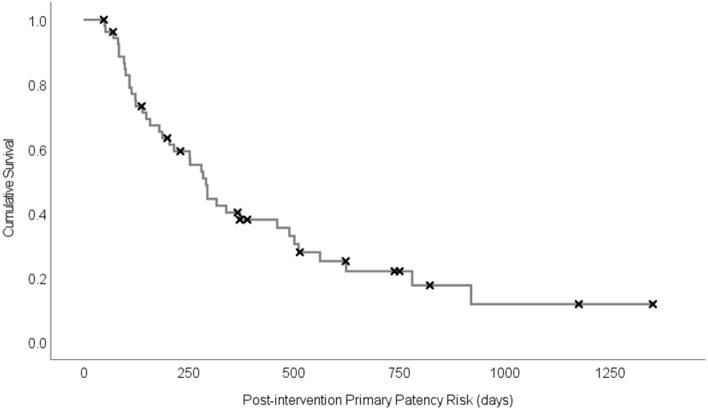
Arteriovenous fistulas are the ideal form of vascular access that allows provision of haemodialysis. Stenotic lesions caused by neointimal hyperplasia commonly occur resulting in patients requiring a fistuloplasty. This is effective but there is a high recurrence rate. We sought to investigate the effects of a fistuloplasty on monocyte populations. Blood samples were taken from patients before and after their fistuloplasty procedure. Samples were analysed using flow cytometry, ELISA and Luminex assays. Univariate cox regression was carried out to investigate associations with post fistuloplasty patency. At 1-2 days post fistuloplasty, the proportion of classical (CD14++CD16-) monocytes decreased (p < 0.001), whilst intermediate (CD14++CD16+) and non-classical (CD14+CD16+) monocytes increased (both p < 0.01) in a cohort of 20 patients. A time course study carried out in 5 patients showed that this was due to an increase in absolute numbers of non-classical and intermediate monocytes. Higher levels of non-classical monocytes pre-fistuloplasty were associated with an increased risk for patency loss (p < 0.05). We measured 41 soluble factors in plasma samples taken before a fistuloplasty in 54 patients, with paired post-fistuloplasty samples (1-2 days) available in 30 patients. After correcting for false discovery, the only factor with a significant change in level was IL-6 (P = 0.0003, q = 0.0124). In a further time-course study in 6 patients, peak level of IL-6 occurred 2-3 h post fistuloplasty. This study demonstrates that there is a systemic inflammatory response to the fistuloplasty procedure and that monocyte subsets and IL-6 may be important in the pathophysiology of restenosis.
动静脉瘘是提供血液透析的理想血管通路形式。由新生内膜增生引起的狭窄病变常导致患者需要进行瘘管成形术。虽然该方法有效,但复发率较高。我们旨在研究瘘管成形术对单核细胞群体的影响。在瘘管成形术前和术后采集患者的血液样本。使用流式细胞术、ELISA 和 Luminex 检测分析样本。采用单变量 Cox 回归分析与瘘管成形术后通畅性相关的因素。在 20 例患者的队列中,在瘘管成形术后 1-2 天,经典型(CD14++CD16-)单核细胞的比例降低(p<0.001),而中间型(CD14++CD16+)和非经典型(CD14+CD16+)单核细胞增加(均 p<0.01)。对 5 例患者进行的时间进程研究表明,这是由于非经典和中间型单核细胞的绝对数量增加所致。瘘管成形术前较高水平的非经典型单核细胞与通畅性丧失的风险增加相关(p<0.05)。我们在 54 例患者的瘘管成形术前采集了 41 种可溶性因子的血浆样本,并在 30 例患者中获得了术后 1-2 天的配对样本。在对假发现率进行校正后,唯一在水平上有显著变化的因子是 IL-6(P=0.0003,q=0.0124)。在 6 例患者的进一步时间进程研究中,IL-6 的峰值水平出现在瘘管成形术后 2-3 小时。本研究表明,瘘管成形术过程会引起全身炎症反应,单核细胞亚群和 IL-6 可能在再狭窄的病理生理学中起重要作用。



 Zotero 插件