• 文献检索
  • 文档翻译
  • 深度研究
  • 学术资讯
  • Suppr Zotero 插件Zotero 插件
  • 邀请有礼
  • 套餐&价格
  • 历史记录
应用&插件
Suppr Zotero 插件Zotero 插件浏览器插件Mac 客户端Windows 客户端微信小程序
定价
高级版会员购买积分包购买API积分包
服务
文献检索文档翻译深度研究API 文档MCP 服务
关于我们
关于 Suppr公司介绍联系我们用户协议隐私条款
关注我们

Suppr 超能文献

核心技术专利:CN118964589B侵权必究
粤ICP备2023148730 号-1Suppr @ 2026

文献检索

告别复杂PubMed语法,用中文像聊天一样搜索,搜遍4000万医学文献。AI智能推荐,让科研检索更轻松。

立即免费搜索

文件翻译

保留排版,准确专业,支持PDF/Word/PPT等文件格式,支持 12+语言互译。

免费翻译文档

深度研究

AI帮你快速写综述,25分钟生成高质量综述,智能提取关键信息,辅助科研写作。

立即免费体验

全科医生对人工智能系统的态度:访谈研究。

General Practitioners' Attitudes Toward Artificial Intelligence-Enabled Systems: Interview Study.

机构信息

Department of Business & Information Systems Engineering, University of Bayreuth, Bayreuth, Germany.

Centre for Future Enterprise, Queensland University of Technology, Brisbane, Australia.

出版信息

J Med Internet Res. 2022 Jan 27;24(1):e28916. doi: 10.2196/28916.

DOI:10.2196/28916
PMID:35084342
原文链接:https://pmc.ncbi.nlm.nih.gov/articles/PMC8832268/
Abstract

BACKGROUND

General practitioners (GPs) care for a large number of patients with various diseases in very short timeframes under high uncertainty. Thus, systems enabled by artificial intelligence (AI) are promising and time-saving solutions that may increase the quality of care.

OBJECTIVE

This study aims to understand GPs' attitudes toward AI-enabled systems in medical diagnosis.

METHODS

We interviewed 18 GPs from Germany between March 2020 and May 2020 to identify determinants of GPs' attitudes toward AI-based systems in diagnosis. By analyzing the interview transcripts, we identified 307 open codes, which we then further structured to derive relevant attitude determinants.

RESULTS

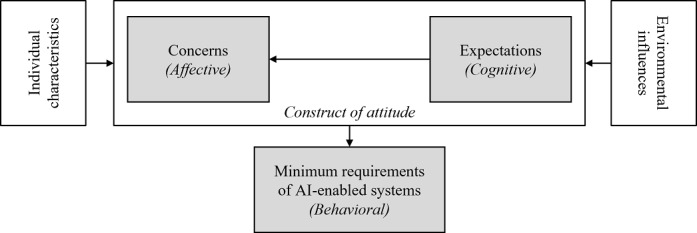
We merged the open codes into 21 concepts and finally into five categories: concerns, expectations, environmental influences, individual characteristics, and minimum requirements of AI-enabled systems. Concerns included all doubts and fears of the participants regarding AI-enabled systems. Expectations reflected GPs' thoughts and beliefs about expected benefits and limitations of AI-enabled systems in terms of GP care. Environmental influences included influences resulting from an evolving working environment, key stakeholders' perspectives and opinions, the available information technology hardware and software resources, and the media environment. Individual characteristics were determinants that describe a physician as a person, including character traits, demographic characteristics, and knowledge. In addition, the interviews also revealed the minimum requirements of AI-enabled systems, which were preconditions that must be met for GPs to contemplate using AI-enabled systems. Moreover, we identified relationships among these categories, which we conflate in our proposed model.

CONCLUSIONS

This study provides a thorough understanding of the perspective of future users of AI-enabled systems in primary care and lays the foundation for successful market penetration. We contribute to the research stream of analyzing and designing AI-enabled systems and the literature on attitudes toward technology and practice by fostering the understanding of GPs and their attitudes toward such systems. Our findings provide relevant information to technology developers, policymakers, and stakeholder institutions of GP care.

摘要

背景

全科医生(GP)在非常短的时间内照顾大量患有各种疾病的患者,并且面临高度的不确定性。因此,人工智能(AI)支持的系统是有前途且节省时间的解决方案,可能会提高医疗质量。

目的

本研究旨在了解全科医生对医疗诊断中 AI 支持系统的态度。

方法

我们于 2020 年 3 月至 5 月间采访了 18 名德国全科医生,以确定全科医生对基于 AI 的诊断系统的态度的决定因素。通过分析访谈记录,我们确定了 307 个开放代码,然后进一步对其进行结构化,以得出相关的态度决定因素。

结果

我们将开放代码合并为 21 个概念,最终合并为五个类别:担忧、期望、环境影响、个体特征和 AI 支持系统的最低要求。担忧包括参与者对 AI 支持系统的所有疑虑和恐惧。期望反映了全科医生对 AI 支持系统在全科医疗方面的预期收益和局限性的想法和信念。环境影响包括由不断发展的工作环境、主要利益相关者的观点和意见、可用的信息技术硬件和软件资源以及媒体环境产生的影响。个体特征是描述医生作为个体的决定因素,包括性格特征、人口统计学特征和知识。此外,访谈还揭示了 AI 支持系统的最低要求,这些要求是全科医生考虑使用 AI 支持系统的前提条件。此外,我们还确定了这些类别的关系,并在我们提出的模型中对其进行了合并。

结论

本研究全面了解了初级保健中 AI 支持系统未来用户的观点,并为成功的市场渗透奠定了基础。我们通过促进对全科医生及其对这些系统的态度的理解,为分析和设计 AI 支持系统的研究以及技术和实践态度的文献做出了贡献。我们的研究结果为技术开发者、政策制定者和全科医生护理的利益相关机构提供了相关信息。

https://cdn.ncbi.nlm.nih.gov/pmc/blobs/7898/8832268/17028aecf502/jmir_v24i1e28916_fig2.jpg
https://cdn.ncbi.nlm.nih.gov/pmc/blobs/7898/8832268/cac8a8d53fd5/jmir_v24i1e28916_fig1.jpg
https://cdn.ncbi.nlm.nih.gov/pmc/blobs/7898/8832268/17028aecf502/jmir_v24i1e28916_fig2.jpg
https://cdn.ncbi.nlm.nih.gov/pmc/blobs/7898/8832268/cac8a8d53fd5/jmir_v24i1e28916_fig1.jpg
https://cdn.ncbi.nlm.nih.gov/pmc/blobs/7898/8832268/17028aecf502/jmir_v24i1e28916_fig2.jpg

相似文献

1
General Practitioners' Attitudes Toward Artificial Intelligence-Enabled Systems: Interview Study.全科医生对人工智能系统的态度:访谈研究。
J Med Internet Res. 2022 Jan 27;24(1):e28916. doi: 10.2196/28916.
2
Artificial Intelligence and the Future of Primary Care: Exploratory Qualitative Study of UK General Practitioners' Views.人工智能与初级医疗保健的未来:对英国全科医生观点的探索性定性研究
J Med Internet Res. 2019 Mar 20;21(3):e12802. doi: 10.2196/12802.
3
Patient Online Record Access in English Primary Care: Qualitative Survey Study of General Practitioners' Views.患者在线记录在英国初级保健中的访问:全科医生观点的定性调查研究。
J Med Internet Res. 2023 Feb 22;25:e43496. doi: 10.2196/43496.
4
Implementation of evidence-based knowledge in general practice.循证医学知识在全科医疗中的应用。
Dan Med J. 2017 Dec;64(12).
5
Clinicians' roles and necessary levels of understanding in the use of artificial intelligence: A qualitative interview study with German medical students.临床医生在使用人工智能方面的角色和必要的理解水平:一项对德国医学生的定性访谈研究。
BMC Med Ethics. 2024 Oct 7;25(1):107. doi: 10.1186/s12910-024-01109-w.
6
Physicians' Perspectives on AI in Clinical Decision Support Systems: Interview Study of the CURATE.AI Personalized Dose Optimization Platform.医生对临床决策支持系统中人工智能的看法:对 CURATE.AI 个性化剂量优化平台的访谈研究。
JMIR Hum Factors. 2023 Oct 30;10:e48476. doi: 10.2196/48476.
7
Patients' requests for radiological imaging: A qualitative study on general practitioners' perspectives.患者对影像学检查的需求:全科医生视角的定性研究。
Health Expect. 2023 Dec;26(6):2453-2460. doi: 10.1111/hex.13849. Epub 2023 Aug 16.
8
GPs' views on the use of depression screening and GP-targeted feedback: a qualitative study.全科医生对使用抑郁筛查和以全科医生为目标的反馈的看法:一项定性研究。
Qual Life Res. 2021 Nov;30(11):3279-3286. doi: 10.1007/s11136-020-02703-2. Epub 2020 Nov 29.
9
Exploring Physician Perspectives on Using Real-world Care Data for the Development of Artificial Intelligence-Based Technologies in Health Care: Qualitative Study.探索医生对利用真实世界医疗数据开发医疗保健领域人工智能技术的看法:定性研究
JMIR Form Res. 2022 May 18;6(5):e35367. doi: 10.2196/35367.
10
Beyond Known Barriers-Assessing Physician Perspectives and Attitudes Toward Introducing Open Health Records in Germany: Qualitative Study.突破已知障碍——评估德国医生对引入开放健康记录的观点和态度:定性研究
J Particip Med. 2020 Nov 6;12(4):e19093. doi: 10.2196/19093.

引用本文的文献

1
AI and Primary Care: Scoping Review.人工智能与初级保健:范围综述
J Med Internet Res. 2025 Aug 15;27:e65950. doi: 10.2196/65950.
2
Enabling Physicians to Make an Informed Adoption Decision on Artificial Intelligence Applications in Medical Imaging Diagnostics: Qualitative Study.助力医生对医学影像诊断中的人工智能应用做出明智的采用决策:定性研究
J Med Internet Res. 2025 Aug 12;27:e63668. doi: 10.2196/63668.
3
Artificial Intelligence-Based Large Language Models Can Facilitate Patient Education.基于人工智能的大语言模型可促进患者教育。

本文引用的文献

1
Public vs physician views of liability for artificial intelligence in health care.公众和医生对医疗人工智能责任的看法。
J Am Med Inform Assoc. 2021 Jul 14;28(7):1574-1577. doi: 10.1093/jamia/ocab055.
2
The Importance of Incorporating Human Factors in the Design and Implementation of Artificial Intelligence for Skin Cancer Diagnosis in the Real World.将人为因素纳入现实世界中用于皮肤癌诊断的人工智能的设计和实施中的重要性。
Am J Clin Dermatol. 2021 Mar;22(2):233-242. doi: 10.1007/s40257-020-00574-4.
3
Artificial Intelligence and Human Trust in Healthcare: Focus on Clinicians.
J Pediatr Soc North Am. 2025 May 24;12:100196. doi: 10.1016/j.jposna.2025.100196. eCollection 2025 Aug.
4
Physicians' attitudes and acceptance towards artificial intelligence in medical care: a qualitative study in Germany.医生对医疗保健中人工智能的态度与接受度:德国的一项定性研究
Front Digit Health. 2025 Jul 14;7:1616827. doi: 10.3389/fdgth.2025.1616827. eCollection 2025.
5
The implementation challenge of computerised clinical decision support systems for the detection of disease in primary care: systematic review and recommendations.基层医疗中用于疾病检测的计算机化临床决策支持系统的实施挑战:系统评价与建议
Implement Sci. 2025 Jul 17;20(1):33. doi: 10.1186/s13012-025-01445-4.
6
Understanding Antecedents of Nurses' and Physicians' Workaround Behavior Regarding Hospital Information Systems: Qualitative Interview Study.了解护士和医生在医院信息系统方面的变通行为的前因:定性访谈研究
J Med Internet Res. 2025 Jul 15;27:e51781. doi: 10.2196/51781.
7
Perspectives of Health Care Professionals on the Use of AI to Support Clinical Decision-Making in the Management of Multiple Long-Term Conditions: Interview Study.医疗保健专业人员对使用人工智能支持多种慢性病管理中临床决策的看法:访谈研究
J Med Internet Res. 2025 Jul 4;27:e71980. doi: 10.2196/71980.
8
Perceptions of, Barriers to, and Facilitators of the Use of AI in Primary Care: Systematic Review of Qualitative Studies.基层医疗中人工智能应用的认知、障碍与促进因素:定性研究的系统评价
J Med Internet Res. 2025 Jun 25;27:e71186. doi: 10.2196/71186.
9
Opportunities, challenges, and requirements for Artificial Intelligence (AI) implementation in Primary Health Care (PHC): a systematic review.初级卫生保健(PHC)中实施人工智能(AI)的机遇、挑战和要求:一项系统综述
BMC Prim Care. 2025 Jun 9;26(1):196. doi: 10.1186/s12875-025-02785-2.
10
Indecision on the use of artificial intelligence in healthcare-A qualitative study of patient perspectives on trust, responsibility and self-determination using AI-CDSS.医疗保健领域人工智能应用的决策困境——一项关于患者对使用人工智能临床决策支持系统的信任、责任和自主决定权观点的定性研究
Digit Health. 2025 May 30;11:20552076251339522. doi: 10.1177/20552076251339522. eCollection 2025 Jan-Dec.
医疗保健中的人工智能与人类信任:聚焦临床医生
J Med Internet Res. 2020 Jun 19;22(6):e15154. doi: 10.2196/15154.
4
An overview of clinical decision support systems: benefits, risks, and strategies for success.临床决策支持系统概述:益处、风险及成功策略。
NPJ Digit Med. 2020 Feb 6;3:17. doi: 10.1038/s41746-020-0221-y. eCollection 2020.
5
Attitudes and perceptions of UK medical students towards artificial intelligence and radiology: a multicentre survey.英国医学生对人工智能与放射学的态度和认知:一项多中心调查
Insights Imaging. 2020 Feb 5;11(1):14. doi: 10.1186/s13244-019-0830-7.
6
A governance model for the application of AI in health care.人工智能在医疗保健领域应用的治理模型。
J Am Med Inform Assoc. 2020 Mar 1;27(3):491-497. doi: 10.1093/jamia/ocz192.
7
The potential for artificial intelligence in healthcare.人工智能在医疗保健领域的潜力。
Future Healthc J. 2019 Jun;6(2):94-98. doi: 10.7861/futurehosp.6-2-94.
8
Big data and machine learning algorithms for health-care delivery.大数据和机器学习算法在医疗中的应用。
Lancet Oncol. 2019 May;20(5):e262-e273. doi: 10.1016/S1470-2045(19)30149-4.
9
The enigma of doctor-patient relationship.医患关系之谜。
Indian J Psychiatry. 2019 Apr;61(Suppl 4):S776-S781. doi: 10.4103/psychiatry.IndianJPsychiatry_96_19.
10
Artificial intelligence in healthcare.人工智能在医疗保健领域的应用。
Nat Biomed Eng. 2018 Oct;2(10):719-731. doi: 10.1038/s41551-018-0305-z. Epub 2018 Oct 10.