Advanced Wellbeing Research Centre, Sheffield Hallam University, Olympic Legacy Park, Sheffield, S9 3TU, UK.
Academy of Sport & Physical Activity, Sheffield Hallam University, Collegiate Campus, Sheffield, S10 2BP, UK.
BMC Public Health. 2022 Jan 29;22(1):199. doi: 10.1186/s12889-022-12630-1.
The Covid-19 pandemic precipitated a shift in the working practices of millions of people. Nearly half the British workforce (47%) reported to be working at home under lockdown in April 2020. This study investigated the impact of enforced home-working under lockdown on employee wellbeing via markers of stress, burnout, depressive symptoms, and sleep. Moderating effects of factors including age, gender, number of dependants, mental health status and work status were examined alongside work-related factors including work-life conflict and leadership quality.
Cross-sectional data were collected over a 12-week period from May to August 2020 using an online survey. Job-related and wellbeing factors were measured using items from the COPSOQIII. Stress, burnout, somatic stress, cognitive stress, and sleep trouble were tested together using MANOVA and MANCOVA to identify mediating effects. T-tests and one-way ANOVA identified differences in overall stress. Regression trees identified groups with highest and lowest levels of stress and depressive symptoms.
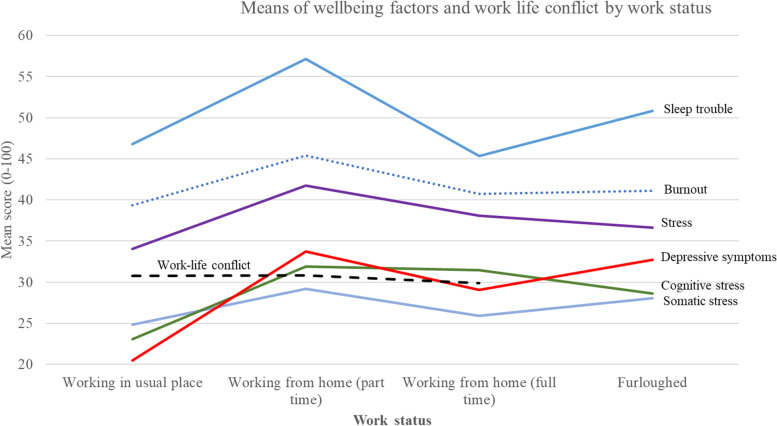
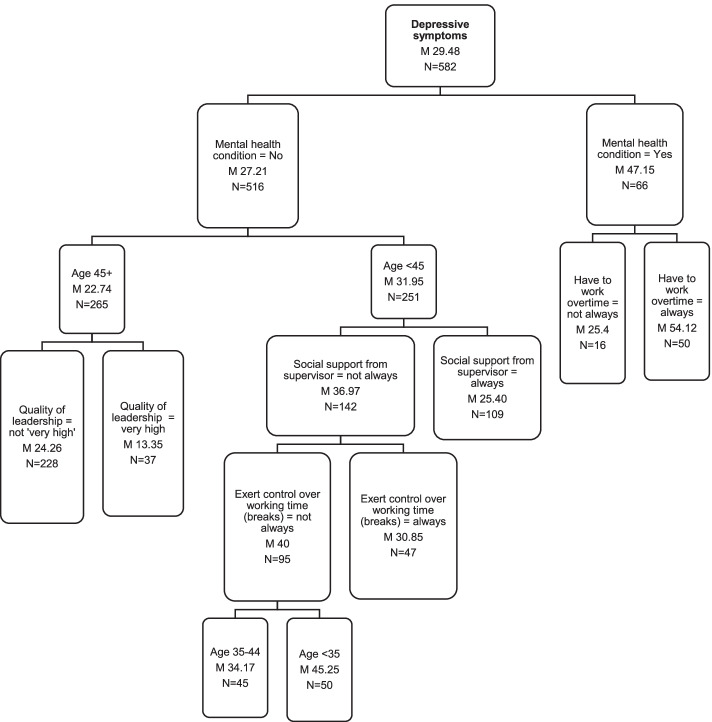
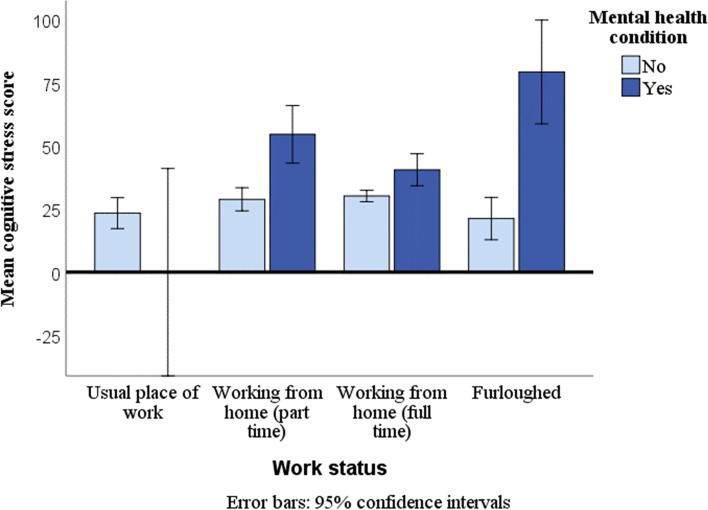
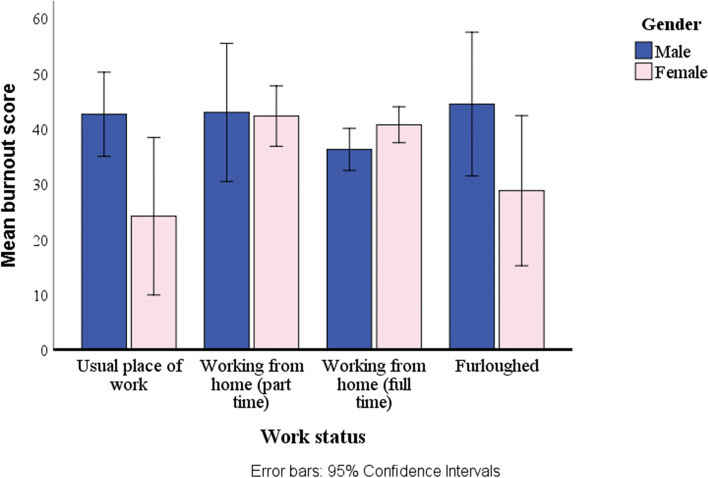
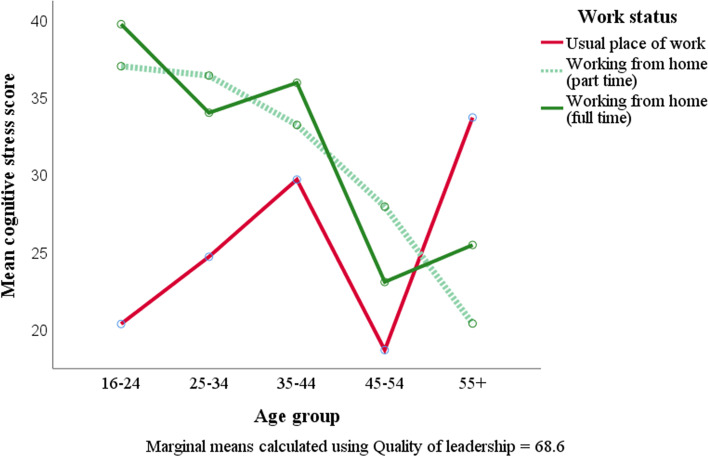
81% of respondents were working at home either full or part-time (n = 623, 62% female). Detrimental health impacts of home-working during lockdown were most acutely experienced by those with existing mental health conditions regardless of age, gender, or work status, and were exacerbated by working regular overtime. In those without mental health conditions, predictors of stress and depressive symptoms were being female, under 45 years, home-working part-time and two dependants, though men reported greater levels of work-life conflict. Place and pattern of work had a greater impact on women. Lower leadership quality was a significant predictor of stress and burnout for both men and women, and, for employees aged > 45 years, had significant impact on level of depressive symptoms experienced.
Experience of home-working under lockdown varies amongst groups. Knowledge of these differences provide employers with tools to better manage employee wellbeing during periods of crisis. While personal factors are not controllable, the quality of leadership provided to employees, and the 'place and pattern' of work, can be actively managed to positive effect. Innovative flexible working practices will help to build greater workforce resilience.
Covid-19 大流行促使数百万人改变了工作方式。2020 年 4 月,将近一半的英国劳动力(47%)在封锁期间报告在家工作。本研究通过压力、倦怠、抑郁症状和睡眠等指标,调查了封锁期间强制在家工作对员工健康的影响。研究还考察了年龄、性别、受抚养人数、心理健康状况和工作状况等因素的调节作用,以及工作生活冲突和领导素质等工作相关因素。
2020 年 5 月至 8 月,使用在线调查,在 12 周内收集了横断面数据。使用 COPSOQIII 中的项目测量了与工作相关的因素和幸福感因素。使用 MANOVA 和 MANCOVA 测试压力、倦怠、躯体性压力、认知性压力和睡眠问题,以确定中介效应。T 检验和单因素方差分析确定了总体压力的差异。回归树确定了压力和抑郁症状水平最高和最低的组。
81%的受访者全职或兼职在家工作(n=623,62%为女性)。在封锁期间在家工作对健康的不利影响在那些无论年龄、性别或工作状况如何,都有现有心理健康状况的人中最为严重,并因经常加班而加剧。在没有心理健康状况的人中,压力和抑郁症状的预测因素是女性、45 岁以下、兼职在家工作和有两个受抚养人,尽管男性报告的工作生活冲突程度更大。工作地点和模式对女性的影响更大。领导素质较低是男性和女性压力和倦怠的显著预测因素,对于年龄在 45 岁以上的员工,领导素质对所经历的抑郁症状水平有显著影响。
在家工作的体验因群体而异。了解这些差异为雇主在危机时期更好地管理员工健康提供了工具。虽然个人因素不可控制,但可以积极管理员工所获得的领导素质以及工作的“地点和模式”,以产生积极的影响。创新的灵活工作实践将有助于增强劳动力的韧性。