Human Health and Performance Systems, MIT Lincoln Laboratory, Lexington, Massachusetts, USA.
Speech and Hearing Bioscience and Technology, Harvard Medical School, Boston, Massachusetts, USA.
Eur J Neurosci. 2022 Mar;55(5):1262-1277. doi: 10.1111/ejn.15616. Epub 2022 Feb 16.
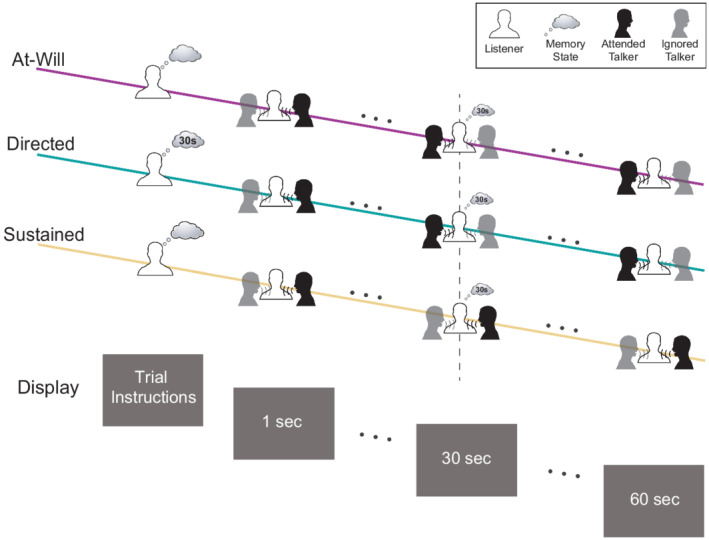
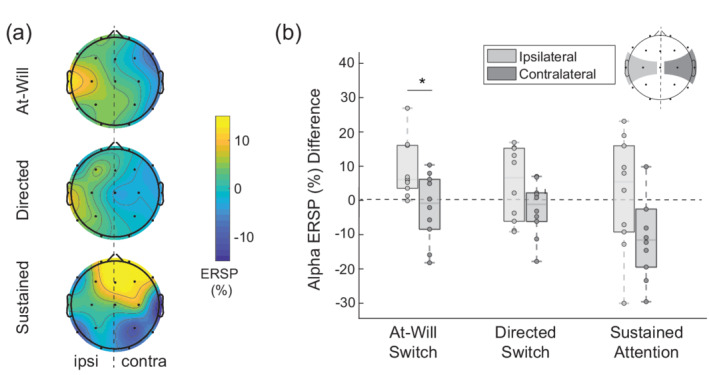
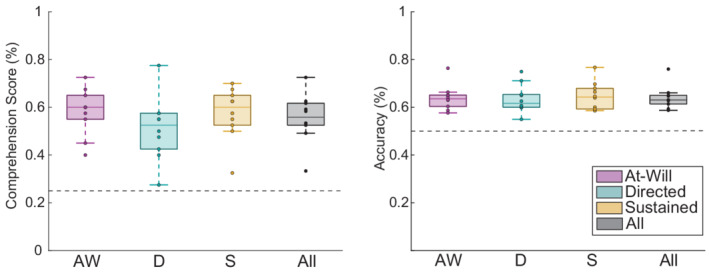
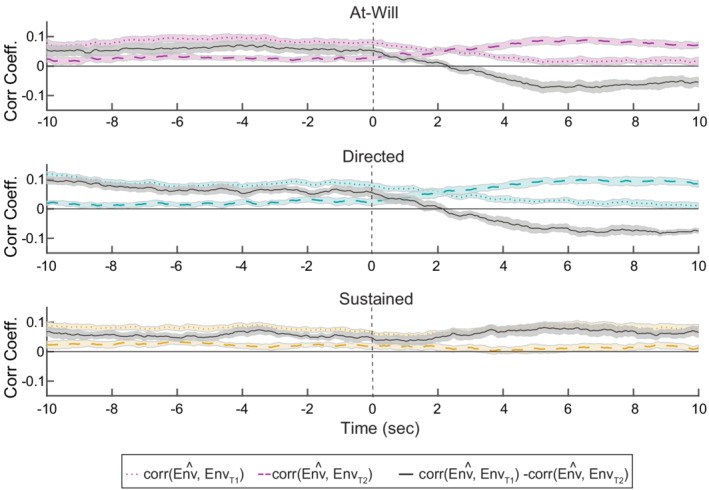
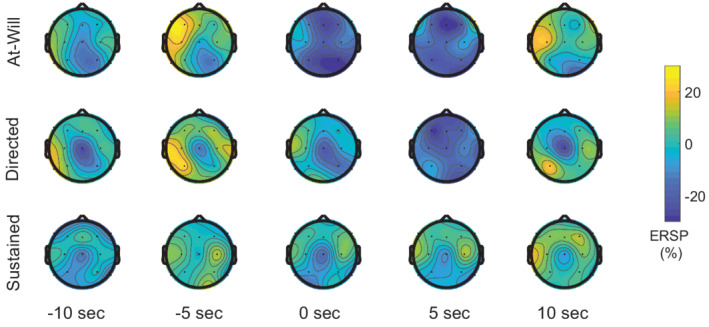
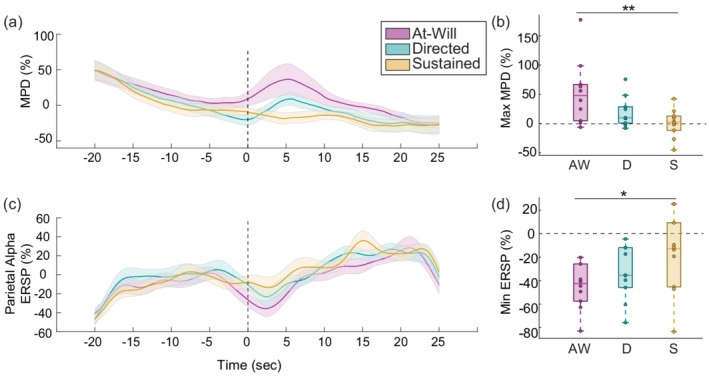
Everyday environments often contain distracting competing talkers and background noise, requiring listeners to focus their attention on one acoustic source and reject others. During this auditory attention task, listeners may naturally interrupt their sustained attention and switch attended sources. The effort required to perform this attention switch has not been well studied in the context of competing continuous speech. In this work, we developed two variants of endogenous attention switching and a sustained attention control. We characterized these three experimental conditions under the context of decoding auditory attention, while simultaneously evaluating listening effort and neural markers of spatial-audio cues. A least-squares, electroencephalography (EEG)-based, attention decoding algorithm was implemented across all conditions. It achieved an accuracy of 69.4% and 64.0% when computed over nonoverlapping 10 and 5-s correlation windows, respectively. Both decoders illustrated smooth transitions in the attended talker prediction through switches at approximately half of the analysis window size (e.g., the mean lag taken across the two switch conditions was 2.2 s when the 5-s correlation window was used). Expended listening effort, as measured by simultaneous EEG and pupillometry, was also a strong indicator of whether the listeners sustained attention or performed an endogenous attention switch (peak pupil diameter measure [ ] and minimum parietal alpha power measure [ ]). We additionally found evidence of talker spatial cues in the form of centrotemporal alpha power lateralization ( ). These results suggest that listener effort and spatial cues may be promising features to pursue in a decoding context, in addition to speech-based features.
日常环境中常常包含分散注意力的干扰性说话者和背景噪音,这要求听众将注意力集中在一个声源上,并忽略其他声源。在这种听觉注意力任务中,听众可能会自然地中断持续注意力并切换到关注的声源。在竞争的连续语音环境中,这种注意力切换所需的努力尚未得到很好的研究。在这项工作中,我们开发了两种内源性注意力切换变体和一种持续注意力控制。我们在解码听觉注意力的背景下对这三种实验条件进行了特征描述,同时评估了听力努力和空间音频线索的神经标记。我们在所有条件下都实现了基于最小二乘法、脑电图 (EEG) 的注意力解码算法。当使用非重叠的 10 秒和 5 秒相关窗口进行计算时,该算法的准确率分别为 69.4%和 64.0%。两个解码器都通过大约一半的分析窗口大小(例如,当使用 5 秒相关窗口时,两个切换条件的平均滞后为 2.2 秒)来展示了在受关注说话者预测中的平滑转换。同时进行的 EEG 和瞳孔测量法测量的扩展听力努力也是判断听众是否保持注意力或执行内源性注意力切换的有力指标(峰值瞳孔直径测量值 [ ]和最小顶叶α功率测量值 [ ])。我们还发现了以中央颞区α功率侧化( )形式出现的说话者空间线索的证据。这些结果表明,除了基于语音的特征外,听众努力和空间线索可能是解码背景下有前途的特征。