NIHR Health Protection Research Unit in Gastrointestinal Infections, The University of Liverpool, Liverpool, UK.
NIHR Health Protection Research Unit in Emerging and Zoonotic Infections, The University of Liverpool, Liverpool, UK.
BMC Infect Dis. 2022 Feb 2;22(1):114. doi: 10.1186/s12879-022-07086-y.
Infection with the Cryptosporidium parasite causes over 4000 cases of diagnosed illness (cryptosporidiosis) in England and Wales each year. The incidence of sporadic disease has not been sufficiently established, and how frequently this arises from contact with other infected people is not well documented. This project aimed to explore potential transmission in the home and attempt to identify asymptomatic infections, which might play a role in transmission. Risk factors and characteristics associated with spread of infection in the home were described including any differences between Cryptosporidium species.
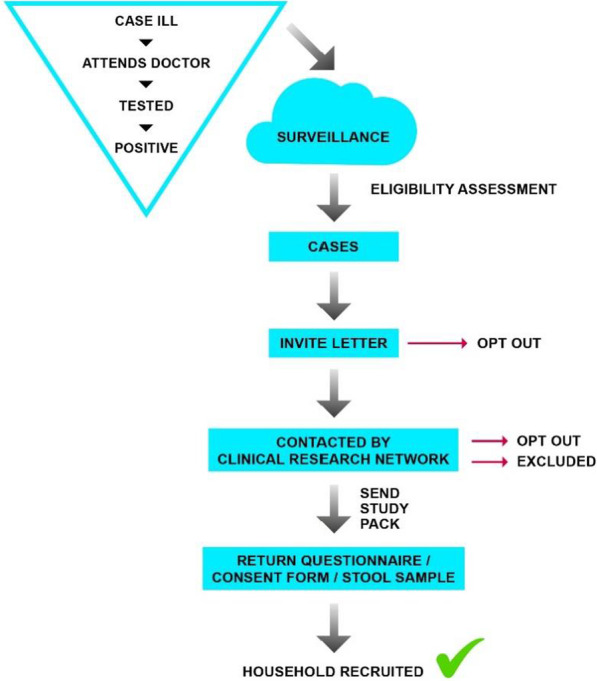
The study identified cryptosporidiosis cases from North West England and Wales over a year and invited them and their household to take part. Each household was sent a study pack containing study information and a questionnaire, and stool sample kits to provide samples from consenting household members. Cryptosporidium-positive stool samples, identified by immunofluorescence microscopy, were characterised using molecular methods to help describe any patterns of transmission. Characteristics of households with and without additional cases were described, and compared using odds ratios (OR) and a multivariable logistic regression identified independent risk factors for household transmission. Data collection ran for one year, beginning in September 2018 with an initial pilot phase.
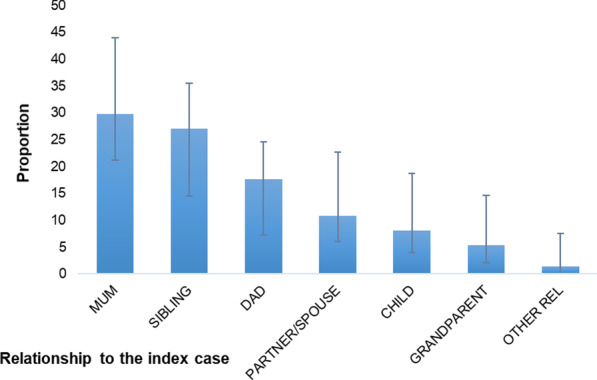
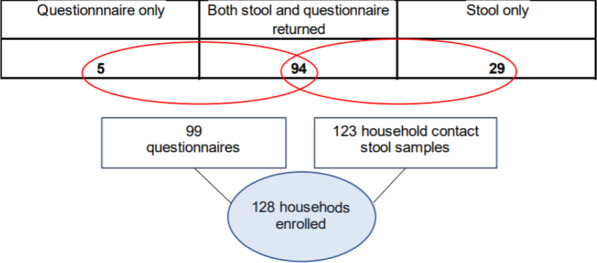
We enrolled 128 index cases and their households. Additional illness occurred in over a quarter of homes, each reporting an average of two additional cases. The majority of these were undiagnosed and unreported to surveillance. This burden was even greater in households where the index case was infected with C. hominis versus C. parvum, or the index case was under five years old, with mums and siblings most at risk of secondary infection. Only having an index case of C. hominis was independently associated with transmission in the multivariable model (OR 4.46; p = 0.01).
Cryptosporidium was a considerable burden in the home. At-risk homes were those where the index was less than five years old and/or infected with C. hominis. Of particular risk were female caregivers and siblings. Hygiene advice should be specifically directed here. This work provides evidence for humans as sources of C. hominis infection and that person-person is a key pathway. We recommend that all stools submitted for the investigation of gastrointestinal pathogens are tested for Cryptosporidium to better capture cases, inclusion of speciation data in routine surveillance, and the consideration of specific clinical advice on prevention for high-risk homes.
在英格兰和威尔士,每年有超过 4000 例确诊的隐孢子虫寄生虫感染病例(隐孢子虫病)。散发性疾病的发病率尚未得到充分证实,也没有很好地记录这种疾病是如何频繁地通过与其他受感染的人接触而发生的。本项目旨在探索家庭内的潜在传播,并试图确定可能在传播中发挥作用的无症状感染。描述了与家庭内感染传播相关的危险因素和特征,包括不同隐孢子虫种之间的差异。
该研究在一年的时间里从英格兰西北部和威尔士确定了隐孢子虫病病例,并邀请他们及其家人参与。每个家庭都收到了一个研究包,其中包含研究信息和一份问卷,以及粪便样本试剂盒,以提供同意的家庭成员的样本。通过免疫荧光显微镜鉴定出的隐孢子虫阳性粪便样本,通过分子方法进行了特征描述,以帮助描述任何传播模式。描述了有和没有额外病例的家庭的特征,并使用比值比(OR)和多变量逻辑回归比较,确定家庭传播的独立危险因素。数据收集从 2018 年 9 月开始,持续了一年,最初进行了试点阶段。
我们招募了 128 名索引病例及其家庭。超过四分之一的家庭出现了额外的疾病,每个家庭报告了平均两例额外的病例。这些病例大多数未经诊断,也未向监测机构报告。在索引病例感染人源隐孢子虫(C. hominis)而非小隐孢子虫(C. parvum)或索引病例年龄小于五岁的家庭中,这种负担更大,母亲和兄弟姐妹感染二次感染的风险最高。只有索引病例是人源隐孢子虫(C. hominis)与多变量模型中的传播有关(OR 4.46;p=0.01)。
隐孢子虫在家中是一个相当大的负担。有风险的家庭是那些索引病例年龄小于五岁且/或感染人源隐孢子虫(C. hominis)的家庭。女性照顾者和兄弟姐妹风险尤其高。应特别针对这里的卫生建议。这项工作为人类是人源隐孢子虫感染的来源提供了证据,并且人际传播是一个关键途径。我们建议所有提交胃肠道病原体调查的粪便都应检测隐孢子虫,以更好地捕获病例,在常规监测中纳入种系数据,并考虑针对高风险家庭的具体预防临床建议。