Key Laboratory of Zoonosis Research, Ministry of Education, College of Animal Science, Jilin University, Changchun, 130062, China.
CAS Key Laboratory of Regenerative Biology, Guangdong Provincial Key Laboratory of Stem Cell and Regenerative Medicine, South China Institute for Stem Cell Biology and Regenerative Medicine, Guangzhou Institutes of Biomedicine and Health, Chinese Academy of Sciences, Guangzhou, 510530, China.
Nat Commun. 2022 Feb 1;13(1):597. doi: 10.1038/s41467-022-28300-0.
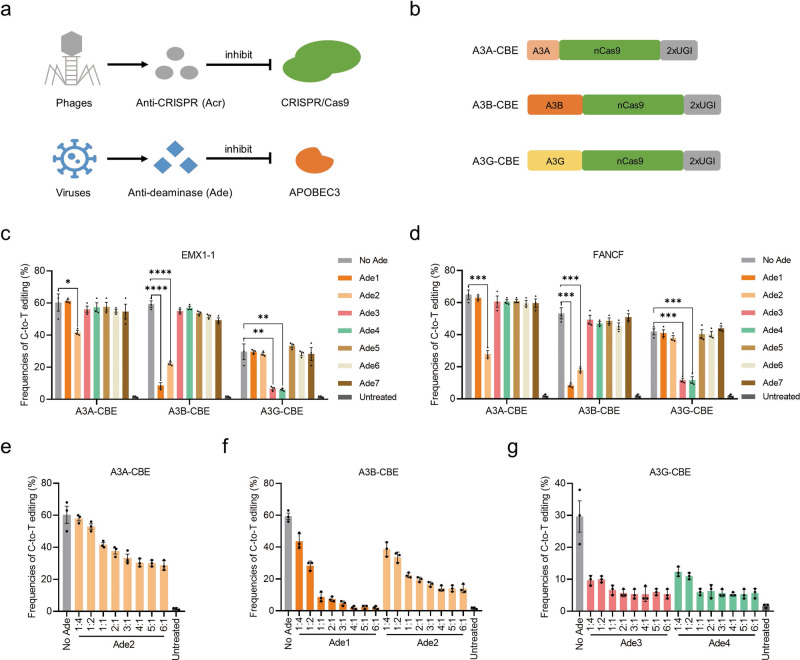
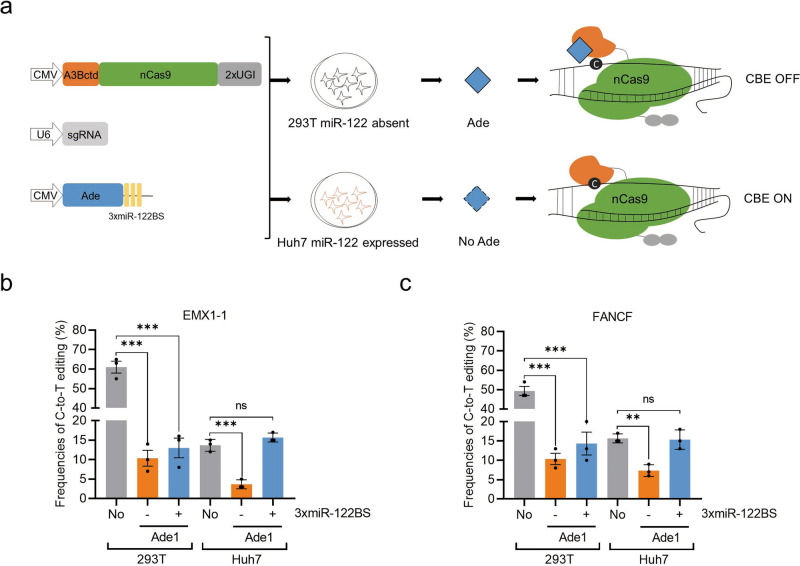
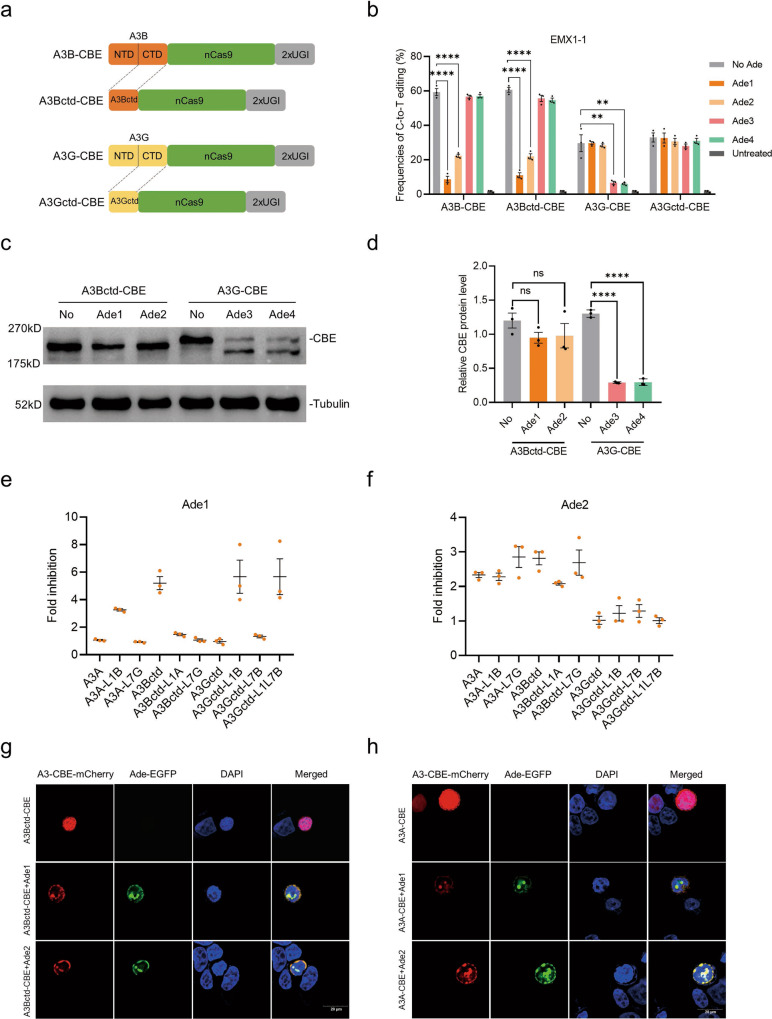
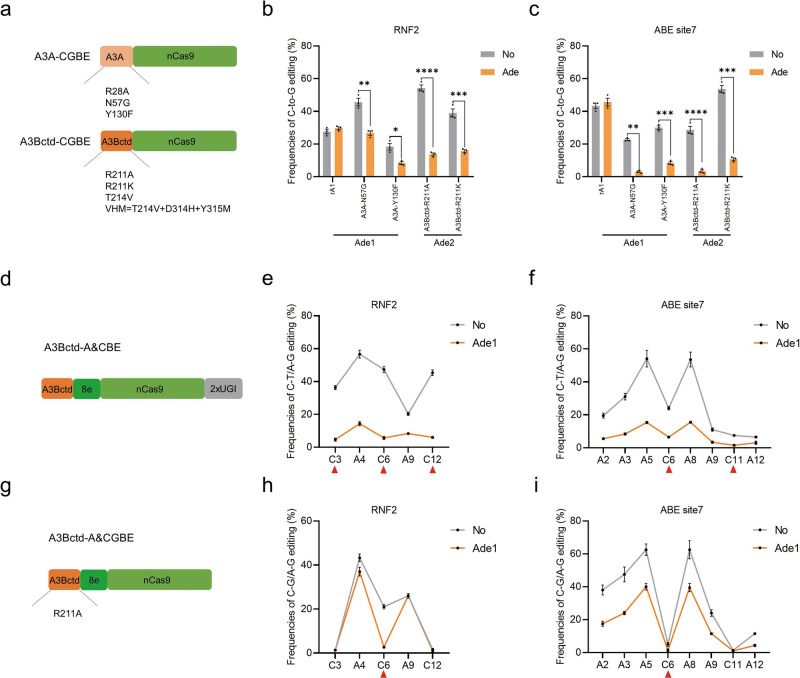
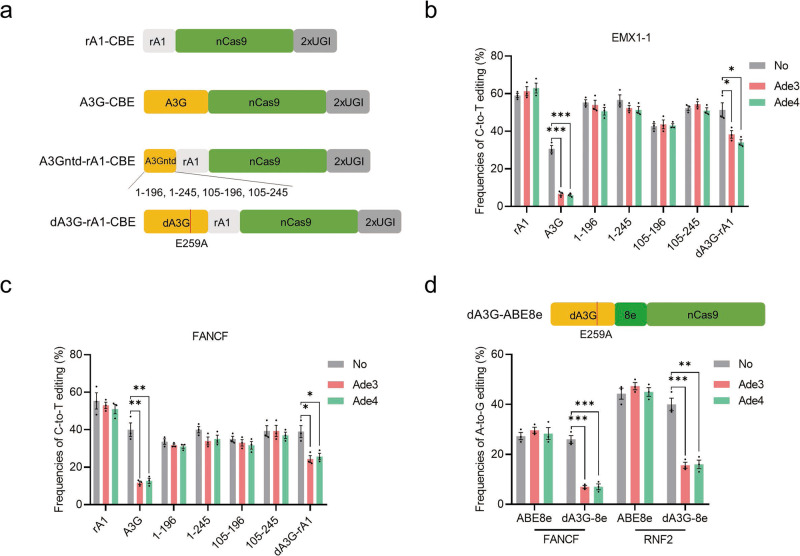
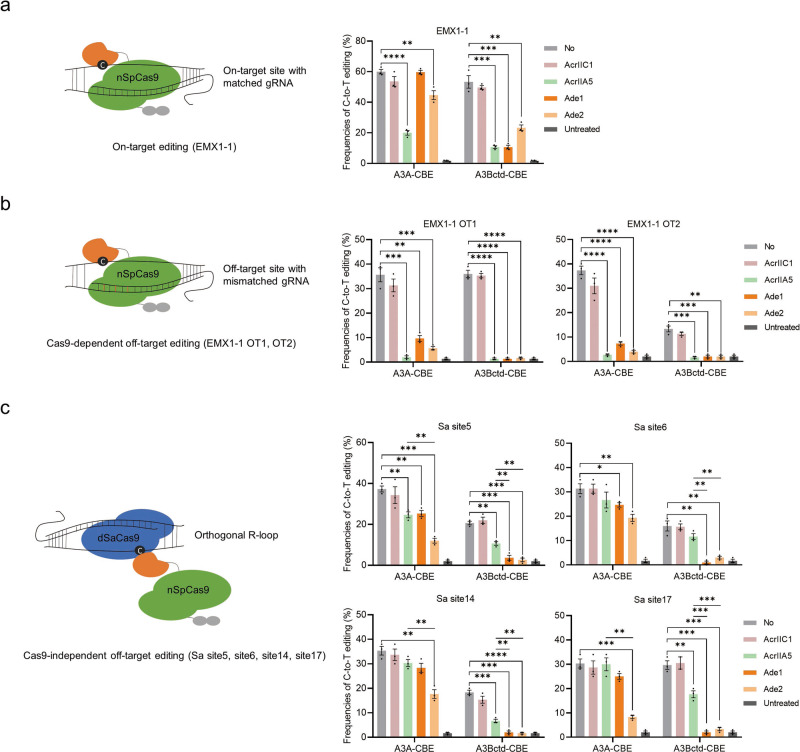
Cytosine base editors (CBEs), combining cytidine deaminases with the Cas9 nickase (nCas9), enable targeted C-to-T conversions in genomic DNA and are powerful genome-editing tools used in biotechnology and medicine. However, the overexpression of cytidine deaminases in vivo leads to unexpected potential safety risks, such as Cas9-independent off-target effects. This risk makes the development of deaminase off switches for modulating CBE activity an urgent need. Here, we report the repurpose of four virus-derived anti-deaminases (Ades) that efficiently inhibit APOBEC3 deaminase-CBEs. We demonstrate that they antagonize CBEs by inhibiting the APOBEC3 catalytic domain, relocating the deaminases to the extranuclear region or degrading the whole CBE complex. By rationally engineering the deaminase domain, other frequently used base editors, such as CGBE, A&CBE, A&CGBE, rA1-CBE and ABE8e, can be moderately inhibited by Ades, expanding the scope of their applications. As a proof of concept, the Ades in this study dramatically decrease both Cas9-dependent and Cas9-independent off-target effects of CBEs better than traditional anti-CRISPRs (Acrs). Finally, we report the creation of a cell type-specific CBE-ON switch based on a microRNA-responsive Ade vector, showing its practicality. In summary, these natural deaminase-specific Ades are tools that can be used to regulate the genome-engineering functions of BEs.
胞嘧啶碱基编辑器(CBEs),将胞嘧啶脱氨酶与 Cas9 核酸酶(nCas9)结合,可在基因组 DNA 中实现靶向 C 到 T 的转换,是生物技术和医学中强大的基因组编辑工具。然而,胞嘧啶脱氨酶在体内的过表达会导致意想不到的潜在安全风险,例如 Cas9 非依赖性脱靶效应。这种风险使得开发脱氨酶关闭开关以调节 CBE 活性成为当务之急。在这里,我们报告了重新利用四种病毒衍生的抗脱氨酶(Ades),它们可以有效地抑制 APOBEC3 脱氨酶-CBEs。我们证明它们通过抑制 APOBEC3 催化结构域来拮抗 CBEs,将脱氨酶重新定位到核外区域或降解整个 CBE 复合物。通过合理设计脱氨酶结构域,Ades 还可以适度抑制其他常用的碱基编辑器,如 CGBE、A&CBE、A&CGBE、rA1-CBE 和 ABE8e,从而扩大了它们的应用范围。作为概念验证,本研究中的 Ades 可显著降低 CBE 的 Cas9 依赖性和 Cas9 非依赖性脱靶效应,优于传统的抗 CRISPRs(Acrs)。最后,我们报告了基于 microRNA 反应性 Ade 载体创建的细胞类型特异性 CBE-ON 开关,显示了其实用性。总之,这些天然的脱氨酶特异性 Ades 是可用于调节 BE 基因组编辑功能的工具。